Photo 1 of 5
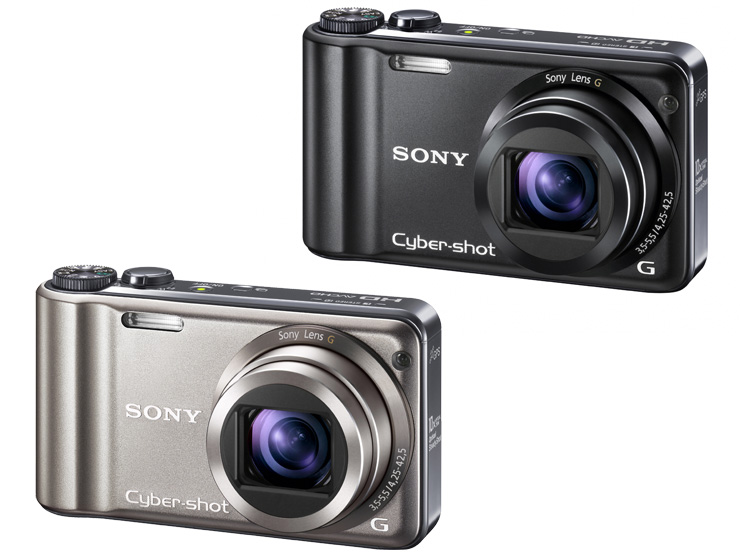
Sony Cyber-shot DSC-HX5V · Photo source
Sony · Cyber-shot
Cyber-shot DSC-HX5V
A pocket travel-zoom camera with a stabilised 10× G lens, GPS geotagging, a digital compass and interlaced Full HD video.
- Type
- Compact
- Sensor
- Other
- Megapixels
- 10.2
- Lens
- 25–250 mm equivalent
- Video
- 1920 × 1080
- Body weight
- 170 g
What reviewers say
Photography Blog and digitalkamera.de praised the versatile zoom, quick autofocus, panorama mode and useful GPS features. Both found fine detail softened by processing and manual exposure restricted by two aperture settings. Photography Blog was more positive about ISO 125–800 image quality; digitalkamera.de highlighted detail loss even at base ISO and poor screen visibility in sunshine.
From photographyblog.com and digitalkamera.de
Specifications
Report a wrong or missing specImage and sensor
- Camera type
- Compact
- Sensor format
- Other
- Sensor type
- Back-illuminated Exmor R CMOS
- Effective resolution
- 10.2 MP
- Largest image
- 3648 × 2736
- RAW recording
- No
- Standard ISO range
- 125–3200
- Sensor detail
- 1/2.4-type progressive-scan, back-illuminated Exmor R CMOS; 10.6 million total and 10.2 million effective photosites. Optical format is distinct from physical sensor dimensions
- Image formats
- JPEG still photographs; no RAW recording. Intelligent Sweep Panorama combines multiple frames, with face and moving-subject detection
- Image processor
- BIONZ; 12-bit DXP processing
Lens and shooting
- Built-in lens
- 25–250 mm equivalent
- Maximum aperture
- f/3.5–5.5
- Optical zoom
- 10×
- Stabilisation
- Optical lens stabilisation
- Maximum continuous burst
- 10 fps
- Lens detail
- Sony G lens; actual 4.25–42.5 mm; 10 elements in 7 groups including 4 aspherical elements; no filter thread or conversion-lens support
- Autofocus
- Nine-point multi AF, centre AF and spot AF with AF illuminator; no manual focus. Focus distance from lens front approximately 5 cm to infinity at wide angle and 100 cm to infinity at telephoto
- Shutter
- Mechanical shutter; Auto 2–1/1600 second, Program 1–1/1600 and Manual 30–1/1600
- Burst detail
- Up to 10 full-resolution images at 10 fps; 5 fps and 2 fps options. Focus, white balance and exposure are fixed from the first image; flash disabled; a self-timer burst is limited to five images
- Stabilisation detail
- Optical SteadyShot; Standard and Active modes for movie recording
- Flash
- Built-in flash with Auto, forced, off and slow-sync modes; ISO Auto range approximately 0.25–3.8 m wide and 1–2.6 m telephoto
- Exposure controls
- Intelligent Auto, Program and Manual plus scene modes; no aperture or shutter priority. Manual selects f/3.5 or f/8 at wide angle and f/5.5 or f/13 at telephoto using an ND filter rather than a continuously adjustable iris. Multi-pattern, centre-weighted and spot metering; ±2 EV in 1/3 EV steps
Video
- Highest video resolution
- 1920 × 1080
- Video detail
- AVCHD MPEG-4 AVC/H.264 records 1920 × 1080 at 17 Mbps or 1440 × 1080 at 9 Mbps, with Dolby Digital audio. Region-dependent 60i or 50i means interlaced fields, not progressive frames. MP4 records 1440 × 1080, 1280 × 720 or VGA at 30 fps on 60i-compatible models or 25 fps on 50i-compatible models; continuous clips approximately 29 minutes; optical zoom available while filming
- Audio
- Built-in stereo microphone and mono playback speaker; AAC audio in MP4
Screen and viewfinder
- Viewfinder
- None
- Screen size
- 3″
- Screen dots
- 230,400
- Display detail
- Fixed Clear Photo TFT LCD with brightness adjustment; no viewfinder
Connections and design
- Battery life (maker's claim)
- 310 photographs
- Body weight
- 170 g
- Release detail
- Sony Japan's original 18 January 2010 announcement specifies sale on 5 March 2010. March precision is retained without treating that Japanese day as a confirmed international first day
- Recording media
- Approximately 45 MB internal memory; Memory Stick Duo, PRO Duo and PRO-HG Duo plus SD, SDHC and SDXC according to Sony's archived specifications. Original English instruction manual lists SD and SDHC but omits SDXC
- Ports
- Proprietary multi terminal for USB, AV, HDMI through supplied adapter and DC input; Hi-Speed USB 2.0; HDMI cable separate
- Wireless connections
- GPS and digital compass record location and shooting direction. TransferJet requires an optional compatible Memory Stick; this is distinct from Wi-Fi or Bluetooth
- Battery life detail
- NP-BG1 lithium-ion battery; maker CIPA claim approximately 310 photographs or 155 minutes, and approximately 75 minutes continuous movie recording. GPS triangulation conditions affect the still-photograph claim
- Charging
- Supplied BC-CSG-series external charger
- Dimensions
- Approximately 102.9 × 57.7 × 28.9 mm (width × height × depth)
- Weight detail
- Approximately 170 g camera only, or 200 g including NP-BG1 and Memory Stick Duo
- Colours
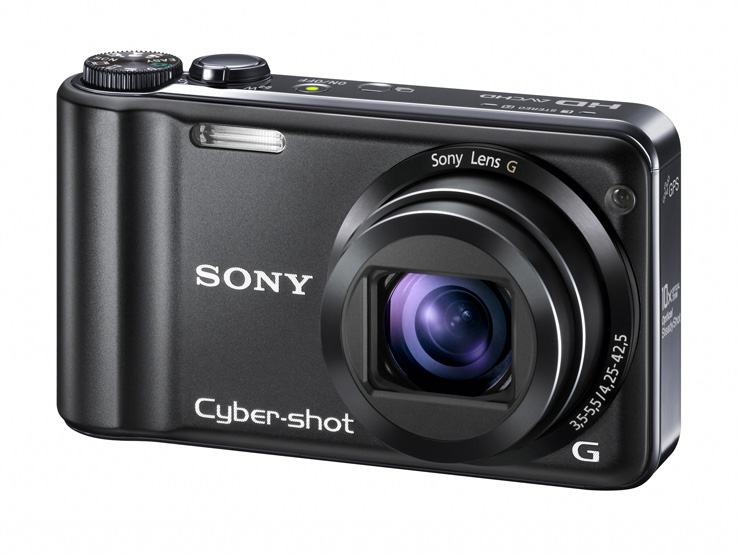
- Black and gold in Sony Japan's original announcement
- In the box
- NP-BG1 battery, BC-CSG-series charger, dedicated USB/AV cable, HDMI adapter, wrist strap, software CD and instructions; mains lead varies by region
Pros and cons
Pros
- 25–250 mm equivalent optical zoom
- GPS coordinates and shooting direction recorded
- Full-resolution bursts and optical zoom during video
Cons
- No RAW or manual focus
- Fixed screen without a viewfinder
- Limited aperture choices and no aperture or shutter priority
Closest rivals
Model | Type | Sensor | Megapixels | Lens | Video | Body weight | Released |
|---|---|---|---|---|---|---|---|
| Compact | Other | 14.1 | 25–250 mm equivalent | 1280 × 720 at 30 fps | 170 g | 2010 | |
| Compact | Other | 10.1 | 38–380 mm equivalent | 1280 × 720 at 30 fps | 250 g | 2009 | |
| Compact | Other | 16.1 | 25–250 mm equivalent | 1280 × 720 at 30 fps | 164 g | 2011 |


Newer model: Cyber-shot DSC-HX7V.
Sources
- sony.jp/cyber-shot/products/archive/DSC-HX5V/spec.html
- sony.jp/CorporateCruise/Press/201001/10-0118B
- sony.jp/cyber-shot/emdown/data/HX5V_im_GB.pdf
- sony.jp/cyber-shot/emdown/data/HX5V_hb_GB.pdf
- digitalkamera.de/Testbericht/Testbericht_Sony_Cyber-shot_DSC-HX5V/6462.aspx
Photo: sony.jp
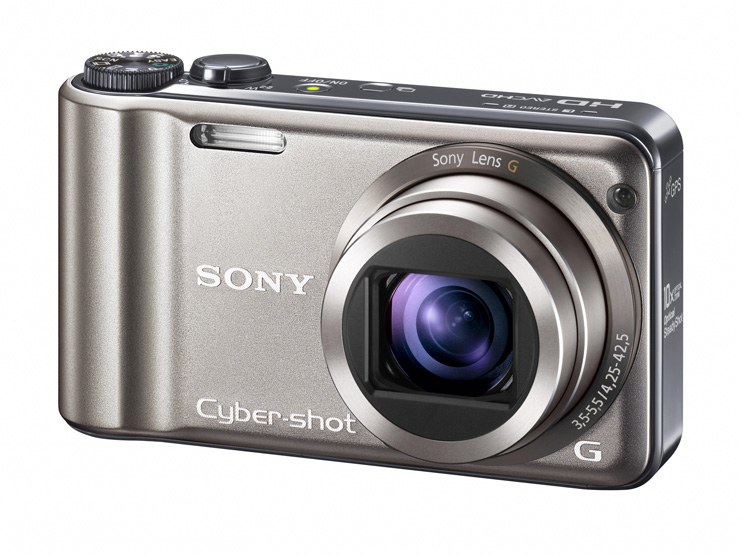
- Sony Cyber-shot DSC-HX5V in gold, front three-quarter view: Sony Japan exact-model image index; original 740 × 555 pixels; named finish/configuration; complete supplied canvas and background retained.
- Sony Cyber-shot DSC-HX5V in black, front three-quarter view: Sony Japan exact-model image index; original 740 × 555 pixels; named finish/configuration; complete supplied canvas and background retained.
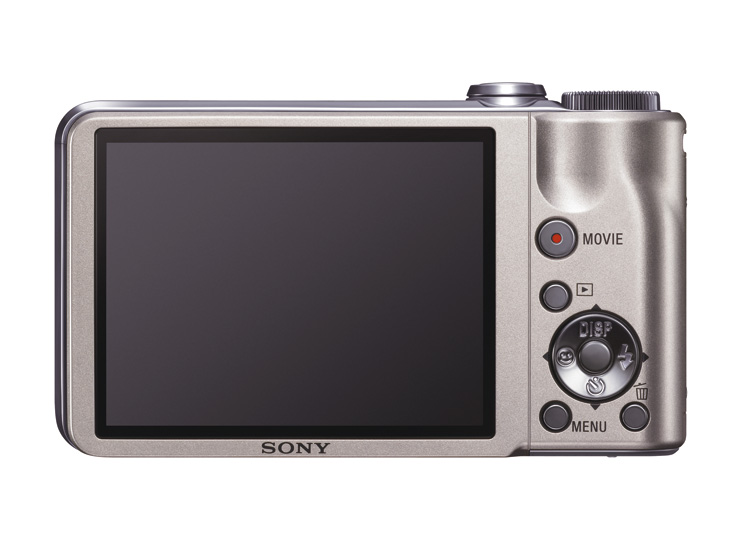
- Sony Cyber-shot DSC-HX5V in gold, rear display and controls: Sony Japan exact-model image index; original 740 × 555 pixels; named finish/configuration; complete supplied canvas and background retained.
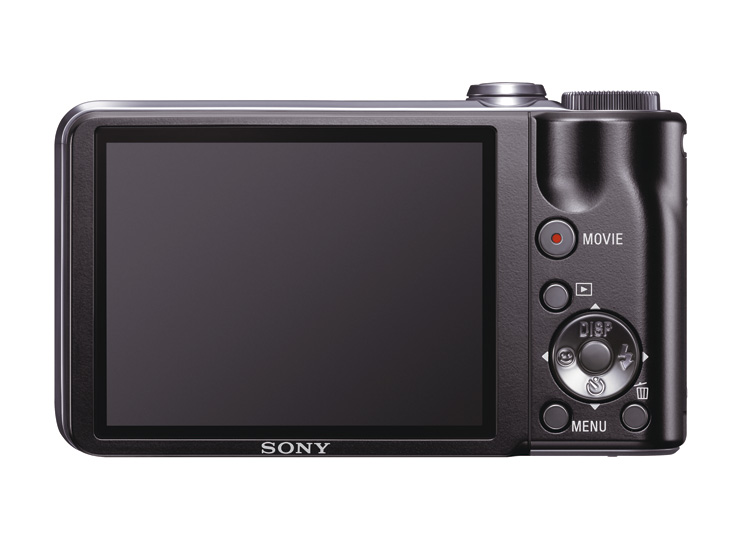
- Sony Cyber-shot DSC-HX5V in black, rear display and controls: Sony Japan exact-model image index; original 740 × 555 pixels; named finish/configuration; complete supplied canvas and background retained.