AMD Radeon RX 580 vs NVIDIA GeForce RTX 5050
Better figure, where one is clearly better
| AMDRadeon RX 580 | NVIDIAGeForce RTX 5050 | |
|---|---|---|
| Overview | ||
| Released | April 2017 | July 2025 |
| Performance | ||
| Chip maker | AMD | NVIDIA |
| Architecture | GCN 4 | Blackwell |
| Shader cores | 2,304 or 2,048 | 2,560 |
| Boost clock | 1,340 MHz or – | 2,570 MHz |
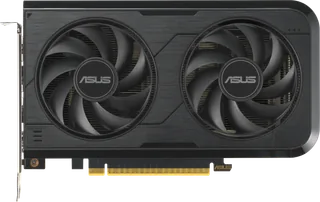
| Architecture | AMD original 8 GB reference baseline uses fourth-generation GCN (Polaris), 36 compute units, 32 ROPs and 144 texture units. Photo shows MSI's factory-overclocked ARMOR 8G OC, not a reference card. Later 2048SP configurations below identify specific Chinese-market Sapphire boards. | – |
| Manufacturing process | 14 nm | – |
| Ray tracing | No hardware ray accelerators | Fourth-generation RT Cores; 40 RT TFLOPS |
| AI cores | – | Fifth-generation Tensor Cores; 421 AI TOPS |
| Upscaling and frame generation | – | DLSS 4.5 with Super Resolution, DLAA, Ray Reconstruction, Frame Generation, Multi Frame Generation and Dynamic Multi Frame Generation |
| Base clock | Original AMD baseline is 1,257 MHz base and 1,340 MHz boost. Pictured MSI ARMOR 8G OC boosts to 1,366 MHz. Sapphire's 2048SP pages state core frequencies of 1,306 MHz (4 GB) and 1,284 MHz (8 GB V2) without a boost label, so numeric boost is omitted for those configurations. | 2.31 GHz |
| Memory | ||
| Video memory | 8 GB GDDR5 or 4 GB GDDR5 | 8 GB GDDR6 |
| Memory bus | 256-bit (better) | 128-bit |
| Memory bandwidth | 256 GB/s or – | – |
| Memory detail | Original stock Sapphire Pulse 8 GB SKU 11265-06 has 8,000 MHz effective memory; original stock 4 GB SKU 11265-10 and the named 2048SP boards have 7,000 MHz. AMD publishes 256 GB/s only for the 8 GB baseline; bandwidth is omitted for the others. Sapphire's original 4 GB power is only stated as less than 225 W, so its numeric power remains unpublished. | – |
| Connections and power | ||
| Board power | 185 W, – or 150 W | 130 W |
| Interface | PCIe 3.0 | PCIe 5.0 |
| Display outputs | Pictured MSI ARMOR has 2 × DisplayPort, 2 × HDMI and dual-link DVI-D. Sapphire 2048SP 4 GB SKU 11265-65-18 has DVI-D only; 8 GB Pulse V2 SKU 11265-70-48 has one HDMI 2.0b, one DisplayPort 1.4 and DVI-D. AMD's reference feature table lists DVI as No; partner outputs vary. | 3 × DisplayPort 2.1b (UHBR20), 1 × HDMI 2.1b; up to 4 displays; HDCP 2.3 |
| Maximum resolution | MSI ARMOR specifies 7680 × 4320 and five displays; Sapphire's named 2048SP 4 GB board is limited to 1920 × 1200 at 60 Hz over DVI-D. Its 8 GB V2 board lists DisplayPort 5120 × 2880 at 60 Hz and HDMI 4096 × 2160 at 60 Hz. | 4K at 480 Hz or 8K at 165 Hz with DSC |
| Power connector | One 8-pin on the pictured MSI ARMOR, original Sapphire Pulse and both named 2048SP boards | 1 × PCIe 8-pin cable, or a 300 W or greater PCIe Gen 5 cable (adapter in the box) |
| Recommended power supply | AMD and MSI specify 500 W for the original model; Sapphire specifies 500 W for original Pulse and 450 W for the named 2048SP boards | 550 W |
| Slot width | Original Sapphire Pulse and named 2048SP designs occupy two slots; pictured MSI ARMOR is 38 mm thick | – |
| Size (reference card) | Pictured MSI ARMOR is 269 × 125 × 38 mm and 653 g. Original Sapphire Pulse is 230 × 125 × 40 mm; named 2048SP 4 GB is 241 × 120 × 42 mm and 8 GB V2 is 212 × 111 × 40 mm. | – |
| Video encode and decode | AMD publishes H.264 and H.265/HEVC encoding and decoding; Sapphire specifies PCIe 3.0 for the named variants | 1 × ninth-generation NVENC, 1 × sixth-generation NVDEC; AV1 encode and decode |

More comparisons
- NVIDIA GeForce RTX 3050 vs NVIDIA GeForce RTX 5050
- NVIDIA GeForce GTX 1650 vs NVIDIA GeForce RTX 5050
- NVIDIA GeForce GTX 1050 Ti vs NVIDIA GeForce RTX 5050
- NVIDIA GeForce GTX 970 vs NVIDIA GeForce RTX 5050
- NVIDIA GeForce GTX 1650 SUPER vs NVIDIA GeForce RTX 5050
- AMD Radeon RX 570 vs NVIDIA GeForce RTX 5050
- Intel Arc B570 vs NVIDIA GeForce RTX 5050
- AMD Radeon RX 9060 XT (8GB) vs NVIDIA GeForce RTX 5050
- Intel Arc B580 vs NVIDIA GeForce RTX 5050
- NVIDIA GeForce RTX 5050 vs NVIDIA GeForce RTX 5060
- NVIDIA GeForce RTX 5050 vs NVIDIA GeForce RTX 5060 Ti
- NVIDIA GeForce RTX 5050 vs NVIDIA GeForce RTX 5070
- NVIDIA GeForce RTX 5050 vs NVIDIA GeForce RTX 5070 Ti
- NVIDIA GeForce RTX 5050 vs NVIDIA GeForce RTX 5080
- NVIDIA GeForce RTX 5050 vs NVIDIA GeForce RTX 5090
- NVIDIA GeForce RTX 4080 SUPER vs NVIDIA GeForce RTX 5050