Apple iMac (20-inch, Early 2009) vs Apple iMac 24″ (M1)
Better figure, where one is clearly better
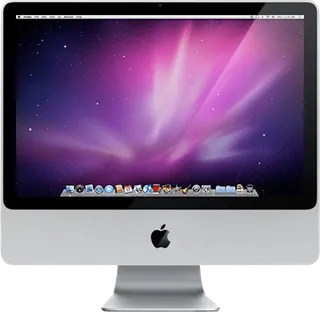
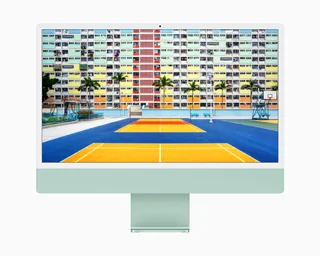
| AppleiMac (20-inch, Early 2009) | AppleiMac 24″ (M1) | |
|---|---|---|
| Overview | ||
| Released | March 2009 | May 2021 |
| Performance | ||
| Processor | Intel Core 2 Duo E8135 | Apple M1 |
| CPU cores | 2 | 8 |
| Graphics | NVIDIA GeForce 9400M (256 MB shared DDR3) | 7-core GPU or 8-core GPU |
| Memory | 2 GB, 4 GB or 8 GB | 8 GB or 16 GB (better) |
| Storage | 320 GB to 1 TB | 256 GB to 2 TB (better) |
| CPU | 2.66 GHz Intel Core 2 Duo E8135 with 6 MB shared L2 cache and 1066 MHz frontside bus; exact chip identity cross-checked with EveryMac | 8-core CPU with 4 performance cores and 4 efficiency cores |
| GPU | NVIDIA GeForce 9400M with at least 256 MB DDR3 shared with system memory; available system memory varies with graphics requirements | 7-core GPU in the two-port model; 8-core GPU in the four-port model |
| AI engine | – | 16-core Neural Engine |
| Memory type | Two user-accessible SO-DIMM slots for 1066 MHz DDR3; 2 GB standard, factory upgrades to 4 or 8 GB | – |
| Storage type | 320 GB 7200 rpm Serial ATA hard drive, configurable to 640 GB or 1 TB; slot-loading 8x SuperDrive with 4x double-layer DVD burning | SSD; two-port model configurable to 512 GB or 1 TB, four-port model to 512 GB, 1 TB or 2 TB |
| Display | ||
| Screen size | 20″ | 24″ |
| Resolution | 1680 × 1050 | 4480 × 2520 (better) |
| Panel | – | IPS LCD |
| Refresh rate | – | 60 Hz |
| Brightness | 290 nits | 500 nits (better) |
| Display type | Glossy widescreen TFT active-matrix LCD, millions of colours; maker typical brightness 290 cd/m², contrast 800:1 and 160° horizontal/vertical viewing angle. Panel technology and refresh rate unpublished and omitted. | 4.5K Retina display; actual diagonal 23.5 inches; IPS panel and 60 Hz refresh rate confirmed by Notebookcheck |
| Pixel density | – | 218 ppi |
| Display features | – | 1 billion colours; wide colour (P3); True Tone; anti-reflective coating |
| Connections | ||
| Ports | DisplayPort, 4 × USB-A, Ethernet, headphone jack | 2 × USB4, headphone jack |
| Ethernet | 1 Gb/s | – |
| External displays | Up to 1 | Up to 1 |
| Wi-Fi | 802.11n draft | Wi-Fi 6 |
| Bluetooth | 2.1 + EDR | 5.0 |
| Camera | iSight camera | 1080p FaceTime HD |
| Back ports | Four USB 2.0 ports on the computer, plus two on the supplied wired keyboard; one FireWire 800 port at 7 W, Mini DisplayPort output, Gigabit Ethernet, headphone/optical digital output and line-in/optical digital input. FireWire and audio input described here; no SD slot. | Two-port model: two Thunderbolt / USB 4 ports with DisplayPort, Thunderbolt 3 and USB 4 up to 40 Gb/s, and USB 3.1 Gen 2 up to 10 Gb/s; optional Gigabit Ethernet. Four-port model adds two USB 3 ports up to 10 Gb/s and includes Gigabit Ethernet. Both have a 3.5 mm headphone jack. |
| External displays | Full built-in resolution and one external display up to 2560 × 1600 simultaneously; extended desktop and mirroring, optional DVI/VGA/dual-link DVI adapters | One external display up to 6K 60 Hz, alongside the built-in display at full resolution |
| Camera | – | 1080p FaceTime HD camera; advanced image signal processor with computational video |
| Speakers | Built-in stereo speakers with internal 24 W digital amplifier, microphone and support for Apple Stereo Headset microphones | High-fidelity six-speaker system with force-cancelling woofers; wide stereo sound; spatial audio with Dolby Atmos |
| Microphones | – | Studio-quality three-mic array with high signal-to-noise ratio and directional beamforming; Hey Siri |
| Keyboard and mouse | Apple Keyboard and Mighty Mouse; numeric-keypad keyboard, wireless keyboard or wireless Mighty Mouse available as options | Magic Mouse and Magic Keyboard; keyboard has Touch ID on the four-port model and optionally on the two-port model; Magic Trackpad and Magic Keyboard with Touch ID and Numeric Keypad available instead |
| Design and power | ||
| Type | All-in-one | All-in-one |
| Weight | 9.1 kg | 4.46 kg (better) |
| Width × depth × height | 485 × 189 × 469 mm | 547 × 147 × 461 mm |
| Operating system | macOS | macOS |
| Power supply | Maximum continuous power 200 W; 100–240 V AC, 50–60 Hz single phase | 143 W external power adapter with magnetic connection; Gigabit Ethernet built into the adapter where fitted |
| Noise | – | 7 dBA sound pressure at idle and during Apple's wireless web test (operator position) |
| Materials | Aluminium and glass enclosure with arsenic-free display glass, BFR-free components and PVC-free internal cables | Recyclable, low-carbon aluminium enclosure |
| Colours | – | Two-port model: Blue, Green, Pink, Silver. Four-port model also comes in Yellow, Orange and Purple. |
| In the box | iMac, Apple Keyboard, Mighty Mouse, cleaning cloth, power cord, install/restore DVDs and documentation; Mac OS X Leopard and iLife '09 | iMac, Magic Keyboard, Magic Mouse, 143 W power adapter, 2 m power lead, USB-C to Lightning cable |
More comparisons
- Apple iMac 24″ (M1) vs Apple iMac 24″ (M4)
- Apple iMac (20-inch, Early 2009) vs Apple iMac 24″ (M4)
- Apple iMac 24″ (M1) vs Apple iMac 24″ (M3)
- Apple iMac (20-inch, Early 2009) vs Apple iMac 24″ (M3)
- Apple iMac 24″ (M1) vs Apple iMac (Retina 4K, 21.5-inch, Late 2015)
- Apple iMac 24″ (M1) vs Apple iMac (Retina 4K, 21.5-inch, 2017)
- Apple iMac 24″ (M1) vs Apple iMac (Retina 4K, 21.5-inch, 2019)
- Apple iMac 24″ (M1) vs Apple iMac (Retina 5K, 27-inch, 2020)
- Apple iMac (21.5-inch, Late 2012) vs Apple iMac 24″ (M1)
- Apple iMac (21.5-inch, Late 2013) vs Apple iMac 24″ (M1)
- Apple iMac (21.5-inch, Mid 2014) vs Apple iMac 24″ (M1)
- Apple iMac (21.5-inch, Late 2015) vs Apple iMac 24″ (M1)
- Apple iMac (21.5-inch, 2017) vs Apple iMac 24″ (M1)
- Apple iMac 24″ (M1) vs Apple iMac (27-inch, Mid 2011)
- Apple iMac (24-inch, Early 2009) vs Apple iMac 24″ (M1)
- Apple iMac (21.5-inch, Late 2009) vs Apple iMac 24″ (M1)