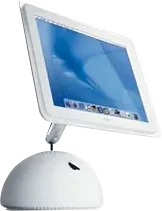
Apple iMac G3 (Slot Loading, 1999) vs Apple iMac G4 (15-inch, Flat Panel)
Better figure, where one is clearly better
| AppleiMac G3 (Slot Loading, 1999) | AppleiMac G4 (15-inch, Flat Panel) | |
|---|---|---|
| Overview | ||
| Released | October 1999 | January 2002 |
| Performance | ||
| Processor | PowerPC G3 350 MHz (iMac) or PowerPC G3 400 MHz (iMac) | Motorola PowerPC G4 700 MHz (iMac Flat Panel) or Motorola PowerPC G4 800 MHz (iMac Flat Panel) |
| CPU cores | 1 | 1 |
| Graphics | ATI RAGE 128 VR (8 MB) | NVIDIA GeForce2 MX (32 MB) |
| Memory | 64 MB, 128 MB or 512 MB | 128 MB, 256 MB or 1 GB (better) |
| Storage | 6 GB to 13 GB | 40 GB to 60 GB (better) |
| CPU | 350 MHz or 400 MHz PowerPC G3 with 100 MHz system bus and 512 KB backside L2 cache. Apple developer history gives 140/160 MHz cache clocks while EveryMac gives 200 MHz for the DV Special Edition; optional cache-clock fields are omitted. Exact processor supplier is not established. | 700 or 800 MHz PowerPC G4 with 256 KB on-chip L2 cache and 100 MHz system bus. Generic maker-clock chip records retain the single-core identity cross-checked with exact EveryMac sources; an uncertain silicon revision is not inferred. |
| GPU | ATI RAGE 128 VR with 8 MB video memory and AGP support. Retained sheet says SGRAM while the developer note says SDRAM; memory technology is not silently selected. | NVIDIA GeForce2 MX with 32 MB dedicated DDR video memory and AGP 2x support. |
| Memory type | PC100 SDRAM in two DIMM slots, up to 512 MB in the retained maker sheet. Base 350 MHz and DV models have 64 MB; DV Special Edition has 128 MB. Configurations retain each base and published maximum with its original processor and drive. | SDRAM, expandable to 1 GB, with one 168-pin DIMM and one user-accessible SO-DIMM slot. Launch CD-RW base: 128 MB; Combo and SuperDrive bases: 256 MB. Configurations conservatively show those published bases and the maker's maximum. |
| Storage type | 350 MHz: 6 GB ATA hard drive and slot-loading 24x CD-ROM, Blueberry. 400 MHz DV: 10 GB and 4x DVD-ROM, five fruit colours. 400 MHz DV Special Edition: 13 GB and 4x DVD-ROM, Graphite. These are configurations of one generation. | Launch combinations: 700 MHz with CD-RW and 40 GB hard drive; 700 MHz with Combo drive and 40 GB; 800 MHz with SuperDrive and 60 GB. Optical options on the 700 MHz model account for its different base memory. Drives use Ultra ATA. Combo reads DVDs and writes CDs; SuperDrive writes DVDs and CDs. |
| Display | ||
| Screen size | 15″ | 15″ |
| Resolution | 1024 × 768 | 1024 × 768 |
| Brightness | – | 200 nits |
| Refresh rate | 75 Hz | – |
| Display type | Nominal 15-inch CRT with 13.8-inch viewable diagonal; no fixed LCD native resolution. | TFT active-matrix LCD with millions of colours and typical 300:1 contrast. Panel technology and refresh rate are not established by the exact maker sheet. |
| Display features | Maximum mode 1024 × 768 at 75 Hz; 800 × 600 at 95 Hz and 640 × 480 at 117 Hz (EveryMac exact DV Special Edition specification). | Typical viewing angles: 120° horizontal and 90° vertical. Articulated arm adjusts the display's height and angle. |
| Connections | ||
| Ports | 2 × USB-A, Ethernet, 2 × headphone jack | 3 × USB-A, Ethernet, headphone jack |
| Ethernet | 0.1 Gb/s | 0.1 Gb/s |
| Back ports | Two 12 Mbps USB ports on the computer, 10/100BASE-T Ethernet, 56K V.90 modem, audio line-in/out and two front headphone jacks. Two FireWire 400 ports and VGA video mirroring are present only on DV and DV Special Edition. AirPort card is optional across this generation. | Three USB 1.1 ports on the computer, plus two on the keyboard; two FireWire 400 ports with 8 W shared power, Mini-VGA, 10/100BASE-T Ethernet, 56K V.90 modem, headphone jack and Apple speaker minijack. Original AirPort 802.11b card is optional; wireless networking is not standard. |
| External displays | DV and DV Special Edition mirror the internal display through VGA; the 350 MHz entry configuration has no external video connector. | Mini-VGA provides video mirroring through an optional VGA adapter: 640 × 480 at 60 Hz, 800 × 600 at 75 Hz or 1024 × 768 at 75 Hz. The original model does not list S-video or composite output. |
| Speakers | Integrated Harman Kardon Odyssey stereo sound system and built-in microphone. Convection cooling uses no fan. | Built-in speaker and microphone; selected configurations include Apple Pro Speakers rated at 9 W each with an internal 18 W amplifier. |
| Keyboard and mouse | Apple USB Keyboard and round Apple USB Mouse. | Apple Pro Keyboard and Apple Pro Mouse; Apple Pro Speakers are included with the Combo and SuperDrive launch configurations. |
| Design and power | ||
| Type | All-in-one | All-in-one |
| Weight | – | 9.7 kg |
| Operating system | macOS | macOS |
| Size and weight detail | Retained Apple sheet gives height 15.8, width 15.2 and depth 17.6 inches, weight 34.7 pounds. Exact developer note gives height 39.5, width 38 and depth 44 cm and weight 15.5 kg (34 pounds). Disagreeing main dimensions and weight are omitted. | Adjustable maker ranges: height 329–509 mm, width 384–415 mm and depth 270–415 mm; base diameter 270 mm. The reference weight varies by configuration and manufacturing process, so no single fixed-position dimension is selected. |
| Power supply | – | 90–264 V AC, 47–63 Hz, single phase; maximum continuous power 130 W. |
| In the box | Mac OS 8.6 at launch; TIME notes Mac OS 9 would begin shipping subsequently. Conservative October 1999 sale month follows the contemporary physical DV Special Edition reviews; the retained introduction day differs from the launch event date. | Launch software: Mac OS X 10.1.2 and Mac OS 9.2.2, with iTunes, iMovie and iPhoto; iDVD requires SuperDrive. The 800 MHz SuperDrive configuration was stated to ship in late January 2002, the 700 MHz Combo in February and CD-RW in March. The release month records the first configuration, not the 7 January announcement. |

More comparisons
- Apple iMac 24″ (M4) vs Apple iMac G4 (15-inch, Flat Panel)
- Apple iMac 24″ (M4) vs Apple iMac G3 (Slot Loading, 1999)
- Apple iMac 24″ (M3) vs Apple iMac G4 (15-inch, Flat Panel)
- Apple iMac 24″ (M3) vs Apple iMac G3 (Slot Loading, 1999)
- Apple iMac 24″ (M1) vs Apple iMac G4 (15-inch, Flat Panel)
- Apple iMac 24″ (M1) vs Apple iMac G3 (Slot Loading, 1999)
- Apple iMac G4 (15-inch, Flat Panel) vs Apple iMac (Retina 5K, 27-inch, 2020)
- Apple iMac G3 (Slot Loading, 1999) vs Apple iMac (Retina 5K, 27-inch, 2020)
- Apple iMac G4 (15-inch, Flat Panel) vs Apple iMac (Retina 4K, 21.5-inch, 2019)
- Apple iMac G4 (15-inch, Flat Panel) vs Apple iMac (Retina 5K, 27-inch, 2019)
- Apple iMac G3 (Slot Loading, 1999) vs Apple iMac (Retina 4K, 21.5-inch, 2019)
- Apple iMac G3 (Slot Loading, 1999) vs Apple iMac (Retina 5K, 27-inch, 2019)
- Apple iMac G4 (15-inch, Flat Panel) vs Apple iMac Pro (2017)
- Apple iMac G3 (Slot Loading, 1999) vs Apple iMac Pro (2017)
- Apple iMac (21.5-inch, 2017) vs Apple iMac G4 (15-inch, Flat Panel)
- Apple iMac (21.5-inch, 2017) vs Apple iMac G3 (Slot Loading, 1999)