Apple iPhone 17 Pro Max vs vivo X200 Ultra
Better figure, where one is clearly better
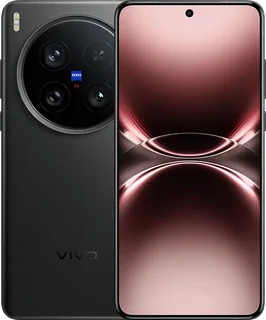
| AppleiPhone 17 Pro Max | vivoX200 Ultra | |
|---|---|---|
| Overview | ||
| Released | September 2025 | April 2025 |
| Display | ||
| Screen size | 6.9″ | 6.82″ |
| Resolution | 2868 × 1320 | 3168 × 1440 (better) |
| Sharpness | 458 pixels per inch | 510 pixels per inch (better) |
| Panel | LTPO OLED | LTPO OLED |
| Refresh rate | 120 Hz | 120 Hz |
| Peak brightness | 3,000 nits | 4,500 nits (better) |
| Display type | Super Retina XDR OLED display with Dynamic Island | 8T LTPO AMOLED, adaptive 1–120 Hz |
| Pixel density | 460 ppi | 510 ppi |
| Brightness detail | 1,000 nits max (typical); 1,600 nits peak (HDR); 1 nit minimum | 4,500 nits local peak |
| Always-on display | Yes | – |
| Screen protection | Ceramic Shield 2 front, Ceramic Shield back | Armor Glass |
| Display features | ProMotion adaptive refresh; HDR; True Tone; Wide colour (P3); Haptic Touch; 2,000,000:1 contrast ratio (typical); anti-reflective coating | 1.07 billion colours, P3 gamut, 8,000,000:1 contrast and HDR; 93.3% screen ratio; circular polariser, 1 Pulse DC-like dimming and 2,160 Hz PWM |
| Performance | ||
| Chip | A19 Pro | Qualcomm Snapdragon 8 Elite |
| Memory | 12 GB | 12 GB – 16 GB (better) |
| Storage | 256 GB, 512 GB, 1 TB, 2 TB (better) | 256 GB, 512 GB, 1 TB |
| CPU | 6-core CPU with 2 performance and 4 efficiency cores | Eight 64-bit cores, 2 × 4.32 GHz + 6 × 3.53 GHz; 3 nm process |
| GPU | 6-core GPU with Neural Accelerators; hardware-accelerated ray tracing | Qualcomm Adreno 830 |
| Storage type | – | Four-channel LPDDR5X Ultra and UFS 4.1; China V2454A/V2454DA configurations 12 GB/256 GB, 16 GB/512 GB and 16 GB/1 TB with satellite communication; photography bundle uses same 1 TB model |
| AI engine | 16-core Neural Engine | – |
| Cooling | Apple-designed vapour chamber laser-welded into the aluminium unibody | Vapour chamber with capillary wick and nanofluid cooling |
| Cameras | ||
| Main camera | 48 MP | 50 MP (better) |
| Ultra wide camera | 48 MP | 50 MP |
| Telephoto camera | 48 MP | 200 MP |
| Optical zoom | 4× (better) | 3.7× |
| Front camera | 18 MP | 50 MP (better) |
| Main camera | 48MP Fusion Main, 24 mm, ƒ/1.78 aperture, second-generation sensor-shift optical image stabilisation, 100% Focus Pixels; 24MP and 48MP photos | 50 MP Sony LYT-818, 1/1.28-inch sensor, f/1.69, 35 mm equivalent, ZEISS T* coating, autofocus and CIPA 5.0 OIS |
| Ultra wide camera | 48MP Fusion Ultra Wide, 13 mm, ƒ/2.2 aperture, 120° field of view, Hybrid Focus Pixels | 50 MP Sony LYT-818, 1/1.28-inch sensor, f/2.0, 14 mm equivalent, autofocus and CIPA 5.0 OIS |
| Telephoto camera | 48MP Fusion Telephoto, 100 mm (4x), ƒ/2.8 aperture, Hybrid Focus Pixels, 3D sensor-shift optical image stabilisation and autofocus, tetraprism design | 200 MP HP9, 1/1.4-inch sensor, f/2.27, 85 mm equivalent, 1G2P4P floating periscope, autofocus and CIPA 5.0 OIS |
| Front camera | 18MP Center Stage camera, ƒ/1.9 aperture, autofocus with Focus Pixels | 50 MP, f/2.45; autofocus identified by Digital Camera World |
| Zoom | 12MP optical-quality 2x (48 mm) from the Main camera and 8x (200 mm) from the Telephoto camera; 8x optical-quality zoom in, 2x optical zoom out (16x optical-quality zoom range); digital zoom up to 40x | Maker specifies 3.7× optical telephoto and up to 105× digital; its zoom scale uses 23 mm as 1× despite 35 mm main lens; optional 2.35× ZEISS extender provides 200 mm equivalent |
| Video recording | 4K Dolby Vision at 24, 25, 30 or 60 fps, and at 100 or 120 fps on the Fusion Main camera; Cinematic mode up to 4K Dolby Vision at 30 fps; Action mode up to 2.8K Dolby Vision at 60 fps; slo-mo 1080p up to 240 fps and 4K Dolby Vision up to 120 fps (Fusion Main); ProRes up to 4K at 120 fps with external recording; ProRes RAW; Apple Log 2; ACES; genlock; spatial video at 1080p 30 fps; Dual Capture up to 4K Dolby Vision at 30 fps; HEVC, H.264, ProRes and ProRes RAW | Up to 8K; rear cameras support 4K120 slow motion, 4K60 10-bit Log, 4K60 Dolby Vision, 4K portrait and time-lapse; Rec.709 monitoring |
| Front video | 4K Dolby Vision at 24, 25, 30 or 60 fps; Cinematic mode up to 4K Dolby Vision at 30 fps; ProRes up to 4K at 60 fps with external recording; ProRes RAW; Apple Log 2; slo-mo 1080p at 120 fps | Up to 4K60, identified by Android Central |
| Camera features | Photonic Engine; Deep Fusion; Smart HDR 5; next-generation portraits with Focus and Depth Control; Night mode; Photographic Styles; ProRAW; spatial photos; 48MP macro photography; Adaptive True Tone flash; LiDAR Scanner; four studio-quality mics; Camera Control | V3+ and VS1 imaging chips; RAW, spatial photo/video, stage, street, landscape, portrait, underwater, food and Pro modes; zoom flash |
| Battery and charging | ||
| Battery | 4,823 mAh | 6,000 mAh (better) |
| Wired charging | – | Up to 90 W |
| Video playback (maker's claim) | Up to 37 hours | – |
| Wireless charging | Up to 25 W | Up to 40 W (better) |
| Battery life detail | Up to 33 hours streamed video playback; EU energy label class A, 53 hours per charge, at least 1,000 charge cycles | Single-cell 6,000 mAh/22.80 Wh typical and 5,880 mAh/22.35 Wh rated at 3.80 V; third-generation silicon anode and semi-solid technology; maker claims up to 18.3 days 4G single-SIM standby or 23.4 hours VoLTE calls in laboratory tests |
| Wired charging | Up to 50% in 20 minutes with a 40W adapter or higher (sold separately) | 90 W FlashCharge |
| Wireless charging | MagSafe and Qi2 up to 25W with a 30W adapter or higher; up to 50% in 30 minutes | 40 W wireless FlashCharge |
| Charges other devices | – | OTG reverse charging supported |
| Connectivity | ||
| Satellite messaging | Yes | Yes |
| Mobile network | 5G (sub-6GHz) with 4x4 MIMO; Gigabit LTE with 4x4 MIMO; UK model A3526 | GSM 850/900/1800/1900 MHz; WCDMA B1/2/4/5/6/8/19; LTE TDD B34/38/39/40/41/42/43/48, FDD B1/2/3/4/5/7/8/12/17/18/19/20/25/26/28/66; 5G n1/2/3/5/7/8/12/18/20/25/26/28/38/40/41/48/66/77/78/79/80/81/83/84/89 |
| SIM | Dual SIM (nano-SIM and eSIM); dual eSIM support | Two nano-SIMs, dual standby; dual 5G active on supported SA/VoNR band combinations |
| Wi-Fi | Wi-Fi 7 (802.11be) with 2x2 MIMO; Apple N1 wireless networking chip | Wi-Fi 6 and 7; 2.4 GHz, 5.1 GHz and 5.8 GHz; Wi-Fi Display, 2 × 2 MIMO, MU-MIMO and concurrent 2.4/5 GHz |
| Bluetooth | Bluetooth 6; Thread | Bluetooth 5.4; SBC, AAC, aptX, aptX HD, aptX Adaptive, aptX Lossless, LDAC and LHDC 5.0 |
| Ultra Wideband | Apple second-generation Ultra Wideband chip | – |
| NFC | NFC with reader mode; Express Cards with Power Reserve | Reader and card-emulation modes, including vivo Wallet, SIM and HCE payments; SIM payment requires SIM1 |
| Satellite features | Emergency SOS via satellite; Roadside Assistance via satellite | BeiDou short-message communication only on 16 GB/1 TB model, with China Mobile service activation; not available on smaller configurations |
| USB | USB-C with charging, DisplayPort and USB 3 (up to 10Gb/s); video out up to 4K HDR | USB-C, USB 3.2 Gen 1, OTG and DisplayPort output; USB-C headphone connection |
| Positioning | Precision dual-frequency GPS (GPS, GLONASS, Galileo, QZSS, BeiDou and NavIC); digital compass; iBeacon micro-location | GPS L1/L5, BeiDou B1C/B1I/B2a, GLONASS G1, Galileo E1/E5a, QZSS L1/L5, A-GPS, cellular and Wi-Fi positioning |
| Design | ||
| Type | Standard | Standard |
| Weight | 231 g (better) | 232 g |
| Thickness | 8.75 mm | 8.69 mm (better) |
| Height × width | 163.4 × 78 mm | 163.14 × 76.76 mm |
| Water and dust resistance | IP68 | IP68 |
| Materials | Aluminium unibody (7000-series aluminium alloy) | – |
| Colours | Silver, Cosmic Orange, Deep Blue | Black Ka and Red Circle 232 g; Silver Tone 229 g, all 8.69 mm thick |
| Buttons | Action button; Camera Control; side button; volume up/down | Two-stage pressure-sensitive camera control; double press opens camera, half press locks focus/exposure when configured, sliding adjusts exposure, lens or zoom |
| Water resistance detail | IP68 (maximum depth of 6 metres up to 30 minutes) under IEC standard 60529 | IP68 and IP69 |
| Biometrics | Face ID | 3D ultrasonic single-point fingerprint sensor and face recognition |
| Sensors | LiDAR Scanner; barometer; high dynamic range gyro; high-g accelerometer; proximity sensor; dual ambient light sensors | Accelerometer, ambient light, proximity, gyroscope, compass, front/rear colour temperature, laser focusing, infrared remote, flicker and multispectral sensors; X-axis linear vibration motor |
| Speakers | Built-in stereo speakers | Dual speakers |
| Microphones | Four studio-quality mics; Voice Isolation and Wide Spectrum modes | – |
| Software | ||
| Operating system | iOS | Android |
| Software at launch | iOS 26 | Android 15 with China-market OriginOS 5 |
| Software updates | Security, corrective and functionality updates for at least 5 years after it stops being sold (EU product information sheet) | – |
| AI features | Apple Intelligence; Visual Intelligence | AI image expansion, erase, object moving, weather changes and automatic composition |
| Safety features | Crash Detection | – |
| In the box | iPhone 17 Pro Max, USB-C Charge Cable (1 m), documentation; no power adapter | – |

More comparisons
- Apple iPhone 17 Pro Max vs Apple iPhone Duo
- Apple iPhone 17 Pro Max vs Apple iPhone 18 Pro
- Apple iPhone 17 Pro Max vs Apple iPhone 18 Pro Max
- vivo X200 Ultra vs vivo X300 Ultra
- Apple iPhone 17 Pro Max vs Apple iPhone 17e
- vivo X200 Ultra vs vivo X300 FE
- OnePlus OnePlus 15 vs vivo X200 Ultra
- vivo X200 Ultra vs vivo X300 Pro
- vivo X200 Ultra vs vivo X300
- iQOO iQOO 15 vs vivo X200 Ultra
- Apple iPhone 17 Pro Max vs Xiaomi Xiaomi 17 Pro Max
- Apple iPhone 17 vs Apple iPhone 17 Pro Max
- Apple iPhone 17 Pro vs Apple iPhone 17 Pro Max
- Apple iPhone 17 Pro Max vs Samsung Galaxy S25 Ultra
- Apple iPhone 17 Pro Max vs OPPO Reno14 Pro 5G
- Apple iPhone 17 Pro Max vs Apple iPhone Air