Apple Macintosh IIci vs Apple Macintosh Performa 5300CD
Better figure, where one is clearly better
| AppleMacintosh IIci | AppleMacintosh Performa 5300CD | |
|---|---|---|
| Overview | ||
| Released | September 1989 | 1995 |
| Performance | ||
| Processor | 68030 25 MHz (Macintosh IIci) | PowerPC 603e 100 MHz (Macintosh Performa 5300CD) |
| CPU cores | 1 | 1 |
| Memory | 1 MB | 16 MB (better) |
| Storage | 40 MB | 1.2 GB (better) |
| CPU | 25 MHz Motorola 68030 with integrated memory management and 68882 floating-point coprocessor; 0.5 KB L1 cache | 100 MHz PowerPC 603e with integrated floating-point unit, 32 KB L1 cache, 256 KB L2 cache and 64-bit data path at 40 MHz |
| GPU | Built-in video uses 64–320 KB of system RAM and supports 8-bit colour at 512 × 384 or 640 × 480; NuBus graphics cards can also be fitted | Integrated 1 MB DRAM video; 640 × 480 at 16-bit colour or 832 × 624 at 8-bit colour |
| Memory type | Eight 30-pin SIMM slots in two banks of four; 80 ns fast-page memory, 1–128 MB supported by Apple; 512 KB ROM | Two 72-pin SIMM slots; 16 MB in Apple's listed configuration and 64 MB maximum with 80 ns memory |
| Storage type | Internal 1.44 MB floppy drive and space for one 40 or 80 MB SCSI hard drive; Low End Mac documents an original floppy-only offering and a 40 MB hard-drive configuration | 1.2 GB internal IDE hard drive, 1.44 MB floppy drive and 4× CD-ROM drive |
| Expansion slots | Three NuBus slots plus a cache/processor-direct connector; Apple's later support sheet lists 32 KB L2 cache, while its original developer note calls the cache card optional | Macintosh LC processor-direct slot, communications slot, TV-tuner bay and video input/output slot |
| Display | ||
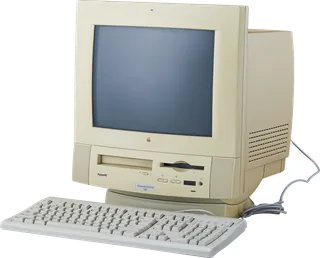
| Screen | None built in | 15″ |
| Resolution | – | 832 × 624 |
| Panel | – | CRT |
| Display type | – | Built-in 15-inch colour CRT; Apple's Performa 5300CD manual gives a 0.28 mm dot pitch. A CRT has selectable pixel modes, not a fixed native LCD resolution. |
| Display features | – | Maximum listed pixel mode 832 × 624 at 8-bit colour; 640 × 480 supports 16-bit colour |
| Connections | ||
| Ports | Headphone jack | Headphone jack |
| Back ports | Two Apple Desktop Bus ports, DB-15 video, DB-19 external floppy, DB-25 SCSI, printer and modem serial ports and stereo sound output; no built-in Ethernet | Apple Desktop Bus, external DB-25 SCSI, two serial connectors, microphone input and stereo sound output; optional DB-15 video-mirroring port |
| External displays | Built-in video supports Apple's 12-inch monochrome, 13-inch RGB and 15-inch portrait displays; other displays require a compatible NuBus card | – |
| Speakers | Internal speaker and stereo 8-bit sound output | Built-in stereo speakers and microphone |
| Design and power | ||
| Type | Compact | All-in-one |
| Weight | 6.2 kg | – |
| Width × depth × height | 302 × 366 × 140 mm | – |
| Operating system | macOS | macOS |
| Size and weight detail | Apple's 5.5 × 11.9 × 14.4 inch and 13.6 lb reference dimensions; metric fields are rounded conversions | Apple lists 17.5 × 15.1 × 16 inches and 47 lb for the 5200 form factor |
| Power supply | Maximum 159 W; 100–240 V AC, 50–60 Hz; 3.6 V lithium clock battery and keyboard soft power | Maximum 125 W; 110–240 V AC at 50–60 Hz; 4.5 V alkaline clock battery |
| In the box | Original System Software 6.0.4. Apple lists 20 September 1989 as introduction; Low End Mac reports September availability without a separate first-sale day | Original System Software 7.5.1. Apple lists 17 October 1995 as introduction; a separate first-sale date was not established. |
More comparisons
- Apple Mac mini (M4 or M4 Pro) vs Apple Macintosh IIci
- Apple Macintosh Performa 5300CD vs Apple Macintosh Performa 5400/160
- Apple Macintosh Performa 5300CD vs Apple Macintosh Performa 6360
- Apple Macintosh Performa 5300CD vs Apple Macintosh Performa 6400/180
- Apple Macintosh Performa 5300CD vs Apple Macintosh Performa 6400/200
- Apple Macintosh Performa 5300CD vs Apple Power Macintosh 5260/100
- Apple Macintosh Performa 5300CD vs Apple Power Macintosh 5260/120
- Apple Macintosh IIci vs Apple Macintosh Performa 5400/160
- Apple Macintosh IIci vs Apple Macintosh Performa 6360
- Apple Macintosh IIci vs Apple Macintosh Performa 6400/180
- Apple Macintosh IIci vs Apple Macintosh Performa 6400/200
- Apple Macintosh LC 580 vs Apple Macintosh Performa 5300CD
- Apple Macintosh Performa 5200CD vs Apple Macintosh Performa 5300CD
- Apple Macintosh Performa 5300CD vs Apple Macintosh Performa 6300CD
- Apple Macintosh Performa 5300CD vs Apple Power Macintosh 6200/75
- Apple Macintosh Performa 5300CD vs Apple Macintosh Quadra 610 DOS Compatible