Apple Macintosh IIfx vs Apple Macintosh Performa 5400/160
Better figure, where one is clearly better
| AppleMacintosh IIfx | AppleMacintosh Performa 5400/160 | |
|---|---|---|
| Overview | ||
| Released | 1990 | 1996 |
| Performance | ||
| Processor | 68030 40 MHz (Macintosh IIfx) | PowerPC 603e (160 MHz, Macintosh Performa 5400/160) |
| CPU cores | 1 | 1 |
| Memory | 4 MB | 16 MB (better) |
| Storage | 80 MB to 160 MB | 1.6 GB (better) |
| CPU | 40 MHz Motorola 68030 with integrated memory-management unit and 68882 floating-point coprocessor; 0.5 KB L1 and 32 KB L2 cache | 160 MHz PowerPC 603e with integrated floating-point and memory management units, 32 KB L1 cache and 64-bit memory bus. Optional High Performance Module adds 256 KB L2 cache; it is not standard. Current Apple support gives a 40 MHz data path clock. |
| GPU | No built-in video; a compatible NuBus video card is required for a display | 1 MB DRAM framebuffer independent of system RAM. Shared Service Source explicitly supports 640 × 480 at 60 or 67 Hz and 800 × 600 at 60 or 72 Hz with 16-bit colour; 832 × 624 at 75 Hz uses 8-bit colour and does not support video input. Current support additionally lists 1024 × 768, but the exact technical specification and shared service manual restrict the built-in CRT to 832 × 624; the higher database row is not adopted as the built-in display resolution. |
| Memory type | Eight 64-pin SIMM slots in banks of four, using 80 ns or faster memory; Apple lists 4–128 MB and a 512 KB ROM. The 64-pin modules are specific to the IIfx. | 16 MB standard, comprising 8 MB soldered RAM and one 8 MB DIMM. Two 168-pin 64-bit DIMM slots allow expansion to 136 MB with two 64 MB modules. Use 70 ns or faster fast-paged-mode DIMMs with 1K or 2K refresh. Modules can be installed individually. 4 MB ROM. |
| Storage type | One or two internal 1.44 MB floppy drives, with optional 40–160 MB SCSI hard drives; 4 MB floppy-only, 80 MB and 160 MB configurations are represented here | Exact 160 MHz maker specification, ordering description and Service Source configuration agree on a 1.6 GB IDE hard drive, Apple SuperDrive 1.44 MB floppy drive and internal 8× AppleCD CD-ROM drive. November 1996 Apple Facts gives a 1.2 GB drive for the broader 160/180 Performa family; that unqualified family figure is not transferred to the exact configuration. |
| Expansion slots | Six NuBus slots and one processor-direct slot | One PCI slot for a 6.88-inch, 15 W card; communications slot occupied by the supplied modem; optional video-input card and TV/FM tuner bay. Optional Apple External Video Connector enables mirroring; optional Apple Presentation System provides NTSC/PAL output. NuBus cards cannot be used in the PCI slot. |
| Display | ||
| Screen | None built in | 12.8″ |
| Resolution | – | 832 × 624 |
| Panel | – | CRT |
| Refresh rate | – | 75 Hz |
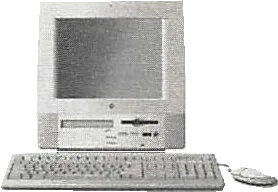
| Display type | – | 15-inch nominal RGB CRT with 12.8-inch viewable diagonal and 0.28 mm dot pitch. Noninterlaced flat square tube. Base tilts from −5° to +15° and swivels 360°. Resolution can be changed without restarting. |
| Connections | ||
| Ports | Headphone jack | 2 × headphone jack |
| Front ports | – | Headphone output and volume controls; built-in infrared remote capability. Remote-control inclusion varies with regional configuration. |
| Back ports | Two Apple Desktop Bus ports, DB-25 SCSI, printer and modem serial ports and sound output; no built-in video or Ethernet | One ADB port; two GeoPort-compatible RS-232/422 serial ports, including LocalTalk support; DB-25 SCSI; stereo sound input and rear stereo sound output. Optional DB-15 external-video connector, not a standard fitted port. Built-in 28.8 Kbit/s V.34 data/fax/voice modem supports MNP4, V.42, MNP5 and V.42bis; optional Ethernet replaces the communications-slot modem. No USB or FireWire. |
| External displays | A NuBus video card is required; resolution and colour depth depend on the fitted card | Optional external-video connector provides mirroring of the built-in screen. Connector kit, suitable cable and external display required; external video does not establish an independent second desktop. |
| Speakers | Internal speaker and sound output | Built-in stereo speakers and 16-bit stereo sound with SRS 3D surround enhancement. Shared service manual identifies separate front and rear stereo output jacks. Headline jack count excludes the sound-input port. |
| Microphones | – | Built-in microphone and stereo sound-input port; the input also supports an external Apple PlainTalk microphone. Shared manual explicitly excludes the earlier Apple Omni microphone from this input. |
| Keyboard and mouse | – | Exact maker ordering description includes keyboard, mouse and necessary cables; the CRT, microphone, speakers, modem, CD-ROM, floppy drive and hard drive are built into the computer. Optional TV/FM and video hardware varies by regional bundle. |
| Design and power | ||
| Type | Compact | All-in-one |
| Weight | 10.9 kg (better) | 21 kg |
| Width × depth × height | 475 × 366 × 140 mm | 383 × 406 × 445 mm |
| Operating system | macOS | macOS |
| Size and weight detail | Apple's 5.5 × 18.7 × 14.4 inch and 24 lb reference dimensions; metric fields are rounded conversions | Exact maker specification gives 445 × 383 × 406 mm (height × width × depth) and 21 kg. Its 17.5 × 15.1 × 16 inches and 47 lb are retained as maker-rounded equivalents. Apple Facts notes weight varies with installed internal devices; no shipping-package mass is used. |
| Power supply | Maximum 230 W; 100–240 V AC, 48–62 Hz; 3.6 V lithium clock battery and keyboard soft power | 220 W maximum continuous input, nominal 110–240 V AC at 50–60 Hz, single phase. Low-power sleep mode supported. Current maker table gives a 4.5 V alkaline clock battery; maximum input is not normal operating consumption. |
| In the box | Original System Software 6.0.5. Apple lists 19 March 1990 as introduction; a separate maker first-sale date was not established. | System 7.5.3 with System Enabler 410, Apple Guide, QuickTime, Macintosh PC Exchange and QuickDraw 3D. Exact October 1996 ordering description and November Apple Facts dealer catalogue establish retail offering in 1996; precise first-sale month or day remains unestablished. Apple's recorded introduction is 5 August 1996. Service Source identifies sale in Japan, Australia and Europe; not sold in the US. This 160 MHz configuration is distinct from the existing Power Macintosh 5400/120, 5400/180 and 5400/200. No unsupported official predecessor link assigned. |

More comparisons
- Apple Mac mini (M4 or M4 Pro) vs Apple Macintosh IIfx
- Apple Macintosh Performa 5400/160 vs Apple Power Macintosh 5260/100
- Apple Macintosh Performa 5400/160 vs Apple Power Macintosh 5260/120
- Apple Macintosh Performa 5400/160 vs Apple Power Macintosh 5400/120
- Apple Macintosh Performa 5400/160 vs Apple Macintosh Performa 6360
- Apple Macintosh Performa 5400/160 vs Apple Macintosh Performa 6400/180
- Apple Macintosh Performa 5400/160 vs Apple Macintosh Performa 6400/200
- Apple Macintosh LC 580 vs Apple Macintosh Performa 5400/160
- Apple Macintosh Performa 5200CD vs Apple Macintosh Performa 5400/160
- Apple Macintosh Performa 5300CD vs Apple Macintosh Performa 5400/160
- Apple Macintosh Performa 5400/160 vs Apple Macintosh Performa 6300CD
- Apple Macintosh Performa 5400/160 vs Apple Power Macintosh 6200/75
- Apple Macintosh Performa 5400/160 vs Apple Power Macintosh 5400/180
- Apple Macintosh Performa 5400/160 vs Apple Macintosh Quadra 610 DOS Compatible
- Apple Macintosh LC 550 vs Apple Macintosh Performa 5400/160
- Apple Macintosh LC 575 vs Apple Macintosh Performa 5400/160