Apple Macintosh LC 630 DOS Compatible vs Apple Power Macintosh 7100/66
Better figure, where one is clearly better
| AppleMacintosh LC 630 DOS Compatible | ApplePower Macintosh 7100/66 | |
|---|---|---|
| Overview | ||
| Released | – | 1994 |
| Performance | ||
| Processor | 68LC040 33 MHz (Macintosh LC 630 DOS Compatible) | PowerPC 601 66 MHz (Power Macintosh 7100/66) |
| CPU cores | 1 | 1 |
| Memory | 8 MB | 8 MB |
| Storage | 500 MB | 250 MB to 500 MB |
| CPU | Macintosh 68LC040, with 66/33 MHz clock notation: CPU execution and bus at 33 MHz, doubled internal clock at 66 MHz. AppleFacts April 1995 and the later Apple Memory Guide identify 68LC040; the LC 630 DOS technical booklet and shared Service Source instead print 68040 and the booklet claims an FPU. That disagreement is retained rather than assuming a standard Macintosh FPU. The separate DOS card contains a 66 MHz Cyrix Cx486DX2 or Intel 80486DX2, both explicitly supported by the exact developer note; this is not a pair of matching Macintosh CPUs | 66 MHz PowerPC 601 with integrated memory management and floating-point unit, 32 KB L1 cache and 64-bit data path at 33 MHz |
| GPU | Macintosh video uses a fixed 1 MB DRAM frame buffer with no video-memory expansion. DOS card has separate 512 KB DRAM and VGA controller. PC environment supports VGA 640 × 480 and SVGA 800 × 600 plus legacy EGA/CGA/MDA. Shared-display colour modes and resolution depend on environment and driver | Built-in HDI-45 video uses system DRAM; separate DB-15 video has 1 MB VRAM standard and supports 2 MB for up to 24-bit colour at 832 × 624 |
| Memory type | 8 MB Macintosh RAM: 4 MB soldered and a 4 MB SIMM, with two 72-pin 80 ns SIMM sockets. Maximum 52 MB on the main logic board using 32 MB and 16 MB SIMMs; the second socket accepts 1, 4 or 16 MB. PC card has its own 4 MB 72-pin SIMM, expandable to 32 MB, or can use a selected portion of Macintosh RAM; those independent pools are not added to the headline Macintosh RAM | 8 MB on the logic board plus four 72-pin SIMM slots installed in pairs; Apple supports 8–136 MB total |
| Storage type | Original AppleFacts configuration includes 500 MB IDE hard disk, manual-insert 1.4 MB SuperDrive and internal CD-ROM. Shared Service Source identifies double-speed AppleCD 300i Plus; the exact technical booklet also permits a configuration without the CD-ROM drive. Internal IDE and external SCSI are separate interfaces; no internal SCSI drive inferred | Internal 1.44 MB floppy drive, 250 or 500 MB SCSI hard drive and optional 2× CD-ROM drive |
| Expansion slots | DOS hardware occupies the Macintosh processor socket and LC-compatible PDS. Separate communications slot accepts optional modem or Ethernet; video-input slot and TV-tuner connector remain available. Original main DOS board, sound daughterboard and game-adaptor board are distinct components. Performa 630/640 DOS Compatible bundles use this family design; ordinary LC 630 and Quadra 630 are separate records | Three NuBus slots; processor-direct slot filled by the video card |
| Display | ||
| Screen | None built in | None built in |
| Connections | ||
| Ports | 2 × headphone jack | Ethernet |
| Front ports | Stereo headphone jack and volume push buttons; optional infrared remote control. Keyboard soft power supported | – |
| Back ports | One ADB, DB-15 monitor, DB-25 external SCSI, two mini-DIN-8 RS-232/RS-422 serial ports, sound input and rear sound output. DOS adaptor adds a DB-15 PC game-controller connector. Supports up to six external SCSI devices; no built-in Ethernet | Apple Desktop Bus, DB-15 and HDI-45 video, DB-25 SCSI, two GeoPort serial connections, AAUI-15 Ethernet, microphone input and speaker output |
| External displays | Separate compatible display needed. Macintosh output supports 640 × 480 at 16-bit colour and 800 × 600 at 8-bit; exact developer note describes a single shared monitor and environment switching. Original AppleFacts staged setup photographs include an external Apple monitor and keyboard/mouse; pictured accessories are not included in the computer dimensions or weight | DB-15 video supports up to 1152 × 870 pixels; available colour depth depends on VRAM |
| Speakers | Macintosh sound input is 8-bit mono; output 8-bit stereo or 16-bit stereo CD playback. Built-in speaker is muted by either sound-output jack. Included Sound Blaster 16-compatible PC sound card outputs through Macintosh speaker/headphones; the PC environment cannot send or receive serial MIDI according to the exact Apple Read Me | – |
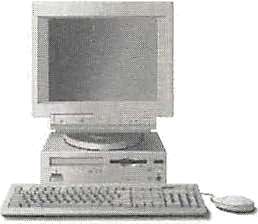
| Keyboard and mouse | ADB keyboard and mouse supported; original staged photographs show an external monitor, keyboard and mouse. Performa bundles may include these accessories and software according to their regional configuration; exact LC 630 DOS supplied bundle is not established by the recovered worldwide AppleFacts entry | – |
| Design and power | ||
| Type | Compact | Compact |
| Weight | 8.6 kg (better) | 11.34 kg |
| Width × depth × height | 320 × 419.5 × 109.5 mm | 330 × 419 × 152 mm |
| Operating system | macOS | macOS |
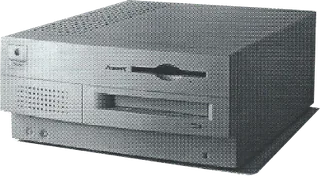
| Size and weight detail | Exact Apple technical booklet publishes 320 mm wide × 419.5 mm deep × 109.5 mm high. 8.6 kg with CD-ROM, 7.7 kg without; weight varies with installed options. Shared Service Source swaps width/depth labels, so the exact technical booklet dimensions are retained | Apple's 6 × 13 × 16.5 inch and 25 lb reference dimensions; metric fields are rounded conversions |
| Power supply | 100–240 V AC, 50–60 Hz; 45 W maximum excluding monitor, as published in exact technical booklet and shared Service Source. DOS card 10 W maximum is a subsystem rating, not added to the 45 W headline. Macintosh clock/calendar has a battery | Maximum 230 W; 100–240 V AC, 50–60 Hz; 3.6 V lithium clock battery |
| In the box | Mac OS and PC environment operate concurrently, with only the active environment receiving input. PC Setup switches environments, shares folders and configures drive-container files. Original AppleFacts identifies MS-DOS 6.2 and Windows 3.1 support. First actual retail sale has not been established from the recovered maker records, so released is omitted | Original System Software 7.1.2 with PowerPC Enabler. Apple lists 14 March 1994 as introduction; a separate maker first-sale date was not established. |
More comparisons
- Apple Power Mac G5 (Late 2005) vs Apple Power Macintosh 7100/66
- Apple Power Mac G5 (Early 2005) vs Apple Power Macintosh 7100/66
- Apple Power Mac G5 (Late 2004) vs Apple Power Macintosh 7100/66
- Apple Power Mac G5 (June 2004) vs Apple Power Macintosh 7100/66
- Apple Power Mac G5 (2003) vs Apple Power Macintosh 7100/66
- Apple Power Mac G4 (Mirrored Drive Doors 2003) vs Apple Power Macintosh 7100/66
- Apple Power Mac G4 (FW800) vs Apple Power Macintosh 7100/66
- Apple Power Mac G4 (Mirrored Drive Doors 2002) vs Apple Power Macintosh 7100/66
- Apple Macintosh LC 630 DOS Compatible vs Apple Power Macintosh 7200/100
- Apple Macintosh LC 630 DOS Compatible vs Apple Macintosh Performa 5400/160
- Apple Macintosh LC 630 DOS Compatible vs Apple Macintosh Performa 6360
- Apple Macintosh LC 630 DOS Compatible vs Apple Macintosh Performa 6400/180
- Apple Macintosh LC 630 DOS Compatible vs Apple Macintosh Performa 6400/200
- Apple Macintosh LC 630 DOS Compatible vs Apple Power Macintosh 6100/66
- Apple Macintosh LC 630 DOS Compatible vs Apple Power Macintosh 7100/80
- Apple Macintosh LC 630 DOS Compatible vs Apple Power Macintosh 7200/75