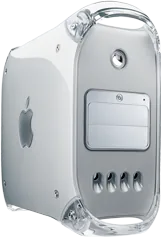
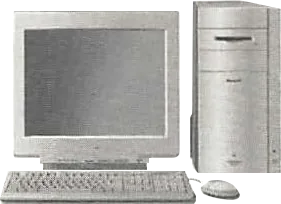
Apple Power Mac G4 (Mirrored Drive Doors 2003) vs Apple Power Macintosh 9500/200
Better figure, where one is clearly better
| ApplePower Mac G4 (Mirrored Drive Doors 2003) | ApplePower Macintosh 9500/200 | |
|---|---|---|
| Overview | ||
| Released | June 2003 | 1996 |
| Performance | ||
| Processor | PowerPC G4 1250 MHz (Power Mac MDD 2003) or 2 × PowerPC G4 1250 MHz (Power Mac MDD 2003) | PowerPC 604e 200 MHz (Power Macintosh 9600/200) |
| CPU cores | 1 or 2 | 1 |
| Graphics | ATI Radeon 9000 Pro (64 MB) | Apple Accelerated Graphics (2 MB VRAM) |
| Memory | 256 MB or 2 GB (better) | 16 MB or 32 MB |
| Storage | 80 GB (better) | 2 GB |
| CPU | Stock single 1.25 GHz PowerPC G4 with 256 KB L2 cache and 1 MB L3 cache. Contemporary Macworld reporting of Apple Store configurations also documents dual 1.25 GHz processors, each with 2 MB L3; this custom build is labelled in configuration details rather than presented as a second stock base. | One PowerPC 604e processor at 200 MHz on a removable processor card; 64 KB level-one cache, 50 MHz processor bus and 512 KB level-two cache on the logic board |
| GPU | Stock ATI Radeon 9000 Pro with 64 MB DDR in an AGP 4x slot. Macworld also documents a custom dual-processor build with NVIDIA GeForce4 Titanium; that build has other upgrades and is not treated as a freely interchangeable stock configuration. | Bundled Apple Accelerated Graphics PCI card with 2 MB VRAM, expandable to 4 MB. Exact maker tables give 24-bit colour through 832 × 624, 16-bit at 1024 × 768 and 1152 × 870, and 8-bit at 1280 × 1024 with standard memory; the 4 MB upgrade permits 24-bit through 1152 × 870 and 16-bit at 1280 × 1024. The catalogue appendix claims higher colour depths and is not transferred over the exact model tables |
| Memory type | Stock 256 MB PC2700 DDR333; four DIMM slots, maximum 2 GB. The single-processor configurations retain the stock drive and graphics at base and maximum memory. The documented dual-processor custom base has 256 MB. | 16 or 32 MB listed in Apple's service manual and worldwide catalogue; the Japanese configuration has 32 MB. Twelve 168-pin 64-bit 70 ns-or-faster DIMM sockets; matching modules in corresponding sockets enable interleaving. Exact support pages and catalogue give a 768 MB maximum; later shared Service Source gives 1536 MB using 128 MB DIMMs, while English support says those DIMMs were not tested. This expansion discrepancy remains explicit. 4 MB ROM |
| Storage type | Stock 80 GB 7200 rpm Ultra ATA/100 hard drive; up to four internal drives. Tray-loading Combo drive reads DVD at 8x and CD at 32x, writes CD-R at 16x and CD-RW at 10x. Macworld documents a dual 1.25 GHz custom base with 80 GB, Combo drive and Radeon 9000 Pro, and a separate upgraded build with 2 GB RAM, two 160 GB drives, SuperDrive and GeForce4 Titanium. The two-drive build is described here without flattening its drives into a single capacity. | 2 GB internal Fast SCSI hard disk, manual-inject Apple SuperDrive floppy and AppleCD 1200i 8× CD-ROM. Additional internal drive bay; external SCSI up to seven devices at 5 MB/s and internal SCSI up to 10 MB/s |
| Expansion slots | Four PCI slots and an occupied AGP 4x graphics slot. | Six PCI 2.0 expansion slots, five free with the supplied graphics card; no NuBus slots. Processor is on a removable card |
| Display | ||
| Screen | None built in | None built in |
| Connections | ||
| Ports | 2 × USB-A, Ethernet, headphone jack | Ethernet, headphone jack |
| Ethernet | 1 Gb/s (better) | 0.01 Gb/s |
| Front ports | Headphone connection and built-in mono speaker. | – |
| Back ports | Two USB 1.1, two FireWire 400, Gigabit Ethernet with Auto-MDIX, ADC and DVI display connectors, audio line-in/out and Apple Pro Speakers connection. The maker lists a V.92 modem. Optional original AirPort; the contemporary Apple-spokesman report confirms no AirPort Extreme, internal Bluetooth or FireWire 800. | One ADB connector, two GeoPort/LocalTalk-compatible serial connectors, external DB-25 SCSI, AAUI-15 and 10BASE-T Ethernet connectors, 16-bit stereo sound input and output. DB-15 display connector belongs to the supplied graphics card. Both Ethernet connectors share one interface; if both are connected the service manual says 10BASE-T takes priority |
| External displays | ADC and DVI connectors with included DVI-to-VGA adapter. Digital resolution up to 1920 × 1200; analogue up to 1600 × 1200. The exact sheet does not publish a simultaneous display count. | One external display through the supplied graphics card, up to 1280 × 1024 with compatible display and cables; colour depth depends on video memory |
| Speakers | Built-in mono speaker and connection for Apple Pro Speakers; no built-in microphone. | Built-in speaker and 16-bit stereo sound input/output |
| Microphones | – | Supports an external Apple PlainTalk microphone; shared service manual lists it as standard but the exact Japanese package list omits it, so regional inclusion remains qualified |
| Keyboard and mouse | Black Apple Pro input devices and DVI-to-VGA adapter. | Japanese configuration includes ADB Mouse II, power cable, KanjiTalk 7.5.3 CD-ROM, Apple Internet Starter Kit, manuals and warranty; keyboard and display sold separately. Shared service manual specifies system software 7.5.3 Revision 2 or later for the 200 MHz model |
| Design and power | ||
| Type | Tower | Tower |
| Weight | 19.1 kg | 12.7 kg (better) |
| Width × depth × height | 226 × 467 × 432 mm | 196 × 400 × 430 mm |
| Operating system | macOS | macOS |
| Size and weight detail | Maker dimensions: height 43.2 cm, width 22.6 cm, depth 46.7 cm; weight 19.1 kg. These published metric values differ slightly from the FW800 sheet. | Exact Japanese specifications and Service Source give 430 mm high, 196 mm wide and 400 mm deep, approximately 12.7 kg depending on installed devices. Worldwide catalogue rounds these to 429 × 196 × 401 mm and 12.6 kg |
| Power supply | – | 100–240 V AC automatically configured, single phase, 50–60 Hz. Service Source distinguishes 225 W maximum DC power-supply output from input consumption |
| Power use | – | 340 W maximum continuous AC input and 520 W peak input, excluding monitor; exact Japanese specifications and Service Source agree. English support's 225 W is the DC supply rating, not AC consumption |
| In the box | Mac OS X 10.2.4 and bootable Mac OS 9.2.2, install/restore DVD and Apple Hardware Test. First sale uses the 23 June 2003 Macworld report that these models were for sale at Apple’s online store; a 29 June report quotes an Apple spokesman confirming manufacture and sale. The first day is contemporary Apple Store reporting rather than a retained maker launch notice. | English support gives 5 August 1996 as introduction. Apple's November 1996 worldwide product catalogue lists this exact model as an offering, supporting release year 1996; actual first-sale month/day remains unconfirmed |
More comparisons
- Apple Mac Studio (M4 Max or M3 Ultra) vs Apple Power Mac G4 (Mirrored Drive Doors 2003)
- Apple Mac Pro (M2 Ultra) vs Apple Power Mac G4 (Mirrored Drive Doors 2003)
- Apple Mac Pro (2006) vs Apple Power Mac G4 (Mirrored Drive Doors 2003)
- Apple Power Mac G4 (Mirrored Drive Doors 2003) vs Apple Power Mac G5 (Late 2005)
- Apple Power Mac G5 (Late 2005) vs Apple Power Macintosh 9500/200
- Apple Power Mac G4 (Mirrored Drive Doors 2003) vs Apple Power Mac G5 (Early 2005)
- Apple Power Mac G5 (Early 2005) vs Apple Power Macintosh 9500/200
- Apple Mac mini (2005) vs Apple Power Mac G4 (Mirrored Drive Doors 2003)
- Apple Power Mac G4 (Mirrored Drive Doors 2003) vs Apple Power Mac G5 (Late 2004)
- Apple Power Mac G5 (Late 2004) vs Apple Power Macintosh 9500/200
- Apple Power Mac G4 (Mirrored Drive Doors 2003) vs Apple Power Mac G5 (June 2004)
- Apple Power Mac G5 (June 2004) vs Apple Power Macintosh 9500/200
- Apple Power Mac G4 (Mirrored Drive Doors 2003) vs Apple Power Mac G5 (2003)
- Apple Power Mac G5 (2003) vs Apple Power Macintosh 9500/200
- Apple Power Mac G4 (FW800) vs Apple Power Mac G4 (Mirrored Drive Doors 2003)
- Apple Power Mac G4 (Mirrored Drive Doors 2002) vs Apple Power Mac G4 (Mirrored Drive Doors 2003)