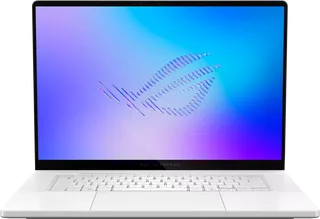
ASUS ROG Zephyrus G16 (2026) GU606 vs Lenovo Legion Pro 7i Gen 10
Better figure, where one is clearly better
| ASUSROG Zephyrus G16 (2026) GU606 | LenovoLegion Pro 7i Gen 10 | |
|---|---|---|
| Overview | ||
| Released | 2026 | March 2025 |
| Display | ||
| Screen size | 16″ | 16″ |
| Resolution | 2560 × 1600 | 2560 × 1600 |
| Panel | OLED | OLED |
| Refresh rate | 240 Hz | 240 Hz |
| Brightness | – | 500 nits |
| HDR peak brightness | 1,100 nits | 1,100 nits |
| Touchscreen | No | No |
| Display type | 2.5K ROG Nebula HDR OLED, 16:10, non-touch | WQXGA OLED, 16:10, non-touch |
| Colour range | 100% DCI-P3 | 100% DCI-P3 |
| Screen finish | Anti-reflection | Glossy |
| Display features | 0.2 ms response; VESA DisplayHDR True Black 1000; G-SYNC; Pantone Validated; MUX Switch + NVIDIA Advanced Optimus | 1,000,000:1 contrast; under 0.5 ms response; DisplayHDR True Black 1000; Dolby Vision; NVIDIA G-SYNC; Advanced Optimus; X-Rite factory colour calibration; TÜV Rheinland Low Blue Light, Flicker Free and High Gaming Performance; 92% active area ratio |
| Performance | ||
| Processor | Intel Core Ultra 9 386H | Intel Core Ultra 7 255HX, Intel Core Ultra 9 275HX or Intel Core Ultra 9 290HX Plus |
| CPU cores | 16 | 20 or 24 |
| CPU threads | 16 | 20 or 24 |
| Graphics | NVIDIA GeForce RTX 5060 Laptop GPU, NVIDIA GeForce RTX 5070 Laptop GPU, NVIDIA GeForce RTX 5070 Ti Laptop GPU, NVIDIA GeForce RTX 5080 Laptop GPU or NVIDIA GeForce RTX 5090 Laptop GPU | NVIDIA GeForce RTX 5070 Ti Laptop GPU, NVIDIA GeForce RTX 5080 Laptop GPU or NVIDIA GeForce RTX 5090 Laptop GPU |
| AI engine (NPU) | 50 TOPS (better) | 13 TOPS |
| Memory | 32 GB or 64 GB | 32 GB or 64 GB |
| Storage | 1 TB to 2 TB | 1 TB to 2 TB |
| CPU | Intel Core Ultra 9 386H with 4 P-cores, 8 E-cores and 4 LP E-cores (18 MB cache) | Core Ultra 7 255HX with 8 P-cores and 12 E-cores (30 MB cache); Core Ultra 9 275HX or 290HX Plus with 8 P-cores and 16 E-cores (36 MB cache) |
| GPU | NVIDIA GeForce RTX 5060 or 5070 (8 GB GDDR7, 115 W with Dynamic Boost), RTX 5070 Ti (12 GB, up to 140 W), RTX 5080 (16 GB, up to 160 W) or RTX 5090 Laptop GPU (24 GB, up to 160 W) in Manual mode | NVIDIA GeForce RTX 5070 Ti Laptop GPU (12 GB GDDR7, 140 W TGP, 992 AI TOPS), RTX 5080 Laptop GPU (16 GB GDDR7, 175 W, 1334 AI TOPS) or RTX 5090 Laptop GPU (24 GB GDDR7, 175 W, 1824 AI TOPS); DLSS 4 |
| AI engine | Copilot+ PC; Intel NPU up to 50 TOPS | Intel AI Boost NPU, up to 13 TOPS; Lenovo LA3 AI chip |
| Memory type | LPDDR5X-8533 on board, 32 or 64 GB, not upgradable | DDR5-6400 in two CSODIMM slots, dual-channel; up to 64 GB |
| Storage type | Two M.2 PCIe slots; one PCIe 4.0 NVMe SSD fitted (1 or 2 TB) | Two M.2 2280 slots (one PCIe 5.0 x4, one PCIe 4.0 x4); up to two drives |
| Cooling | Vapour chamber and Tri-Fan Technology (varies by model); 0dB Ambient Cooling in Silent mode | Legion Coldfront Vapor with hyperchamber; up to 250 W combined TDP (Lenovo) |
| Battery and size | ||
| Battery life (maker's claim) | – | Up to 6.25 hours |
| Battery capacity | 90 Wh | 99.9 Wh (better) |
| Weight | 1.85 kg (better) | 2.57 kg |
| Thickness | 16.4 mm (better) | 26.65 mm |
| Width × depth | 354 × 246 mm | 364.38 × 275.94 mm |
| Battery life detail | 90 Wh, 4-cell Li-ion | 99.9 Wh (or 80 Wh on some models); MobileMark 30 up to 2.85 hr and local 1080p video up to 6.25 hr (99.9 Wh); 2.9 hr and 4.25 hr (80 Wh) |
| Charger | 250 W adapter; USB-C charging at 45–100 W (USB PD) | 400 W slim-tip adapter; USB-C charging at 95–100 W (140 W with a Lenovo adapter) |
| Fast charging | – | Super Rapid Charge, 0–30% in 10 minutes, 0–70% in 30 minutes, 0–100% in 80 minutes |
| Materials | Aluminium chassis with 35-zone Slash Lighting | Aluminium top and bottom covers |
| Colours | – | Eclipse Black; Glacier White |
| Connections | ||
| Ports | Thunderbolt 4, USB-C, 2 × USB-A, HDMI, SD card slot, headphone jack | Thunderbolt 4, USB-C, 3 × USB-A, HDMI, Ethernet, headphone jack |
| Wi-Fi | Wi-Fi 7 | Wi-Fi 7 |
| Bluetooth | 6.0 | 5.4 |
| Webcam | FHD with IR | 5MP |
| Operating system | Windows | Windows |
| Port detail | Thunderbolt 4 (40 Gbps, DisplayPort and power delivery); USB 3.2 Gen 2 Type-C (DisplayPort 2.1, PD 3.0); 2 × USB 3.2 Gen 2 Type-A; HDMI 2.1 FRL; UHS-II SD card reader (312 MB/s); 3.5 mm combo jack; XG Mobile support | Thunderbolt 4 (40 Gbps, DisplayPort 2.1); USB-C 10 Gbps with USB PD 95–100 W and DisplayPort 2.1; USB-A 10 Gbps (Always On); 2 × USB-A 5 Gbps; HDMI 2.1 up to 8K 60 Hz; 2.5 Gbit Ethernet; 3.5 mm headphone/mic combo jack |
| External displays | – | Up to three external displays via HDMI and USB-C (four including the built-in); up to 8K 60 Hz |
| Keyboard | Backlit RGB keyboard with Copilot key | Legion TrueStrike, 6-row with numeric keypad, per-key RGB backlight, 1.6 mm key travel, Copilot key; 4 switchable keycaps included |
| Trackpad | – | Buttonless Mylar touchpad, 75 × 120 mm |
| Speakers | 4-speaker (dual-force woofer) system with 2 tweeters, Smart Amp, Dolby Atmos | 4 speakers (2 × 2 W woofers, 2 × 2 W tweeters), Nahimic Audio |
| Microphones | Array microphone with AI noise cancelling | Dual-microphone array |
| Biometrics | IR camera for Windows Hello | None |

More comparisons
- Acer Predator Helios Neo 16 AI (PHN16-I71) vs Lenovo Legion Pro 7i Gen 10
- Lenovo Legion 5a Gen 11 (15AGP11) vs Lenovo Legion Pro 7i Gen 10
- ASUS ROG Zephyrus G16 (2026) GU606 vs Razer Blade 16 (2026)
- Lenovo Legion Pro 7i Gen 10 vs Razer Blade 16 (2026)
- ASUS ROG Strix G16 (2026) G615 vs Lenovo Legion Pro 7i Gen 10
- ASUS ROG Strix G16 (2026) G615 vs ASUS ROG Zephyrus G16 (2026) GU606
- ASUS ROG Zephyrus G16 (2025, Intel) vs ASUS ROG Zephyrus G16 (2026) GU606
- ASUS ROG Zephyrus G14 (2026) GU405 vs ASUS ROG Zephyrus G16 (2026) GU606
- ASUS ROG Zephyrus G14 (2025) vs ASUS ROG Zephyrus G16 (2026) GU606
- Lenovo Legion 5i Gen 10 (15IAX10) vs Lenovo Legion Pro 7i Gen 10
- ASUS ROG Zephyrus G16 (2025, Intel) vs Lenovo Legion Pro 7i Gen 10
- Lenovo Legion Pro 7i Gen 10 vs MSI Vector 16 HX AI (A2XW)