Lenovo Legion Pro 7i Gen 10 vs MSI Vector 16 HX AI (A2XW)
Better figure, where one is clearly better
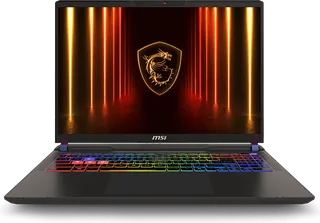
| LenovoLegion Pro 7i Gen 10 | MSIVector 16 HX AI (A2XW) | |
|---|---|---|
| Overview | ||
| Released | March 2025 | March 2025 |
| Display | ||
| Screen size | 16″ | 16″ |
| Resolution | 2560 × 1600 | 2560 × 1600 |
| Panel | OLED | IPS LCD |
| Refresh rate | 240 Hz | 240 Hz |
| Brightness | 500 nits | – |
| HDR peak brightness | 1,100 nits | – |
| Touchscreen | No | No |
| Display type | WQXGA OLED, 16:10, non-touch | QHD+ (2560 × 1600) IPS-level, 16:10 |
| Colour range | 100% DCI-P3 | 100% DCI-P3 (typical) |
| Screen finish | Glossy | – |
| Display features | 1,000,000:1 contrast; under 0.5 ms response; DisplayHDR True Black 1000; Dolby Vision; NVIDIA G-SYNC; Advanced Optimus; X-Rite factory colour calibration; TÜV Rheinland Low Blue Light, Flicker Free and High Gaming Performance; 92% active area ratio | – |
| Performance | ||
| Processor | Intel Core Ultra 7 255HX, Intel Core Ultra 9 275HX or Intel Core Ultra 9 290HX Plus | Intel Core Ultra 7 255HX or Intel Core Ultra 9 275HX |
| CPU cores | 20 or 24 | 20 or 24 |
| CPU threads | 20 or 24 | 20 or 24 |
| Graphics | NVIDIA GeForce RTX 5070 Ti Laptop GPU, NVIDIA GeForce RTX 5080 Laptop GPU or NVIDIA GeForce RTX 5090 Laptop GPU | NVIDIA GeForce RTX 5070 Ti Laptop GPU, NVIDIA GeForce RTX 5060 Laptop GPU or NVIDIA GeForce RTX 5080 Laptop GPU |
| AI engine (NPU) | 13 TOPS | 13 TOPS |
| Memory | 32 GB or 64 GB (better) | 16 GB or 32 GB |
| Storage | 1 TB to 2 TB (better) | 512 GB to 1 TB |
| CPU | Core Ultra 7 255HX with 8 P-cores and 12 E-cores (30 MB cache); Core Ultra 9 275HX or 290HX Plus with 8 P-cores and 16 E-cores (36 MB cache) | Core Ultra 7 255HX (20 cores, up to 5.2 GHz, 30 MB cache) or Core Ultra 9 275HX (24 cores, up to 5.4 GHz, 36 MB cache); Intel HM870 chipset |
| GPU | NVIDIA GeForce RTX 5070 Ti Laptop GPU (12 GB GDDR7, 140 W TGP, 992 AI TOPS), RTX 5080 Laptop GPU (16 GB GDDR7, 175 W, 1334 AI TOPS) or RTX 5090 Laptop GPU (24 GB GDDR7, 175 W, 1824 AI TOPS); DLSS 4 | NVIDIA GeForce RTX 5060 (8 GB GDDR7, 115 W), RTX 5070 Ti (12 GB GDDR7, 140 W) or RTX 5080 Laptop GPU (16 GB GDDR7, 175 W), including Dynamic Boost; up to 240 W combined CPU and GPU power with MSI OverBoost Ultra |
| AI engine | Intel AI Boost NPU, up to 13 TOPS; Lenovo LA3 AI chip | Intel AI Boost NPU |
| Memory type | DDR5-6400 in two CSODIMM slots, dual-channel; up to 64 GB | DDR5-5600 in two slots (supports up to DDR5-6400); up to 96 GB |
| Storage type | Two M.2 2280 slots (one PCIe 5.0 x4, one PCIe 4.0 x4); up to two drives | One M.2 NVMe PCIe Gen4 slot and one M.2 NVMe PCIe Gen5 slot |
| Cooling | Legion Coldfront Vapor with hyperchamber; up to 250 W combined TDP (Lenovo) | – |
| Battery and size | ||
| Battery life (maker's claim) | Up to 6.25 hours | – |
| Battery capacity | 99.9 Wh (better) | 90 Wh |
| Weight | 2.57 kg (better) | 2.7 kg |
| Thickness | 26.65 mm (better) | 28.55 mm |
| Width × depth | 364.38 × 275.94 mm | 357 × 284 mm |
| Battery life detail | 99.9 Wh (or 80 Wh on some models); MobileMark 30 up to 2.85 hr and local 1080p video up to 6.25 hr (99.9 Wh); 2.9 hr and 4.25 hr (80 Wh) | 90 Wh, 4-cell |
| Charger | 400 W slim-tip adapter; USB-C charging at 95–100 W (140 W with a Lenovo adapter) | 330 W adapter (280 W on the RTX 5060 model); USB Power Delivery 3.1 over Thunderbolt 5 |
| Fast charging | Super Rapid Charge, 0–30% in 10 minutes, 0–70% in 30 minutes, 0–100% in 80 minutes | – |
| Materials | Aluminium top and bottom covers | – |
| Colours | Eclipse Black; Glacier White | Cosmos Gray |
| Connections | ||
| Ports | Thunderbolt 4, USB-C, 3 × USB-A, HDMI, Ethernet, headphone jack | 2 × Thunderbolt 5, 2 × USB-A, HDMI, SD card slot, Ethernet, headphone jack |
| Wi-Fi | Wi-Fi 7 | Wi-Fi 7 or Wi-Fi 6E |
| Bluetooth | 5.4 | 5.4 or 5.3 |
| Webcam | 5MP | 1080p with IR |
| Operating system | Windows | Windows |
| Port detail | Thunderbolt 4 (40 Gbps, DisplayPort 2.1); USB-C 10 Gbps with USB PD 95–100 W and DisplayPort 2.1; USB-A 10 Gbps (Always On); 2 × USB-A 5 Gbps; HDMI 2.1 up to 8K 60 Hz; 2.5 Gbit Ethernet; 3.5 mm headphone/mic combo jack | 2 × Thunderbolt 5 with DisplayPort and Power Delivery 3.1; 2 × USB 3.2 Gen 2 Type-A; HDMI 2.1 (8K 60 Hz / 4K 120 Hz); SD Express reader; 2.5 Gb Ethernet; 3.5 mm combo jack |
| External displays | Up to three external displays via HDMI and USB-C (four including the built-in); up to 8K 60 Hz | – |
| Keyboard | Legion TrueStrike, 6-row with numeric keypad, per-key RGB backlight, 1.6 mm key travel, Copilot key; 4 switchable keycaps included | 24-zone RGB gaming keyboard with Copilot key |
| Trackpad | Buttonless Mylar touchpad, 75 × 120 mm | – |
| Speakers | 4 speakers (2 × 2 W woofers, 2 × 2 W tweeters), Nahimic Audio | 2 × 2 W, Nahimic 3, Hi-Res Audio ready |
| Microphones | Dual-microphone array | Array microphone |
| Biometrics | None | IR webcam with shutter |

More comparisons
- Acer Predator Helios Neo 16 AI (PHN16-I71) vs MSI Vector 16 HX AI (A2XW)
- Acer Predator Helios Neo 16 AI (PHN16-I71) vs Lenovo Legion Pro 7i Gen 10
- Lenovo Legion 5a Gen 11 (15AGP11) vs Lenovo Legion Pro 7i Gen 10
- Lenovo Legion Pro 7i Gen 10 vs Razer Blade 16 (2026)
- ASUS ROG Strix G16 (2026) G615 vs MSI Vector 16 HX AI (A2XW)
- ASUS ROG Strix G16 (2026) G615 vs Lenovo Legion Pro 7i Gen 10
- ASUS ROG Zephyrus G16 (2026) GU606 vs Lenovo Legion Pro 7i Gen 10
- Lenovo Legion 5i Gen 10 (15IAX10) vs Lenovo Legion Pro 7i Gen 10
- ASUS ROG Zephyrus G16 (2025, Intel) vs Lenovo Legion Pro 7i Gen 10
- Dell Alienware 16 Area-51 AA16250 vs MSI Vector 16 HX AI (A2XW)