Audi Q7 vs Toyota Hilux
Better figure, where one is clearly better
| AudiQ7 | ToyotaHilux | |
|---|---|---|
| Overview | ||
| Released | June 2026 | June 2026 |
| Performance | ||
| Powertrain | Mild hybrid | Mild hybrid, Electric |
| Power | 295 bhp (better) | 193–201 bhp |
| 0–62 mph | 6.2 s (better) | 11.9 s |
| Top speed | 146 mph (better) | 86–109 mph |
| Engine or motors | 3.0-litre V6 TDI with MHEV plus (299 PS, up to 18 kW extra from a powertrain generator); bhp converted from Audi's PS figure; Audi also offers a 245 PS version in some markets | Diesel 48V: 2.8-litre four-cylinder turbodiesel (1GD-FTV), 201 bhp (204 DIN hp, 150 kW) at 3,000–3,400 rpm, with an 8.5 kW motor-generator and lithium-ion 48V battery. Electric: front eAxle 110 bhp (82.2 kW) and rear eAxle 173 bhp (129.3 kW), 193 bhp (196 DIN hp, 144 kW) combined, 0–62 mph in 9.03 s (press specifications); lithium-ion battery 59.2 kWh gross, 54 kWh net, 80 cells |
| Torque | 630 Nm | Diesel: 500 Nm at 1,600–2,800 rpm (motor-generator 65 Nm). Electric: 205.5 Nm front, 268.6 Nm rear |
| Gearbox | 8-speed tiptronic | 6-speed automatic (Diesel 48V); single-speed reduction gear (Electric) |
| Drive | quattro four-wheel drive | Four-wheel drive (Diesel 48V); permanent all-wheel drive with Multi-Terrain Select and Downhill Assist Control (Electric) |
| Range and charging | ||
| Zero-emission range (WLTP) | – | 159 miles |
| Battery | – | 54 kWh |
| Fastest charging | – | 125 kW |
| Economy (WLTP) | 38.2 mpg (better) | 29.1 mpg |
| Range detail | – | Electric, WLTP: 159 miles combined, 236 miles city |
| Charging | – | 125 kW DC, 10–80% in about 30 minutes; 10 kW AC (Toyota UK site) |
| Efficiency | WLTP combined: 35.7–38.2 mpg, depending on trim | Diesel 48V WLTP combined: 27.6–29.1 mpg, 80-litre fuel tank. Electric: 39.1 kWh/100 miles |
| CO2 emissions | 194–208 g/km, WLTP combined | 254–258 g/km (Diesel 48V, WLTP combined); 0 g/km at the tailpipe (Electric) |
| Practicality | ||
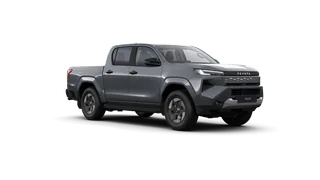
| Body | SUV | Pickup |
| Seats | 7 (better) | 5 |
| Boot | 722 litres | – |
| Length | 5,065 mm | 5,320 mm |
| Width | 2,010 mm | 1,855 mm |
| Weight | From 2,425 kg | From 2,175 kg |
| Boot | Seven-seater: 722 litres behind the second row, 1,980 litres behind the front seats (Audi UK also lists 581 litres); five-seater (other markets): 806 litres, 2,075 litres with the rear seats folded | – |
| Towing | 3,500 kg braked | 3,500 kg braked (Diesel 48V), 1,600 kg braked (Electric); 750 kg unbraked |
| Size | 5,065 mm long, 2,010 mm wide, 1,820 mm high (Audi Germany configurator); Audi UK lists 5,056 mm long and 2,205 mm wide; weight is Audi UK's unladen figure | 5,320 mm long, 1,855 mm wide, 1,865 mm high; 3,085 mm wheelbase; ground clearance 309 mm (Diesel 48V), 212 mm (Electric); approach 29°, departure 24°; 700 mm wading depth; load deck 1,555 mm long, 1,540 mm wide; kerb weight 2,175–2,375 kg (Diesel 48V), 2,420–2,625 kg (Electric) |
| Tech and safety | ||
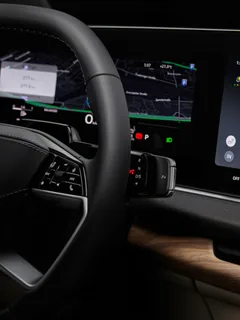
| Infotainment | – | 12.3-inch Toyota Smart Connect multimedia with Apple CarPlay and Android Auto and wireless charger from Icon; 12-inch digital driver's display from Invincible; JBL audio on Invincible X |
| Driver assistance | Adaptive cruise assist, emergency assist, reversing assist, park assist plus and surround-view cameras available | Toyota Safety Sense on all grades; Multi-Terrain Monitor on Invincible X |