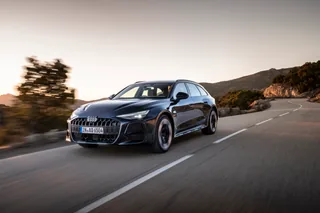
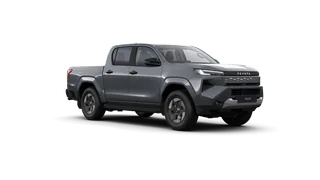
Audi A6 allroad vs Toyota Hilux
Better figure, where one is clearly better
| AudiA6 allroad | ToyotaHilux | |
|---|---|---|
| Overview | ||
| Released | June 2026 | June 2026 |
| Performance | ||
| Powertrain | Mild hybrid, Plug-in hybrid | Mild hybrid, Electric |
| Power | 295–362 bhp (better) | 193–201 bhp |
| 0–62 mph | 5.4–5.5 s (better) | 11.9 s |
| Top speed | 155 mph (better) | 86–109 mph |
| Engine or motors | 3.0-litre V6 TDI with MHEV plus and an electric compressor (299 PS, up to 18 kW extra), 2.0 TFSI e-hybrid plug-in hybrid (367 PS system output, 105 kW electric motor); bhp converted from Audi's PS figures | Diesel 48V: 2.8-litre four-cylinder turbodiesel (1GD-FTV), 201 bhp (204 DIN hp, 150 kW) at 3,000–3,400 rpm, with an 8.5 kW motor-generator and lithium-ion 48V battery. Electric: front eAxle 110 bhp (82.2 kW) and rear eAxle 173 bhp (129.3 kW), 193 bhp (196 DIN hp, 144 kW) combined, 0–62 mph in 9.03 s (press specifications); lithium-ion battery 59.2 kWh gross, 54 kWh net, 80 cells |
| Torque | 580 Nm (V6 TDI), 500 Nm system (e-hybrid) | Diesel: 500 Nm at 1,600–2,800 rpm (motor-generator 65 Nm). Electric: 205.5 Nm front, 268.6 Nm rear |
| Gearbox | 7-speed S tronic | 6-speed automatic (Diesel 48V); single-speed reduction gear (Electric) |
| Drive | quattro four-wheel drive | Four-wheel drive (Diesel 48V); permanent all-wheel drive with Multi-Terrain Select and Downhill Assist Control (Electric) |
| Range and charging | ||
| Zero-emission range (WLTP) | 63 miles | 159 miles (better) |
| Battery | 20.7 kWh | 54 kWh (better) |
| Fastest charging | – | 125 kW |
| Economy (WLTP) | 48.1–119.7 mpg (better) | 29.1 mpg |
| Range detail | e-hybrid WLTP electric range: 57–63 miles combined, 63–70 miles city, depending on trim | Electric, WLTP: 159 miles combined, 236 miles city |
| Charging | e-hybrid has a 20.7 kWh net (25.9 kWh gross) battery and charges on AC at up to 11 kW (150 minutes to full) | 125 kW DC, 10–80% in about 30 minutes; 10 kW AC (Toyota UK site) |
| Efficiency | WLTP combined: 44.6–48.1 mpg (V6 TDI), 101.1–119.7 mpg weighted (e-hybrid); depends on trim | Diesel 48V WLTP combined: 27.6–29.1 mpg, 80-litre fuel tank. Electric: 39.1 kWh/100 miles |
| CO2 emissions | 154–166 g/km (V6 TDI), 54–64 g/km (e-hybrid), WLTP combined | 254–258 g/km (Diesel 48V, WLTP combined); 0 g/km at the tailpipe (Electric) |
| Practicality | ||
| Body | Estate | Pickup |
| Seats | 5 | 5 |
| Boot | 466 litres | – |
| Length | 5,016 mm | 5,320 mm |
| Width | 1,986 mm | 1,855 mm |
| Weight | – | From 2,175 kg |
| Boot | 466 litres, 1,497 litres with the rear seats folded; 404/1,423 litres (e-hybrid) | – |
| Towing | 2,500 kg braked (V6 TDI), 2,000 kg (e-hybrid) | 3,500 kg braked (Diesel 48V), 1,600 kg braked (Electric); 750 kg unbraked |
| Size | 5,016 mm long, 1,986 mm wide (2,099 mm with mirrors), 1,479–1,508 mm high; the e-hybrid weighs 2,280 kg unladen (Audi UK), and Audi UK doesn't yet list the V6 TDI's weight, top speed or 0–62 mph time, which come from Audi's press release (0–100 km/h in 5.4 s, 250 km/h) | 5,320 mm long, 1,855 mm wide, 1,865 mm high; 3,085 mm wheelbase; ground clearance 309 mm (Diesel 48V), 212 mm (Electric); approach 29°, departure 24°; 700 mm wading depth; load deck 1,555 mm long, 1,540 mm wide; kerb weight 2,175–2,375 kg (Diesel 48V), 2,420–2,625 kg (Electric) |
| Tech and safety | ||
| Infotainment | – | 12.3-inch Toyota Smart Connect multimedia with Apple CarPlay and Android Auto and wireless charger from Icon; 12-inch digital driver's display from Invincible; JBL audio on Invincible X |
| Driver assistance | Adaptive air suspension with 55 mm of adjustment, offroad and offroad+ modes and a lift function; all-wheel steering | Toyota Safety Sense on all grades; Multi-Terrain Monitor on Invincible X |