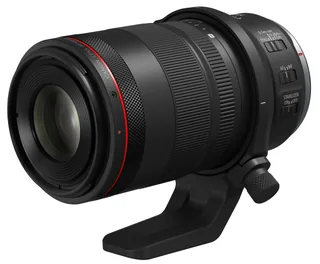
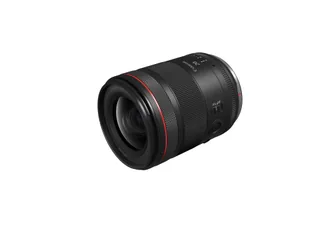
Canon RF 100mm F2.8 L Macro IS USM vs Canon RF 20mm F1.4 L VCM
Better figure, where one is clearly better
| CanonRF 100mm F2.8 L Macro IS USM | CanonRF 20mm F1.4 L VCM | |
|---|---|---|
| Overview | ||
| Released | July 2021 | April 2025 |
| Optics | ||
| Lens type | Prime | Prime |
| Focal length | 100 mm | 20 mm |
| Maximum aperture | f/2.8 | f/1.4 |
| Minimum aperture | f/32 | f/16 |
| Macro lens | Yes | – |
| Optical construction | Seventeen elements in thirteen groups | Fifteen elements in eleven groups |
| Special elements | – | One Super UD, two UD, one BR and two glass-moulded aspherical elements; ASC, SWC and Super Spectra coatings; front fluorine coating |
| Coatings | Super Spectra coating and front-element fluorine coating | – |
| Aperture detail | Maximum f/2.8 at infinity; effective f-number becomes f/6.6 at 1.4× magnification according to the manual | – |
| Diaphragm | Nine aperture blades | Eleven blades with circular aperture |
| Mount and compatibility | ||
| Mounts | Canon RF | Canon RF |
| Image circle | Full frame | Full frame |
| Compatibility | Canon RF mount for full-frame and APS-C EOS R cameras; EF12 II and EF25 II extension tubes not compatible | Canon RF mount for full-frame and APS-C EOS R cameras; RF extenders not compatible. Iris ring provides movie aperture control; Canon lists EOS R, RP, Ra, R3, R5, R6, R6 Mark II, R7, R8, R10, R50, R100 and R5 C as unable to set still-photo aperture with this ring even with their latest firmware |
| Teleconverter support | Canon extenders not compatible | – |
| Focus and stabilisation | ||
| Autofocus | Yes | Yes |
| Minimum focus distance | 0.26 m | 0.2 m |
| Maximum magnification | 1.4× | 0.19× |
| Optical stabilisation | Yes | No |
| Autofocus detail | Dual Nano USM; electronic manual focusing with full-time manual override in One Shot AF when enabled in camera settings | Rear focusing system driven by a VCM motor |
| Focus distance detail | Minimum focus 0.26 m from the imaging plane; 8.6 cm working distance from the lens front; limiter settings full, 0.5 m to infinity or 0.26–0.5 m | Minimum focus 0.2 m |
| Magnification detail | Maximum 1.4×; approximately 25 × 17 mm field of view at minimum focus | Maximum 0.19× |
| Stabilisation detail | Hybrid IS rated up to 5 stops with EOS R; 2 stops at 1.0× under Canon test standards; up to 8 stops coordinated with EOS R5 IBIS under CIPA yaw/pitch testing | No optical stabiliser; Canon rates EOS R1 in-body stabilisation at 8 stops centrally and 5 stops in the corners under CIPA-2024 testing |
| Design | ||
| Dust and moisture resistant | Yes | Yes |
| Filter diameter | 67 mm | 67 mm |
| Maximum diameter | 81.5 mm | 76.5 mm |
| Length | 148 mm | 99.3 mm |
| Weight | 685 g | 519 g (better) |
| Controls | Manual-focus and customisable lens control rings; AF/MF, stabiliser and focus limiter switches; Spherical Aberration control ring with central-position lock. SA adjustment changes bokeh, soft focus, angle of view and exposure; its effect disappears at 0.26 m | Electronic manual-focus, customisable control and smooth-action iris rings; iris Auto-position lock; customisable lens function button; AF/MF switch |
| Filter detail | – | 67 mm front thread and rear filter holder; Canon specifies a single rear filter no thicker than 0.2 mm and recommends removing the holder when unused to avoid possible ghosting |
| Weather resistance | Dust and moisture resistant construction; front fluorine coating | Dust and moisture resistant construction with mount rubber seal |
| Dimensions detail | Approximately 81.5 mm maximum diameter × 148 mm length | Approximately 76.5 mm maximum diameter × 99.3 mm length |
| Weight detail | Approximately 685 g lens only, excluding caps and optional tripod mount | Approximately 519 g lens |
| Tripod mount | Tripod mount ring E (B) with dedicated adapter sold separately | – |
| Lens hood | ET-73C hood included | EW-73H hood included |
| In the box | Lens, E-67 II front cap, RF dust cap, ET-73C hood, LP1222 lens case and user manual kit (Canon UK store) | Lens, E-67 II front cap, RF dust cap, EW-73H hood, LP1219 case, rear filter holder and user manual |
| Release detail | July 2021 marketed month in Canon Camera Museum | April 2025 marketed month in Canon Camera Museum |
More comparisons
- Canon RF 20-50mm F4L IS USM PZ vs Canon RF 20mm F1.4 L VCM
- Canon RF 100mm F2.8 L Macro IS USM vs Canon RF 20-50mm F4L IS USM PZ
- Canon RF 14mm F1.4L VCM vs Canon RF 20mm F1.4 L VCM
- Canon RF 20mm F1.4 L VCM vs Canon RF 7-14mm F2.8-3.5L FISHEYE STM
- Canon RF 100mm F2.8 L Macro IS USM vs Canon RF 14mm F1.4L VCM
- Canon RF 100mm F2.8 L Macro IS USM vs Canon RF 7-14mm F2.8-3.5L FISHEYE STM
- Canon RF 20mm F1.4 L VCM vs Canon RF 45mm F1.2 STM
- Canon RF 100mm F2.8 L Macro IS USM vs Canon RF 45mm F1.2 STM
- Canon RF 20mm F1.4 L VCM vs Canon RF 85mm F1.4L VCM
- Canon RF 100mm F2.8 L Macro IS USM vs Canon RF 85mm F1.4L VCM
- Canon RF 20mm F1.4 L VCM vs Canon RF 75–300mm F4–5.6
- Canon RF 100mm F2.8 L Macro IS USM vs Canon RF 75–300mm F4–5.6
- Canon RF 16mm F2.8 STM vs Canon RF 20mm F1.4 L VCM
- Canon RF 20mm F1.4 L VCM vs Canon RF 24mm F1.4 L VCM
- Canon RF 20mm F1.4 L VCM vs Canon RF 24mm F1.8 MACRO IS STM
- Canon RF 20mm F1.4 L VCM vs Canon RF-S 14–30mm F4–6.3 IS STM PZ