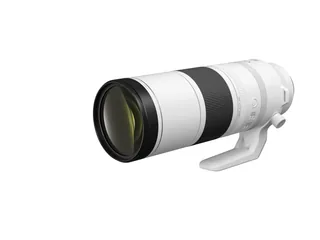
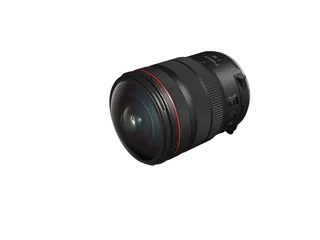
Canon RF 200–800mm F6.3–9 IS USM vs Canon RF 7-14mm F2.8-3.5L FISHEYE STM
Better figure, where one is clearly better
| CanonRF 200–800mm F6.3–9 IS USM | CanonRF 7-14mm F2.8-3.5L FISHEYE STM | |
|---|---|---|
| Overview | ||
| Released | December 2023 | February 2026 |
| Optics | ||
| Lens type | Zoom | Zoom |
| Focal length | 200–800 mm | 7–14 mm |
| Maximum aperture | f/6.3–9 | f/2.8–3.5 |
| Minimum aperture | f/32–54 | f/22–29 |
| Optical construction | Seventeen elements in eleven groups | 16 elements in 11 groups |
| Special elements | Three UD elements | Five UD and two replica aspherical elements |
| Coatings | Super Spectra coating; no fluorine coating | Three ASC coatings and Super Spectra; fluorine coating on the front element |
| Aperture detail | Maximum f/6.3 at 200 mm and f/9 at 800 mm; minimum f/32–54 in the current UK specification. Canon Camera Museum instead lists f/51 at 800 mm | f/2.8–22 at 7 mm and f/3.5–29 at 14 mm; maker minimum-aperture figures use 1/3-stop display |
| Diaphragm | Nine aperture blades | Nine aperture blades |
| Angle of view | 12°–3°05′ diagonal, 10°–2°35′ horizontal and 7°–1°40′ vertical | Horizontal 190°–149°45′, vertical 190°–99°50′ and diagonal 190°–180° on full frame |
| Projection | – | Circular 190° fisheye at 7 mm and frame-filling diagonal 180° fisheye at 14 mm on full frame; circular mode uses equidistant projection; neither is rectilinear |
| Mount and compatibility | ||
| Mounts | Canon RF | Canon RF |
| Image circle | Full frame | Full frame |
| Compatibility | Canon RF mount for full-frame and APS-C EOS R cameras | Canon EOS R full-frame or APS-C cameras; APS-C cannot show the complete circular image and uses approximately 8.7 mm for diagonal coverage (Digital Camera World) |
| Teleconverter support | RF 1.4× gives 280–1120 mm at f/9–13, maximum 0.37×; RF 2× gives 400–1600 mm at f/13–18, maximum 0.54×. Autofocus and stabilisation supported throughout the zoom range; autofocus coverage depends on camera and extender | Canon RF extenders not compatible |
| Focus and stabilisation | ||
| Autofocus | Yes | Yes |
| Minimum focus distance | 0.8 m | 0.15 m (autofocus) |
| Maximum magnification | 0.25× | 0.35× (autofocus) |
| Optical stabilisation | Yes | No |
| Autofocus detail | Nano USM autofocus for fast stills focusing and smooth video transitions | Leadscrew-type STM focusing with position sensors; full-time manual focus; maker rear-focusing design maintains length during focus |
| Focus distance detail | Minimum focus 0.8 m at 200 mm and 3.3 m at 800 mm | Maker specifies 0.15 m throughout the 7–14 mm range in autofocus |
| Magnification detail | Maximum 0.25× at 200 mm and 0.2× at 800 mm | Maximum 0.35× at 14 mm in autofocus, measured at the image centre; do not assume identical magnification across a fisheye image |
| Stabilisation detail | Up to 5.5 stops optical stabilisation with EOS R at 800 mm, or 5.5 stops coordinated stabilisation with EOS R3 at 800 mm; CIPA yaw and pitch testing. Coordinated correction has greater effect towards the wide end | No lens optical IS; maker separately lists compatible camera IBIS at seven stops at the centre/14 mm under CIPA-2024 conditions |
| Video features | – | Circular fisheye material can be converted to monoscopic 2D 180° VR with EOS VR Utility on supported cameras; not a stereoscopic dual-fisheye lens; conversion compatibility depends on body and recording format |
| Design | ||
| Dust and moisture resistant | Yes | Yes |
| Filter diameter | 95 mm | – |
| Maximum diameter | 102.3 mm | 76.5 mm |
| Length | 314.1 mm | 109.4 mm |
| Weight | 2,060 g | 476 g (better) |
| Controls | Combined focus/control ring, customisable lens function buttons, AF/MF and stabiliser switches, and smooth/tight zoom torque adjustment | Zoom, focus and customisable control rings; AF/MF switch, function button and zoom lock/limit control (Digital Camera World) |
| Zoom design | Barrel extends when zooming towards 800 mm | Internal zoom and focus retain the same physical lens length (Amateur Photographer; Digital Camera World) |
| Filter detail | – | No front screw-in filter thread; rear Drop-in Filter A system; supplied clear filter and optional Drop-in Variable ND Filter A or Drop-in Circular Polarizing Filter A |
| Weather resistance | Dust and moisture resistant construction; white exterior helps limit heating in sunlight | Dust and moisture resistant with mount gasket; Canon states attachment to a camera is needed and protection does not prevent all dust or water ingress; no waterproof/IP claim |
| Dimensions detail | 102.3 mm maximum diameter × 314.1 mm length with barrel retracted | Approximately 76.5 mm maximum diameter × 109.4 mm length, excluding detachable hood |
| Weight detail | Approximately 2060 g current production; products manufactured before July 2026 weigh 2050 g. Canon's Japanese notice attributes the change to revised component specifications | Approximately 476 g lens |
| Tripod mount | Attached rotating tripod collar; not removable or Arca-Swiss compatible (Amateur Photographer) | – |
| Lens hood | ET-101 hood included | Detachable EW-76; remove for circular fisheye shooting to avoid the hood entering the image (Amateur Photographer; Digital Camera World) |
| In the box | Lens, E-95 cap, ET-101 hood, RF dust cap, Lens Strap 40 and user manual | Drop-in clear filter included |
| Release detail | December 2023 release confirmed retrospectively by Canon's February 2024 global announcement; Japan's launch notice states early December and the US announcement expected December. Canon Camera Museum instead labels November 2023 as marketed | Canon Japan specifies first sale on 20 February 2026; US announcement expected availability by the end of February, rather than the same exact regional day |
More comparisons
- Canon RF 20-50mm F4L IS USM PZ vs Canon RF 7-14mm F2.8-3.5L FISHEYE STM
- Canon RF 20-50mm F4L IS USM PZ vs Canon RF 200–800mm F6.3–9 IS USM
- Canon RF 14mm F1.4L VCM vs Canon RF 7-14mm F2.8-3.5L FISHEYE STM
- Canon RF 10–20mm F4 L IS STM vs Canon RF 7-14mm F2.8-3.5L FISHEYE STM
- Canon RF 16–28mm F2.8 IS STM vs Canon RF 7-14mm F2.8-3.5L FISHEYE STM
- Canon RF 45mm F1.2 STM vs Canon RF 7-14mm F2.8-3.5L FISHEYE STM
- Canon RF 7-14mm F2.8-3.5L FISHEYE STM vs Canon RF 85mm F1.4L VCM
- Canon RF 7-14mm F2.8-3.5L FISHEYE STM vs Canon RF 75–300mm F4–5.6
- Canon RF 20mm F1.4 L VCM vs Canon RF 7-14mm F2.8-3.5L FISHEYE STM
- Canon RF 7-14mm F2.8-3.5L FISHEYE STM vs Canon RF-S 14–30mm F4–6.3 IS STM PZ
- Canon RF 24mm F1.4 L VCM vs Canon RF 7-14mm F2.8-3.5L FISHEYE STM
- Canon RF 50mm F1.4 L VCM vs Canon RF 7-14mm F2.8-3.5L FISHEYE STM
- Canon RF 7-14mm F2.8-3.5L FISHEYE STM vs Canon RF 70-200mm F2.8L IS USM Z
- Canon RF 28–70mm F2.8 IS STM vs Canon RF 7-14mm F2.8-3.5L FISHEYE STM
- Canon RF 35mm F1.4 L VCM vs Canon RF 7-14mm F2.8-3.5L FISHEYE STM
- Canon RF 14mm F1.4L VCM vs Canon RF 200–800mm F6.3–9 IS USM