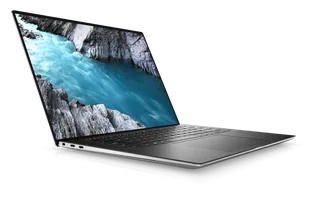
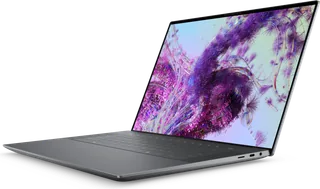
Dell XPS 15 9500 vs Dell XPS 16 9640
Better figure, where one is clearly better
| DellXPS 15 9500 | DellXPS 16 9640 | |
|---|---|---|
| Overview | ||
| Released | May 2020 | February 2024 |
| Display | ||
| Screen size | 15.6″ | 16.3″ |
| Resolution | 1920 × 1200 or 3840 × 2400 | 1920 × 1200 or 3840 × 2400 |
| Panel | – | IPS LCD or OLED |
| Refresh rate | 60 Hz | 120 Hz or 90 Hz (better) |
| Brightness | 500 nits | 500 nits or 400 nits |
| Touchscreen | No or Yes | No or Yes |
| Display type | 15.6-inch WVA LCD; FHD+ 1920 × 1200 non-touch or UHD+ 3840 × 2400 touchscreen, both 60 Hz and 500 nits | FHD+ (1920 × 1200) WLED, non-touch, anti-glare, 30–120 Hz; or UHD+ (3840 × 2400) OLED touchscreen with passive pen support, anti-reflective and anti-smudge, 48–90 Hz |
| Pixel density | 145 ppi (FHD+); 290 ppi (UHD+) | 139 ppi (LCD); 278.1 ppi (OLED) |
| Colour range | 100% sRGB (FHD+); 100% Adobe RGB (UHD+) | 100% sRGB (LCD); 100% DCI-P3 (OLED) |
| Screen finish | Anti-glare (FHD+); anti-reflective (UHD+) | Anti-glare (LCD); anti-reflective, anti-smudge (OLED) |
| Display features | Minimum contrast 1650:1 (FHD+) or 1600:1 (UHD+); Dell does not identify the panel technology beyond WVA in the setup guide | 2000:1 contrast, 35 ms response (LCD); OLED 400 nits typical, 1,000,000:1 contrast, 1 ms typical response; Eyesafe hardware low blue light |
| Performance | ||
| Processor | Intel Core i5-10300H or Intel Core i7-10750H | Intel Core Ultra 7 155H or Intel Core Ultra 9 185H |
| CPU cores | 4 or 6 | 16 |
| CPU threads | 8 or 12 | 22 |
| Graphics | Intel UHD Graphics 630 or NVIDIA GeForce GTX 1650 Ti | Intel Arc Graphics or NVIDIA GeForce RTX 4070 |
| AI engine (NPU) | – | 11 TOPS |
| Memory | 8 GB or 32 GB | 16 GB or 64 GB (better) |
| Storage | 512 GB to 1 TB | 512 GB to 4 TB (better) |
| CPU | 45 W Intel Core i5-10300H, i7-10750H, i7-10875H or i9-10885H; four, six or eight cores depending on processor | Intel Core Ultra 7 155H (up to 4.8 GHz), Core Ultra 7 165H (up to 5 GHz) or Core Ultra 9 185H (up to 5.1 GHz); 16 cores, 22 threads; up to 55 W (integrated graphics) or 20 W + 60 W CPU and GPU in Ultra Performance mode |
| GPU | Intel UHD Graphics 630; optional NVIDIA GeForce GTX 1650 Ti with 4 GB GDDR6 | Intel Arc Graphics; or NVIDIA GeForce RTX 4050 (6 GB GDDR6), RTX 4060 (8 GB GDDR6) or RTX 4070 (8 GB GDDR6) |
| AI engine | – | Intel AI Boost NPU |
| Memory type | Two replaceable SO-DIMMs; dual-channel DDR4-2933; Dell lists 8, 16, 32 and 64 GB configurations | LPDDR5X, soldered; 16 GB at 6400 MT/s (Intel Arc); 16, 32 or 64 GB at 6400 MT/s (RTX 4050 and 4060); 32 or 64 GB at 7467 MT/s (RTX 4070) |
| Storage type | Two M.2 2230/2280 PCIe Gen 3 x4 NVMe SSD slots; up to 2 TB per drive. The i5/8 GB/512 GB configuration is Dell's battery-test configuration; the i7/32 GB/1 TB UHD+ configuration is the exact TechAdvisor review unit | One M.2 slot; 512 GB or 1 TB M.2 2230, or 1, 2 or 4 TB M.2 2280, PCIe Gen 4 NVMe SSD |
| Battery and size | ||
| Battery life (maker's claim) | Up to 25 hours | – |
| Battery capacity | 86 Wh | 99.5 Wh (better) |
| Weight | 2.05 kg (better) | 2.13 kg |
| Thickness | 18 mm (better) | 18.7 mm |
| Width × depth | 344.4 × 230.3 mm | 358.18 × 240.05 mm |
| Battery life detail | 56 Wh three-cell or 86 Wh six-cell lithium-ion. Dell claims up to 25 hours in MobileMark 2014 with i5-10300H, 8 GB RAM, 512 GB SSD, integrated graphics, FHD+ display and 86 Wh battery; this is not a claim for the UHD+ configuration | 99.5 Wh 6-cell lithium-ion |
| Charger | 90 W or 130 W USB-C power adapter, depending on configuration | 130 W USB-C adapter |
| Fast charging | Setup guide lists approximately three hours to charge either battery with the computer switched off | ExpressCharge; full charge in about 2 hours with the laptop off |
| Materials | Machined aluminium enclosure and carbon-fibre palm rest | CNC-machined aluminium; Gorilla Glass 3 |
| Colours | – | Graphite or Platinum |
| Connections | ||
| Ports | 2 × Thunderbolt 3, USB-C, SD card slot, headphone jack | 3 × Thunderbolt 4, microSD slot, headphone jack |
| Wi-Fi | Wi-Fi 6 | Wi-Fi 7 |
| Bluetooth | 5.0 / 5.2, depending on wireless module | 5.4 |
| Webcam | 720p at 30 fps, with IR | 1080p with IR |
| Operating system | Windows | Windows |
| Port detail | Two Thunderbolt 3 USB-C ports with DisplayPort and Power Delivery; one USB 3.2 Gen 2 USB-C port with DisplayPort and Power Delivery; SD card slot; headset jack; wedge-shaped cable lock slot | 3 × Thunderbolt 4 USB-C with USB4, DisplayPort and Power Delivery (RTX 4070 models have 2 × Thunderbolt 4 on the left and 1 × USB 3.2 Gen 2 USB-C on the right); microSD card reader (v6.0); 3.5 mm headset jack; no lock slot |
| Keyboard | Backlit QWERTY keyboard; 80 keys for the UK layout | Backlit zero-lattice keyboard; capacitive touch function row; Copilot key |
| Trackpad | 150 × 90 mm touchpad | Seamless glass haptic touchpad, 148 × 90 mm |
| Speakers | Dell's setup guide lists two speakers with subwoofer support; Tom’s Hardware describes two top-firing speakers and two tweeters | Quad speakers (two woofers at 3 W, two tweeters at 2 W) |
| Microphones | Dual-array microphones | Digital-array microphones |
| Biometrics | IR camera for Windows Hello; fingerprint reader in the power button | IR camera for Windows Hello face recognition; fingerprint reader in the power button |
More comparisons
- Dell XPS 13 DX13260 vs Dell XPS 16 9640
- Dell XPS 13 DX13260 vs Dell XPS 15 9500
- Dell XPS 14 DA14260 vs Dell XPS 16 9640
- Dell XPS 16 9640 vs Dell XPS 16 DA16260
- Dell XPS 14 DA14260 vs Dell XPS 15 9500
- Dell XPS 15 9500 vs Dell XPS 16 DA16260
- Dell XPS 16 9640 vs Lenovo ThinkBook 16 Gen 9 (Intel)
- Dell XPS 16 9640 vs Lenovo IdeaPad Pro 5i Gen 11 (16″)
- Dell XPS 15 9500 vs Lenovo ThinkPad P16s Gen 4 (Intel)
- Dell XPS 16 9640 vs Lenovo Yoga Pro 9i Gen 10 Aura Edition (16IAH10)
- Dell XPS 13 9350 vs Dell XPS 16 9640
- Dell XPS 13 9350 vs Dell XPS 15 9500
- Dell XPS 14 9440 vs Dell XPS 16 9640
- Dell XPS 13 Plus 9320 (2022) vs Dell XPS 16 9640
- Dell XPS 13 9310 vs Dell XPS 16 9640
- Dell XPS 16 9640 vs Dell XPS 17 9700