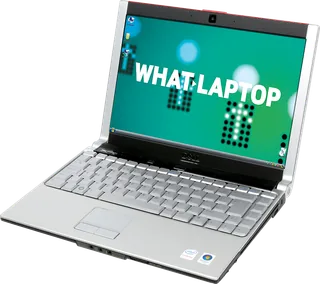
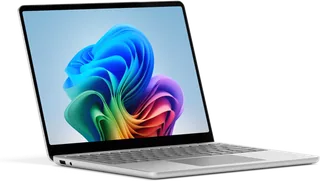
Dell XPS M1330 vs Microsoft Surface Laptop 13″ (1st Edition)
Better figure, where one is clearly better
| DellXPS M1330 | MicrosoftSurface Laptop 13″ (1st Edition) | |
|---|---|---|
| Overview | ||
| Released | 2007 | May 2025 |
| Display | ||
| Screen size | 13.3″ | 13″ |
| Resolution | 1280 × 800 | 1920 × 1280 (better) |
| Panel | – | IPS LCD |
| Refresh rate | 60 Hz | 60 Hz |
| Brightness | 300 nits | 400 nits (better) |
| Touchscreen | No | Yes |
| Display type | 13.3-inch WXGA TrueLife LCD; LED and CCFL backlight options, both 1280 × 800 at 60 Hz. Dell publishes 300 cd/m² typical for LED and 220 cd/m² typical for CCFL; the main display describes LED | PixelSense touchscreen LCD, 3:2, 1000:1 contrast; strengthened glass; 10-point multi-touch |
| Pixel density | – | 178 ppi |
| Colour range | – | sRGB and Enhanced colour profiles; individually colour-calibrated |
| Screen finish | Glossy TrueLife surface | – |
| Display features | Up to 140° opening angle; LED horizontal viewing angles ±50° minimum, vertical +40°/−50° minimum. Dell's manual reverses the screen width and height labels | Adaptive colour and contrast |
| Performance | ||
| Processor | Intel Core 2 Duo T7300 | Qualcomm Snapdragon X Plus X1P-42-100 |
| CPU cores | 2 | 8 |
| Graphics | NVIDIA GeForce 8400M GS | Qualcomm Adreno X1-45 |
| AI engine (NPU) | – | 45 TOPS |
| Memory | 2 GB | 8 GB or 16 GB (better) |
| Storage | 160 GB | 256 GB to 512 GB (better) |
| CPU | Core 2 Duo or Celeron options in Dell's revised owner manual; the listed T7300 configuration is the exact 2007 model tested by Notebookcheck and Laptop Mag | Snapdragon X Plus X1P-42-100, 8 cores |
| GPU | Intel 965 GM integrated graphics or optional GeForce 8400M GS with 128 MB dedicated video memory; the listed configuration has GeForce graphics | Qualcomm Adreno GPU |
| AI engine | – | Qualcomm Hexagon NPU, 45 TOPS; Copilot+ PC features need 16 GB of memory |
| Memory type | Two user-accessible DDR2-667 SO-DIMM slots. Revised October 2008 maker manual supports up to 8 GB; the 2007 reviews state a 4 GB maximum | LPDDR5x, 8 or 16 GB |
| Storage type | Replaceable internal SATA hard drive; listed 2 GB memory/160 GB 5400 rpm drive pairing is the exact review configuration. Slot-loading DVD±RW drive | Removable; 256 GB or 512 GB UFS, or 1 TB Gen 4 SSD |
| Connections | ||
| Ports | 2 × USB-A, HDMI, Ethernet, SD card slot, 2 × headphone jack | 2 × USB-C, USB-A, headphone jack |
| Wi-Fi | Optional 802.11a/b/g/n | Wi-Fi 7 |
| Bluetooth | Optional Bluetooth | 5.4 |
| Webcam | 0.3 MP with LED display or 2 MP with CCFL display | 1080p Full HD |
| Operating system | Windows | Windows |
| Port detail | Two USB 2.0 Type-A, HDMI, VGA, 10/100 Ethernet, four-pin IEEE 1394, two headphone outputs and separate microphone input; ExpressCard/34 or /54 slot and eight-format card reader. Optional WLAN, WWAN and Bluetooth modules; 802.11a/b/g/n configuration confirmed by Laptop Mag | 2 × USB-C USB 3.2 (charging, data, DisplayPort 1.4a); USB-A 3.1 Gen 2; 3.5 mm headphone jack |
| External displays | – | Up to two 4K monitors at 60 Hz |
| Keyboard | QWERTY, AZERTY or Kanji layouts; Europe keyboard 87/104 keys, according to the manual | Backlit, full row of function keys, Copilot key |
| Trackpad | 71.7 × 34.0 mm active area; separate buttons | Precision touchpad |
| Speakers | Two speakers, 2 W per channel; Sigmatel STAC9228 audio controller | Omnisonic speakers with Dolby Audio |
| Microphones | Dual digital microphones | Dual Studio Mics with enhanced voice focus |
| Biometrics | Optional fingerprint reader | Windows Hello fingerprint reader in the power button |
| In the box | – | Surface Laptop, USB-C charging cable, Quick Start Guide, safety and warranty documents |
| Battery and size | ||
| Battery life (maker's claim) | – | Up to 23 hours |
| Battery capacity | – | 50 Wh |
| Weight | – | 1.22 kg |
| Thickness | – | 15.6 mm |
| Width × depth | – | 285.65 × 214.14 mm |
| Battery life detail | Six-cell and nine-cell smart lithium-ion packs in the maker manual; Notebookcheck also documents four-cell 37 Wh, six-cell 56 Wh and nine-cell 85 Wh options. Runtime varies with workload and configuration; no maker hours claim is published | Up to 23 hours of local video playback or 16 hours of active web use (Microsoft tests); 50 Wh nominal, 48 Wh minimum |
| Charger | 65 W or 90 W adapter; 100–240 V AC input | None in the UK box; Surface 45W USB-C Wall Charger sold separately |
| Fast charging | Approximately four hours with the computer switched off | With a USB-C charger of at least 60 W |
| Materials | Magnesium-alloy chassis with brushed aluminium accents, according to Dell's reproduced launch announcement | Anodised aluminium; 100% recycled cobalt in the battery cell, 100% recycled rare earth metals in the magnets |
| Colours | Tuxedo Black, Pearl White or Crimson Red at introduction | Platinum, Violet, Ocean |
More comparisons
- Microsoft Surface Laptop 13″ (1st Edition) vs Microsoft Surface Laptop 13.8″ (8th Edition)
- Microsoft Surface Laptop 13″ (1st Edition) vs Microsoft Surface Laptop 15″ (8th Edition)
- Dell XPS 13 DX13260 vs Dell XPS M1330
- Dell XPS 14 DA14260 vs Dell XPS M1330
- Dell XPS 16 DA16260 vs Dell XPS M1330
- Dell XPS M1330 vs Lenovo ThinkPad X13 Gen 6 (AMD)
- Dell XPS M1330 vs Lenovo ThinkPad X13 Gen 6 (Intel)
- Microsoft Surface Laptop 13″ (1st Edition) vs Sony VAIO Z (VGN-Z11WN/B)
- Microsoft Surface Laptop 13″ (1st Edition) vs Sony VAIO Z (VPCZ21M9E)
- Lenovo ThinkPad X280 vs Microsoft Surface Laptop 13″ (1st Edition)
- Microsoft Surface Laptop 13″ (1st Edition) vs Sony VAIO Z (VPCZ11Z9E)
- Dell XPS 13 9350 vs Dell XPS M1330
- Dell XPS 14 9440 vs Dell XPS M1330
- Dell XPS 16 9640 vs Dell XPS M1330
- Dell XPS 13 Plus 9320 (2022) vs Dell XPS M1330
- Dell XPS 13 9310 vs Dell XPS M1330