Garmin fēnix 2 vs Garmin fēnix 6
Better figure, where one is clearly better
| Garminfēnix 2 | Garminfēnix 6 | |
|---|---|---|
| Overview | ||
| Released | March 2014 | August 2019 |
| Display | ||
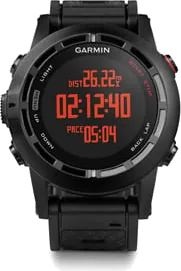
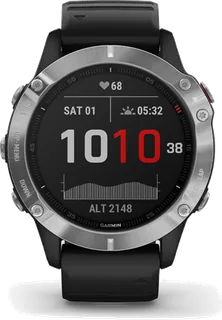
| Case sizes | 49 mm | 47 mm |
| Panel | LCD | Memory-in-pixel |
| Always-on display | Yes | Yes |
| Display detail | Transflective monochrome LCD, 31 mm diameter and 70 × 70 pixels; negative display with red LED backlight and physical buttons. | 1.3-inch (33.02 mm) always-on transflective colour memory-in-pixel display, 260 x 260 pixels, with five buttons. |
| Screen protection | – | Corning Gorilla Glass 3. |
| Health and fitness | ||
| ECG | No | No |
| Blood oxygen | No | Yes |
| Skin temperature | No | No |
| Sleep apnoea alerts | No | No |
| High blood pressure alerts | No | No |
| Body composition | No | No |
| Fall detection | No | No |
| Crash detection | No | No |
| GPS | Single-band | Single-band |
| Water resistance | 50 m | 100 m (better) |
| Sensors | High-sensitivity GPS receiver, barometric altimeter, three-axis compass and accelerometer. Optional ANT+ heart-rate, HRM-Run, foot-pod, speed/cadence, power and tempe temperature sensors; no optical wrist heart-rate sensor. | GPS, GLONASS, Galileo, Garmin Elevate wrist heart rate, Pulse Ox, barometric altimeter, compass, gyroscope, accelerometer and thermometer. |
| Health features | – | Pulse Ox for sleep or altitude acclimation, sleep, stress and Body Battery energy monitoring. |
| Fitness features | Running, cycling, pool and open-water swimming, multisport, hiking and skiing profiles; advanced workouts, Virtual Partner, Training Effect, VO2 max estimates, race prediction and recovery advice. Running dynamics require an HRM-Run chest strap; indoor pace and distance use the accelerometer. | Running and cycling metrics, multisport profiles, ClimbPro, PacePro, power manager, expedition GPS mode and course navigation. |
| Safety features | Breadcrumb routes, waypoint navigation and TracBack to retrace the recorded route; no preloaded base maps. | Incident detection and assistance require a paired smartphone. |
| Battery and connections | ||
| Battery life (maker's claim) | Up to 35 days | Up to 14 days |
| Mobile data option | No | No |
| Works with | iPhone and Android | iPhone and Android |
| Battery life detail | Rechargeable 500 mAh lithium-ion battery; up to five weeks in watch mode, sixteen hours with normal GPS recording or fifty hours in UltraTrac with one-minute GPS polling, according to the owner's manual. | Up to 14 days in smartwatch mode, 36 hours in GPS mode or 48 days in battery saver watch mode. |
| Charging | USB contact charging/data cradle and AC adapter. | Internal rechargeable lithium battery. |
| Connectivity | Bluetooth Smart phone notifications, Garmin Connect uploads and LiveTrack; USB computer transfer and ANT+ sensor connections. Garmin's 2015 catalogue confirms iPhone 4S or later and most Bluetooth Smart Android devices running Android 4.3 or later. The manual says ANT+ sensors cannot connect while Bluetooth is enabled. | Bluetooth Smart and ANT+; smart notifications, Connect IQ, Garmin Pay and phone music controls. The standard model does not store music. |
| Storage | 20 MB internal memory; up to 1,000 waypoints, fifty routes, 10,000 track points and 100 saved tracks. | – |
| Design | ||
| Weight (lightest version) | 90.6 g | 80 g (better) |
| Software | Garmin | Garmin |
| Case materials | Curved mineral-glass lens, shock-resistant housing and polyurethane wristband; 5 ATM water rating. | Stainless steel bezel, fibre-reinforced polymer case with metal rear cover and silicone band; 10 ATM water rating. |
| Size | 49 × 49 × 17 mm; 90.6 g. | 47 x 47 x 14.7 mm; 80 g with silicone band, 57 g case only. |
| Bands | Polyurethane wristband; additional hook-and-loop fabric strap accommodates larger wrists or wearing over a jacket. | QuickFit 22 mm band; silicone band fits wrists 125–208 mm. |
| Colours | – | Silver bezel with black case and band. |
| In the box | Watch, fabric wrist-strap kit, USB charging/data cable, AC adapter and quick-start manual; HRM-Run chest strap included in the Performer Bundle. | – |
More comparisons
- Garmin fēnix 6 vs Garmin fēnix 9
- Garmin fēnix 2 vs Garmin fēnix 9
- Garmin fēnix 6 vs Garmin fēnix 8 Solar
- Garmin fēnix 6 vs Garmin fēnix E
- Garmin fēnix 2 vs Garmin fēnix 8 Solar
- Garmin fēnix 2 vs Garmin fēnix E
- Garmin fēnix 2 vs Garmin fēnix 8 AMOLED (47 mm, Sapphire)
- Garmin fēnix 6 vs Garmin fēnix 8 AMOLED (47 mm, Sapphire)
- Garmin fēnix 6 vs Garmin fēnix 7
- Garmin fēnix 2 vs Garmin fēnix 7
- Garmin fēnix 6 vs Garmin Forerunner 945
- Garmin fēnix 5 Plus vs Garmin fēnix 6
- Garmin fēnix 5 vs Garmin fēnix 6
- Garmin fēnix 5S vs Garmin fēnix 6
- Garmin fēnix 6 vs Garmin Forerunner 935
- Garmin fēnix 5X vs Garmin fēnix 6