Hisense E8Q vs Sony BRAVIA X9005B
Better figure, where one is clearly better
| HisenseE8Q | SonyBRAVIA X9005B | |
|---|---|---|
| Overview | ||
| Released | 2025 | May 2014 |
| Display | ||
| Panel | Mini-LED | LED LCD |
| Panel detail | ULED MiniLED (quantum dot LCD) with a Mini-LED backlight and full-array local dimming | Triluminos LED LCD with X-tended Dynamic Range. The 55- and 65-inch models use active 3D glasses; Sony lists passive TDG-500P glasses for the 79-inch model. Motionflow XR 800 is a processing label, not a native refresh rate. |
| Resolution | 3840 × 2160 (4K) | 3840 × 2160 (4K) |
| Refresh rate | 144 Hz | – |
| HDR formats | Dolby Vision, HDR10, HDR10+, HLG | None |
| HDR extras | Dolby Vision IQ, HDR10+ Adaptive | – |
| Colour range | Quantum Dot Colour; wide colour gamut | – |
| Picture processing | Hi-View AI Engine, AI HDR Upscaler, 4K upscaling, MEMC, MPEG and mosquito noise reduction, AI Light Sensor, AI Sports Mode; Calman Ready | 4K X-Reality PRO upscaling, Triluminos colour, X-tended Dynamic Range and Motionflow XR 800. |
| Picture modes | Filmmaker Mode; 144Hz Game Mode PRO; eye-care mode | Cinema, Custom, Standard, Game, Sports, Photo and Graphics presets. |
| Motion handling | AI Smooth Motion (MEMC); panel response time 6 ms (50″, 55″), 6.5 ms (65″) or 8 ms (75″) (Hisense) | – |
| Viewing angle | 178° | – |
| Sizes | ||
| Sizes | 50, 55, 65, 75″ | 55, 65, 79″ |
| Largest size | 75″ | 79″ (better) |
| Gaming | ||
| HDMI ports | 4 (2 HDMI 2.1 at 4K 120 Hz+) (better) | 4 (0 HDMI 2.1 at 4K 120 Hz+) |
| Variable refresh rate | HDMI VRR, FreeSync Premium | None |
| Auto low latency mode | Yes | – |
| HDMI detail | 4 × HDMI 2.1 with ALLM; HDMI 1 and 2 4K 60Hz with VRR up to 60 Hz; HDMI 3 (eARC) and HDMI 4 4K 144Hz with VRR | Four HDMI inputs. HDTVTest verified 3840 × 2160 at 50/60 Hz on all four inputs of the 55-inch model, but found limited high-chroma bandwidth; HDMI 1 and 2 support HDCP 2.2. |
| Variable refresh range | Up to 144 Hz | – |
| Input lag | ≤ 7 ms with a 4K 120 Hz input (Hisense) | HDTVTest measured 41 ms with a Leo Bodnar tester in Game mode on the 55-inch model. |
| Game features | AMD FreeSync Premium, Game Bar, Dolby Vision Gaming, HDR10+ Gaming | 4K Game mode and SimulView 3D gaming with optional glasses. |
| Smart TV and sound | ||
| Smart TV platform | VIDAA | Sony Entertainment Network |
| Processor | Hi-View AI Engine | 4K X-Reality PRO |
| Speakers | 40 W, 2.1 channels | 65 W (better) |
| Dolby Atmos | Yes | – |
| eARC | Yes | – |
| Wi-Fi | Wi-Fi 5 (802.11ac, 2.4/5 GHz) | Built-in Wi-Fi and Wi-Fi Direct |
| Bluetooth | Yes | – |
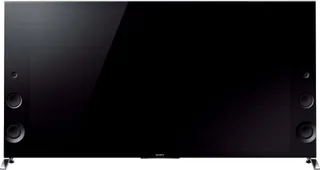
| Speaker detail | 2 × 10 W plus a 20 W subwoofer, 2.1 ch | Side-facing Magnetic Fluid speaker array with two 12.5 W and two 20 W outputs, 65 W total. A wireless subwoofer was optional. |
| Audio features | Dolby Atmos, DTS Virtual:X; Hi-Concerto, EzPlay, TV mode; WiSA SoundSend; user equaliser | – |
| Voice assistants | Voice control via the remote | – |
| Casting | AirPlay 2; screen sharing; DMP/DMR content sharing | Sony Entertainment Network apps, built-in HEVC 4K streaming, Opera browser, DLNA, screen mirroring and One-Flick Entertainment with NFC remote; original online services may no longer operate. |
| Software updates | Software and firmware updates for at least 8 years (Hisense) | – |
| TV tuners | 2 × RF; DVB-T2/T/C/S2/S; CI+ 2.0 | Twin DVB-T/T2 terrestrial, DVB-C cable and DVB-S/S2 satellite tuners, analogue tuner and CI+. |
| USB | 1 × USB 2.0, 1 × USB 3.0 | Three side USB 2.0 inputs with USB hard-drive recording; Sony supplied a port replicator. |
| Ethernet | 1 × RJ45 | One rear Ethernet input. |
| Optical audio out | 1 × S/PDIF; composite AV input, audio L/R input and headphone output | One optical digital audio output and a combined side headphone/audio/subwoofer output. |
| Design and power | ||
| Size | Without stand, 50″ 1111 × 647 × 78 mm; 55″ 1226 × 711 × 78 mm; 65″ 1446 × 836 × 76 mm; 75″ 1668 × 961 × 86 mm | Sony UK, without stand (W × H × D): 55-inch 149.3 × 75.2 × 9.9 cm; 65-inch 171.5 × 87.8 × 9.9 cm; 79-inch 202.9 × 105.4 × 11.1 cm. With stand: 55-inch 149.4 × 79.1 × 32 cm and 38.1 kg; 65-inch 171.6 × 91.6 × 32 cm and 46.6 kg; 79-inch 203.1 × 110.9 × 44.2 cm and 60.9 kg. |
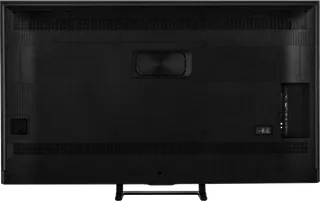
| Stand | Single metal and plastic pedestal, 400 × 288 mm (50″, 55″), 401 × 326 mm (65″) or 431 × 374 mm (75″); cable management on 65″ and 75″ | Wedge-shaped cabinet with a pair of metal feet that can mount near the edges or closer together on the 55- and 65-inch sets. |
| VESA pattern | 50″ 300 × 200 mm; 55″ 400 × 200 mm; 65″ 400 × 400 mm; 75″ 600 × 400 mm | – |
| Power use | Maximum 160 W (50″), 180 W (55″), 240 W (65″), 330 W (75″); 0.5 W standby | Sony UK on-mode estimates: 149 W (55 inches), 180 W (65 inches), 229 W (79 inches); 0.30 W standby across the three sizes. |
| Energy class | SDR: E; HDR: G | Historical EU television energy classes B for 55 and 65 inches, A for 79 inches. |
| In the box | – | Port replicator, standard and One-Flick touchpad remotes, two pairs of 3D glasses, table stand and IR blaster. Glasses type differs by size. |
| Colours | Black/dark grey | – |
| Warranty | 2 years (UK) | – |
More comparisons
- Hisense E8Q vs Hisense E8S
- Hisense E8Q vs Hisense U7S Pro
- Sony BRAVIA 7 II vs Sony BRAVIA X9005B
- Sony BRAVIA 9 II vs Sony BRAVIA X9005B
- Sony BRAVIA 3 II vs Sony BRAVIA X9005B
- Hisense E8Q vs Hisense U8Q
- Sony BRAVIA 8 II vs Sony BRAVIA X9005B
- Sony BRAVIA 5 vs Sony BRAVIA X9005B
- Sony BRAVIA 3 vs Sony BRAVIA X9005B
- Hisense E8Q vs Samsung LED F6400
- Hisense E8Q vs Samsung LED F8000
- Hisense E8Q vs Samsung LED H6400
- Hisense E8Q vs Hisense U7Q
- Hisense E8Q vs TCL C745K
- Hisense E8Q vs Samsung QLED Q90T (2020)
- Hisense E8Q vs Samsung QLED Q90R (2019)