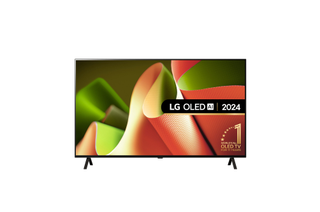
LG OLED B4 vs LG OLED evo G4
Better figure, where one is clearly better
| LGOLED B4 | LGOLED evo G4 | |
|---|---|---|
| Overview | ||
| Released | March 2024 | March 2024 |
| Display | ||
| Panel | OLED | OLED |
| Panel detail | Self-lit 4K OLED with pixel dimming | Self-lit OLED evo; Micro Lens Array on 55, 65, 77 and 83 inches, absent on 97 inches (Trusted Reviews) |
| Resolution | 3840 × 2160 (4K) | 3840 × 2160 (4K) |
| Refresh rate | 120 Hz | 120 Hz |
| HDR formats | Dolby Vision, HDR10, HLG | Dolby Vision, HDR10, HLG |
| Picture processing | AI Picture Pro, α8 AI Super Upscaling 4K, AI Brightness Control, Dynamic Tone Mapping Pro and Filmmaker Mode | AI Super Upscaling 4K, AI Brightness Control, OLED Dynamic Tone Mapping Pro, AI Genre Selection and Filmmaker Mode |
| Picture modes | Personalised Picture Wizard, Vivid, Standard, APS, Cinema, Sports, Game, Filmmaker and ISF Expert bright/dark room modes | – |
| Motion handling | Native 120Hz panel; OLED Motion and HDMI 4K 120 fps input | LG specifies 120Hz native for all sizes. PC-connected 144Hz mode and VRR up to 144Hz apply to 55/65/77/83 inches; 97 inches supports VRR up to 120Hz. |
| Sizes | ||
| Sizes | 48, 55, 65, 77″ | 55, 65, 77, 83, 97″ |
| Largest size | 77″ | 97″ (better) |
| Gaming | ||
| HDMI ports | 4 (all HDMI 2.1 at 4K 120 Hz+) | 4 (all HDMI 2.1 at 4K 120 Hz+) |
| Variable refresh rate | HDMI VRR, FreeSync Premium, G-Sync Compatible | HDMI VRR, FreeSync Premium, G-Sync Compatible |
| Auto low latency mode | Yes | Yes |
| HDMI detail | Four inputs support 4K 120Hz, VRR, ALLM and QMS; eARC on HDMI 3 | Four HDMI 2.1 inputs support 4K 120Hz, VRR, ALLM and QMS; eARC on HDMI 2. LG's exact-model FAQ specifies 48Gbps on all four ports. |
| Variable refresh range | LG specifies 40–120Hz | – |
| Game features | Game Optimiser and Dashboard, HGiG, AMD FreeSync Premium, NVIDIA G-SYNC Compatible and Dolby Vision gaming at 4K 120Hz | Game Optimiser and Dashboard, HGiG, NVIDIA G-SYNC Compatible and AMD FreeSync Premium |
| Smart TV and sound | ||
| Smart TV platform | webOS | webOS |
| Processor | α8 AI Processor 4K | α11 AI Processor 4K |
| Speakers | 20 W, 2.0 channels | 60 W, 4.2 channels (better) |
| Dolby Atmos | Yes | Yes |
| eARC | Yes | Yes |
| Wi-Fi | Wi-Fi 5 | Wi-Fi 6 |
| Bluetooth | 5.1 | 5.1 |
| Speaker detail | Down-firing 2.0-channel speakers | Down-firing 4.2-channel speaker system |
| Audio features | α8 AI Sound Pro with virtual 9.1.2 up-mixing, acoustic tuning, Clear Voice Pro, Bluetooth Surround Ready and WiSA up to 2.1 channels | AI Sound Pro virtual 11.1.2 up-mixing, AI Voice Remastering, acoustic tuning, Bluetooth Surround Ready, WiSA 2.1 and WOW Orchestra with compatible LG soundbars |
| Voice assistants | Built-in Amazon Alexa and LG intelligent voice recognition; supported languages vary by country | – |
| Casting | Apple AirPlay 2, ThinQ remote app and Multi View | AirPlay 2, built-in Chromecast and LG ThinQ app; application availability varies by region |
| Software updates | webOS 24; LG states four upgrades over five years with regional scheduling differences and security support through 31 December 2028. LG Australia's March 2024 launch notice confirms the range available now and lists 55/65-inch B4 March availability; release records that first confirmed series month, not a universal UK size-specific date. | webOS 24; four upgrades over five years, with regional schedules. LG Australia confirmed its TV range available now on March 14, 2024 and listed 55/65/77/83-inch G4 in-store in March; release records the first confirmed series month, not a universal size or regional day. The 97-inch rollout is not dated by that Australian announcement. |
| USB | Two USB 2.0 ports | Three USB 2.0 inputs |
| Ethernet | Ethernet LAN port | One Ethernet input |
| Optical audio out | One optical digital audio output | One optical digital audio output |
| Design and power | ||
| Size | Without stand (W × H × D): 48″ 1070 × 620 × 45.9 mm; 55″ 1228 × 708 × 45.9 mm; 65″ 1449 × 832 × 45.9 mm; 77″ 1719 × 989 × 50.9 mm | Without stand (W × H × D): 55″ 1222 × 703 × 27.2 mm; 65″ 1441 × 826 × 24.3 mm; 77″ 1712 × 982 × 24.8 mm; 83″ 1847 × 1057 × 28 mm; 97″ 2155 × 1230 × 28.2 mm |
| Stand | With stand (W × H × D; weight): 48″ 1070 × 684 × 235 mm, 11.7 kg; 55″ 1228 × 772 × 235 mm, 14.5 kg; 65″ 1449 × 896 × 235 mm, 17.3 kg; 77″ 1719 × 1057 × 319 mm, 23.5 kg. Stand footprint: 48″ 933 × 235 mm; 55/65″ 1057 × 235 mm; 77″ 1403 × 319 mm. | UK G45LW versions include a wall bracket; 55/65-inch G46LS versions include a stand instead, with a wall bracket sold separately. Maker with-stand dimensions (W × H × D): 55″ 1222 × 787 × 263 mm; 65″ 1441 × 910 × 263 mm; 77″ 1712 × 1039 × 321 mm; 83″ 1847 × 1115 × 321 mm. The 97-inch sheet lists 2155 × 1628 × 580 mm; this unusual stand height is retained as the published value rather than corrected by inference. Stands shown in the larger wall-version specifications are optional. Main weights exclude stands. |
| VESA pattern | 300 × 200 mm across these UK sizes | 55″ 300 × 200 mm; 65/77″ 300 × 300 mm; 83″ 400 × 400 mm; 97″ 600 × 400 mm |
| Power use | Under 0.5 W standby; 100–240 V AC, 50–60Hz supply | Under 0.5 W standby |
| In the box | Magic Remote MR24, two AA batteries and attached power cable | MR24 Magic Remote, two AA batteries and attached power cable; UK stand or wall bracket depends on model suffix |

More comparisons
- LG OLED B4 vs Samsung OLED S95H
- LG OLED evo G4 vs Samsung OLED S95H
- LG OLED B4 vs LG OLED B6
- LG OLED evo G4 vs LG OLED evo G6
- LG OLED B6 vs LG OLED evo G4
- LG OLED B4 vs Sony BRAVIA 8 II
- LG OLED evo G4 vs Sony BRAVIA 8 II
- LG OLED B4 vs LG OLED B5
- LG OLED evo G4 vs LG OLED evo G5
- LG OLED B5 vs LG OLED evo G4
- LG OLED B3 vs LG OLED B4
- LG OLED evo G3 vs LG OLED evo G4
- LG OLED evo G4 vs Samsung OLED S95D
- LG OLED B4 vs Panasonic EZ1002
- LG OLED B4 vs Panasonic LZ2000
- LG OLED B4 vs Panasonic MZ2000