LG OLED EC9300 vs LG OLED evo G4
Better figure, where one is clearly better
| LGOLED EC9300 | LGOLED evo G4 | |
|---|---|---|
| Overview | ||
| Released | August 2014 | March 2024 |
| Display | ||
| Panel | OLED | OLED |
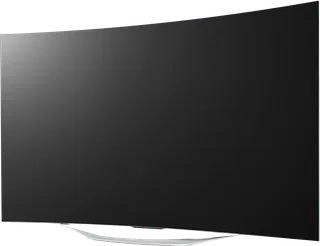
| Panel detail | Curved WRGB OLED with passive Cinema 3D | Self-lit OLED evo; Micro Lens Array on 55, 65, 77 and 83 inches, absent on 97 inches (Trusted Reviews) |
| Resolution | 1920 × 1080 (Full HD) | 3840 × 2160 (4K) (better) |
| Refresh rate | – | 120 Hz |
| HDR formats | None | Dolby Vision, HDR10, HLG |
| Picture processing | – | AI Super Upscaling 4K, AI Brightness Control, OLED Dynamic Tone Mapping Pro, AI Genre Selection and Filmmaker Mode |
| Motion handling | Native panel refresh is not established by the exact maker tables; unlimited MCI and Absolute Motion Clarity are marketing descriptions, not native Hz. | LG specifies 120Hz native for all sizes. PC-connected 144Hz mode and VRR up to 144Hz apply to 55/65/77/83 inches; 97 inches supports VRR up to 120Hz. |
| Sizes | ||
| Sizes | 55″ | 55, 65, 77, 83, 97″ |
| Largest size | 55″ | 97″ (better) |
| Gaming | ||
| HDMI ports | 4 (0 HDMI 2.1 at 4K 120 Hz+) | 4 (all HDMI 2.1 at 4K 120 Hz+) (better) |
| Variable refresh rate | None | HDMI VRR, FreeSync Premium, G-Sync Compatible |
| Auto low latency mode | – | Yes |
| HDMI detail | Four HDMI inputs, three side and one rear; ARC on the rear input and MHL support reported by AVForums | Four HDMI 2.1 inputs support 4K 120Hz, VRR, ALLM and QMS; eARC on HDMI 2. LG's exact-model FAQ specifies 48Gbps on all four ports. |
| Game features | – | Game Optimiser and Dashboard, HGiG, NVIDIA G-SYNC Compatible and AMD FreeSync Premium |
| Input lag | 39 ms in PC mode and 49 ms in Game mode (HDTVTest); 41 ms and 52 ms respectively (AVForums), both on firmware 04.32.20 | – |
| Smart TV and sound | ||
| Smart TV platform | webOS | webOS |
| Processor | – | α11 AI Processor 4K |
| Speakers | 40 W | 60 W, 4.2 channels (better) |
| Dolby Atmos | – | Yes |
| eARC | – | Yes |
| Wi-Fi | Built-in Wi-Fi | Wi-Fi 6 |
| Bluetooth | – | 5.1 |
| Speaker detail | 40 W output. LG Czech specifies no subwoofer, while AVForums describes a 2.1-channel system; channel count is omitted because the sources conflict. | Down-firing 4.2-channel speaker system |
| Audio features | Dolby Digital and DTS decoding; LG wireless sound synchronisation | AI Sound Pro virtual 11.1.2 up-mixing, AI Voice Remastering, acoustic tuning, Bluetooth Surround Ready, WiSA 2.1 and WOW Orchestra with compatible LG soundbars |
| Casting | DLNA, MHL and LG Cloud; Miracast and WiDi reported by AVForums | AirPlay 2, built-in Chromecast and LG ThinQ app; application availability varies by region |
| Software updates | Launched with the original webOS Smart+ interface; the retained LG Czech page now says webOS 2.0. LG's syndicated August 27 2014 release states the US EC9300 was on sale that month, supporting August first-sale precision without treating the earlier promised August 24 day as independently confirmed delivery. | webOS 24; four upgrades over five years, with regional schedules. LG Australia confirmed its TV range available now on March 14, 2024 and listed 55/65/77/83-inch G4 in-store in March; release records the first confirmed series month, not a universal size or regional day. The 97-inch rollout is not dated by that Australian announcement. |
| TV tuners | DVB-T2, DVB-C and DVB-S2, with CI slot; UK Freeview HD and satellite reception confirmed by AVForums. Analogue composite, component and SCART inputs are specified by LG. | – |
| USB | Three side USB 2.0 inputs with hub support; no USB 3.0 | Three USB 2.0 inputs |
| Ethernet | Ethernet LAN port | One Ethernet input |
| Optical audio out | Optical digital audio and side headphone outputs | One optical digital audio output |
| Design and power | ||
| Size | Without stand (W × H × D): 1225 × 715 × 80 mm, from LG's exact EC930V Dutch specification | Without stand (W × H × D): 55″ 1222 × 703 × 27.2 mm; 65″ 1441 × 826 × 24.3 mm; 77″ 1712 × 982 × 24.8 mm; 83″ 1847 × 1057 × 28 mm; 97″ 2155 × 1230 × 28.2 mm |
| Stand | With stand (W × H × D): 1225 × 753 × 204 mm; 16.4 kg. The stand is detachable and does not swivel; wall mounting is supported, per AVForums. | UK G45LW versions include a wall bracket; 55/65-inch G46LS versions include a stand instead, with a wall bracket sold separately. Maker with-stand dimensions (W × H × D): 55″ 1222 × 787 × 263 mm; 65″ 1441 × 910 × 263 mm; 77″ 1712 × 1039 × 321 mm; 83″ 1847 × 1115 × 321 mm. The 97-inch sheet lists 2155 × 1628 × 580 mm; this unusual stand height is retained as the published value rather than corrected by inference. Stands shown in the larger wall-version specifications are optional. Main weights exclude stands. |
| VESA pattern | – | 55″ 300 × 200 mm; 65/77″ 300 × 300 mm; 83″ 400 × 400 mm; 97″ 600 × 400 mm |
| Power use | 106 W on-mode in the maker energy table; 0.3 W standby; Dutch maker supply 220–240 V, 50/60Hz | Under 0.5 W standby |
| In the box | Magic Remote and conventional remote; UK reviews identify two pairs of passive 3D glasses plus two clip-ons. LG's Dutch accessory table instead lists three pairs plus one clip-on, a regional package difference. | MR24 Magic Remote, two AA batteries and attached power cable; UK stand or wall bracket depends on model suffix |

More comparisons
- LG OLED evo G4 vs Samsung OLED S95H
- LG OLED evo G4 vs LG OLED evo G6
- LG OLED EC9300 vs LG OLED evo C6
- LG OLED B6 vs LG OLED evo G4
- LG OLED B6 vs LG OLED EC9300
- LG OLED evo G4 vs Sony BRAVIA 8 II
- Hisense A85Q vs LG OLED EC9300
- LG OLED evo G4 vs LG OLED evo G5
- LG OLED B5 vs LG OLED evo G4
- LG OLED B5 vs LG OLED EC9300
- LG OLED evo G3 vs LG OLED evo G4
- LG OLED evo G4 vs Samsung OLED S95D
- LG OLED B4 vs LG OLED evo G4
- LG OLED evo G2 vs LG OLED evo G4
- LG OLED evo G4 vs Sony A90J
- LG OLED B3 vs LG OLED evo G4