LG OLED evo C6 vs Sony BRAVIA W5500
Better figure, where one is clearly better
| LGOLED evo C6 | SonyBRAVIA W5500 | |
|---|---|---|
| Overview | ||
| Released | March 2026 | 2009 |
| Display | ||
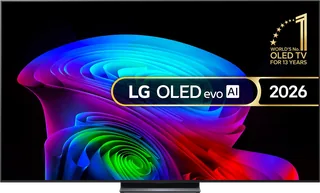
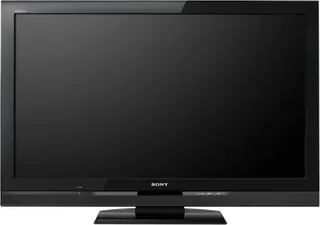
| Panel | OLED | LCD |
| Panel detail | WOLED; 77″ and 83″ use a Primary RGB Tandem panel with Hyper Radiant Colour Tech | CCFL-backlit LCD. Sony's Motionflow 100Hz includes frame interpolation and Image Blur Reduction; this is not entered as an independently verified native panel refresh figure. |
| Resolution | 3840 × 2160 (4K) (better) | 1920 × 1080 (Full HD) |
| Refresh rate | 165 Hz | – |
| HDR formats | Dolby Vision, HDR10, HLG | None |
| HDR extras | Dolby Vision IQ | – |
| Screen finish | Glossy | – |
| Peak brightness | 1,251 nits in HDR on a 10% window, 65″ (Tom's Guide) | – |
| Picture processing | AI Picture Pro, AI HDR Remastering, Brightness Booster; 77″ and 83″ add Hyper Radiant Colour Tech (up to 3.2x peak brightness) | BRAVIA Engine 3, Live Colour, Motionflow 100Hz with Image Blur Reduction and 24p True Cinema. |
| Motion handling | – | Sony's Motionflow 100Hz name describes the motion-processing output; a native panel figure for every UK size was not verified. |
| Picture modes | FILMMAKER MODE with Ambient Light Compensation, Creator Original mode | – |
| Sizes | ||
| Sizes | 42, 48, 55, 65, 77, 83″ | 32, 37, 40, 46, 52″ |
| Largest size | 83″ (better) | 52″ |
| Gaming | ||
| HDMI ports | 4 (all HDMI 2.1 at 4K 120 Hz+) (better) | 4 (0 HDMI 2.1 at 4K 120 Hz+) |
| Variable refresh rate | HDMI VRR, G-Sync Compatible, FreeSync Premium | None |
| Auto low latency mode | Yes | – |
| HDMI detail | 4K 120 Hz on all four ports; eARC, VRR, ALLM, QMS and QFT | Four HDMI inputs, plus component, two SCART and VGA inputs according to Sony's UK technical sheets. |
| Game features | Up to 4K 165 Hz; G-SYNC Compatible, FreeSync Premium, HGiG, VESA ClearMR 10000, 0.1 ms response; Game Dashboard and Optimiser; Bluetooth Ultra Low Latency controllers (under 2.5 ms) | – |
| Cloud gaming | NVIDIA GeForce NOW (4K 120 Hz HDR) | – |
| Smart TV and sound | ||
| Smart TV platform | webOS | None (no smart platform) |
| Processor | alpha 11 AI Processor 4K Gen3 (Dual AI Engine) | BRAVIA Engine 3 |
| Speakers | – | 20 W |
| Dolby Atmos | Yes | – |
| DTS:X | No | – |
| eARC | Yes | – |
| Wi-Fi | Wi-Fi 6 | – |
| Bluetooth | 5.3 | – |
| Speaker detail | 42″ 20 W, 2.0 ch; 48″ to 83″ 40 W, 2.2 ch | Sony UK specifies 10 W + 10 W and S-Force Front Surround for its W5500 technical sheets. |
| Casting | – | DLNA playback of video, music and photos over Ethernet. AppliCast accesses simple online widgets such as RSS feeds, weather and a clock; this predates a full app platform. |
| TV tuners | – | Sony UK lists digital terrestrial MPEG-2, MPEG-4 HD with supported operators, digital cable and analogue tuners. |
| Audio features | Virtual 11.1.2 ch, AI Sound, AI Object Remastering Ultra, Dolby Atmos | – |
| Software updates | webOS 26; webOS Re:New Program upgrades for up to 5 years | – |
| USB | 2 × USB 2.0 | USB 2.0 media input. |
| Ethernet | – | Wired Ethernet for DLNA and AppliCast; no built-in Wi-Fi is listed on the UK sheet. |
| Optical audio out | – | One optical digital audio output. |
| Design and power | ||
| Size | Without stand, 42″ 932 × 540 × 41.1 mm; 48″ 1071 × 620 × 46.9 mm; 55″ 1222 × 703 × 45.1 mm; 65″ 1441 × 826 × 45.1 mm; 77″ 1711 × 982 × 47.1 mm; 83″ 1842 × 1055 × 52.9 mm | Sony UK without-stand W × H × D: 37″ 917 × 602 × 91 mm; 40″ 987 × 638 × 93 mm. Listed weights exclude the stand; unverified size weights are omitted. |
| Stand | Central pedestal stand; 65″ stands 880 mm tall on it, stand footprint 470 × 230 mm | Sony UK lists a supplied swivel table stand, rotating 20° left and right, for the 37- and 40-inch sizes. |
| Colours | – | Piano black. |
| VESA pattern | 48″, 55″ and 65″ 300 × 200 mm; 83″ 400 × 400 mm | – |
| Warranty | OLED Care+ covers the panel for 5 years | – |
More comparisons
- LG OLED evo C6 vs LG OLED evo W6
- LG OLED evo C6 vs Samsung OLED S90H
- Sony BRAVIA 7 II vs Sony BRAVIA W5500
- Sony BRAVIA 9 II vs Sony BRAVIA W5500
- LG OLED evo C3 vs LG OLED evo C6
- LG OLED evo C2 vs LG OLED evo C6
- LG OLED C1 vs LG OLED evo C6
- LG OLED CX vs LG OLED evo C6
- LG OLED B3 vs LG OLED evo C6
- LG OLED evo C6 vs Samsung OLED S95C
- LG OLED C9 vs LG OLED evo C6
- LG OLED C8 vs LG OLED evo C6
- LG OLED B8 vs LG OLED evo C6
- LG OLED C7 vs LG OLED evo C6
- LG OLED C6 (2016) vs LG OLED evo C6
- LG OLED evo C4 vs LG OLED evo C6