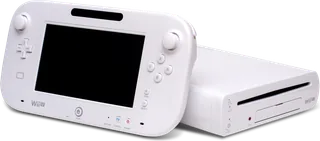
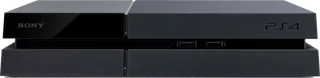
Nintendo Wii U vs Sony PlayStation 4
Better figure, where one is clearly better
| NintendoWii U | SonyPlayStation 4 | |
|---|---|---|
| Overview | ||
| Released | November 2012 | November 2013 |
| Performance | ||
| Type | Home console | Home console |
| CPU | IBM Espresso (PowerPC), 3 cores, 1.24 GHz | AMD Jaguar, 8 cores |
| GPU | AMD Radeon-based Latte, 550 MHz | AMD Radeon |
| GPU compute | – | 1.84 TFLOPS |
| Memory | 2 GB | 8 GB (better) |
| Storage | 8 GB, 32 GB | 500 GB (better) |
| Disc drive | Yes | Yes |
| CPU | IBM PowerPC-based tri-core "Espresso" at about 1.24 GHz (Nintendo; fail0verflow Cafe OS log) | Single-chip custom processor; x86-64 AMD "Jaguar", 8 cores at 1.6 GHz (Sony and system architect Mark Cerny) |
| GPU | AMD Radeon-based "Latte" at about 550 MHz (Nintendo; fail0verflow Cafe OS log) | 1.84 TFLOPS AMD Radeon-based engine; 18 compute units at 800 MHz (Sony and Mark Cerny) |
| Memory detail | 2 GB DDR3L, identified from four Micron memory chips (iFixit) | 8 GB GDDR5; a separate 256 MB DDR3 chip and a low-power processor for network tasks (iFixit teardown) |
| Storage detail | 8 GB (Basic) or 32 GB (Premium) internal flash; Wii U and Wii optical discs | 500 GB hard drive, user-replaceable; Blu-ray (6× CAV) and DVD (8× CAV) drive, read only |
| Storage expansion | SD cards up to 2 GB, SDHC cards up to 32 GB; USB storage up to 2 TB (Nintendo) | External USB 3.0 hard drives for games and apps from system software 4.50 (PlayStation) |
| Display and video | ||
| Maximum output | 1080p | 1080p |
| Built-in screen | No screen on the console; the Wii U GamePad has a 6.2-inch touch screen, 854 × 480 (Nintendo) | No built-in screen |
| Video output | HDMI up to 1080p; AV Multi out with composite, RGB SCART or component cable (Nintendo) | HDMI out, up to 1080p |
| HDR | – | HDR from system software 4.00, including the original PS4 (PlayStation) |
| Audio | Six-channel linear PCM over HDMI; analogue audio through AV Multi out (Nintendo) | DIGITAL OUT (OPTICAL) port; audio over HDMI |
| Design and power | ||
| Weight | 1,600 g (better) | 2,800 g |
| Battery life detail | Wii U GamePad battery lasts about 3–5 hours and charges in about 2.5 hours (Nintendo UK manual) | – |
| Power use | 31.5 W during gameplay in Nintendo's 2016 test | 250 W maximum rating (CUH-1000 series; Sony) |
| Connections | ||
| Ports | 4 × USB 2.0, HDMI, AV Multi out, SD card slot, sensor bar port (Nintendo) | 2 × SuperSpeed USB (USB 3.0), AUX port (PlayStation Camera), HDMI out, DIGITAL OUT (OPTICAL), Ethernet (10BASE-T, 100BASE-TX, 1000BASE-T) |
| Wi-Fi and Bluetooth | Wi-Fi IEEE 802.11b/g/n (Nintendo) | Wi-Fi IEEE 802.11 b/g/n, Bluetooth 2.1 (EDR) |
| Controller | Wii U GamePad with touch screen, two analogue sticks, motion sensors, NFC and approximately 0.3-megapixel camera; works with Wii Remotes and the Wii U Pro Controller | DUALSHOCK 4 wireless controller with touch pad, light bar and built-in speaker |
| Backward compatibility | Wii games and accessories | No PS3, PS2 or PS1 discs; some older games are sold as digital re-releases |
More comparisons
- Sony PlayStation 4 vs Sony PlayStation 5 Pro
- Sony PlayStation 4 vs Sony PlayStation Portal
- Sony PlayStation 4 vs Sony PlayStation 5 Slim
- Sony PlayStation 4 vs Sony PlayStation 5
- Nintendo Switch vs Nintendo Wii U
- Sony PlayStation 4 vs Sony PlayStation 4 Pro
- Sony PlayStation 4 vs Sony PlayStation 4 Slim
- Microsoft Xbox One S vs Sony PlayStation 4
- Sony PlayStation 4 vs Sony PlayStation 4 (CUH-1200)
- Microsoft Xbox One vs Sony PlayStation 4
- Sony PlayStation 4 vs Sony PlayStation Vita Slim (PCH-2000)
- Sony PlayStation 3 vs Sony PlayStation 4
- Sony PlayStation 3 Super Slim vs Sony PlayStation 4
- Sony PlayStation 4 vs Sony PlayStation Vita
- Sony PlayStation 4 vs Sony PSPgo
- Sony PlayStation 3 Slim vs Sony PlayStation 4