NVIDIA GeForce GTX 1050 Ti vs NVIDIA GeForce RTX 5060
Better figure, where one is clearly better
| NVIDIAGeForce GTX 1050 Ti | NVIDIAGeForce RTX 5060 | |
|---|---|---|
| Overview | ||
| Released | October 2016 | May 2025 |
| Performance | ||
| Chip maker | NVIDIA | NVIDIA |
| Architecture | Pascal | Blackwell |
| Shader cores | 768 | 3,840 |
| Boost clock | 1,392 MHz | 2,500 MHz (better) |
| Architecture | Stock-clock GPU figures from MSI's GeForce GTX 1050 Ti 4G datasheet, whose card is pictured. First sale on 25 October 2016 is confirmed by GamersNexus launch coverage; the original NVIDIA launch page could not be read. | – |
| Ray tracing | No hardware RT Cores | Fourth-generation RT Cores; 58 RT TFLOPS |
| AI cores | No Tensor Cores | Fifth-generation Tensor Cores; 614 AI TOPS |
| Upscaling and frame generation | No NVIDIA DLSS support | DLSS 4.5 with Super Resolution, DLAA, Ray Reconstruction, Frame Generation, Multi Frame Generation and Dynamic Multi Frame Generation |
| Base clock | 1,290 MHz for the stock specification; PNY's separate OC model is 1,366 MHz base and 1,480 MHz boost | 2.28 GHz |
| Memory | ||
| Video memory | 4 GB GDDR5 | 8 GB GDDR7 (better) |
| Memory bus | 128-bit | 128-bit |
| Memory detail | MSI specifies 7,008 MHz effective GDDR5; no unambiguous maker bandwidth figure was established | – |
| Connections and power | ||
| Board power | 75 W (better) | 145 W |
| Interface | PCIe 3.0 | PCIe 5.0 |
| Display outputs | Pictured MSI 4G has DisplayPort 1.4a, HDMI 2.0b and dual-link DVI-D; up to three displays | 3 × DisplayPort 2.1b (UHBR20), 1 × HDMI 2.1b; up to 4 displays; HDCP 2.3 |
| Maximum resolution | 7680 × 4320 on MSI's stock-card specification | 4K at 480 Hz or 8K at 165 Hz with DSC |
| Power connector | PNY's stock-clock model takes PCIe slot power; its separate OC model requires one 6-pin. Check the selected partner design. | 1 × PCIe 8-pin cable, or a 300 W or greater PCIe Gen 5 cable (adapter in the box) |
| Recommended power supply | 300 W on MSI's specification; requirements depend on the system | 550 W |
| Slot width | Partner designs vary; PNY lists its stock-clock card as dual-slot | – |
| Size (reference card) | No retail Founders Edition; pictured MSI 4G is 177 × 118 × 34 mm and 330 g | – |
| Video encode and decode | MSI specifies PCIe 3.0 x16 and HDCP 2.2 | 1 × ninth-generation NVENC, 1 × sixth-generation NVDEC; AV1 encode and decode |

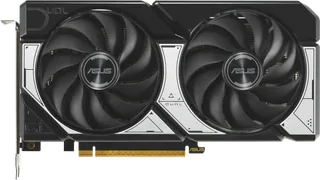
More comparisons
- NVIDIA GeForce GTX 1050 Ti vs NVIDIA GeForce RTX 5050
- NVIDIA GeForce RTX 5050 vs NVIDIA GeForce RTX 5060
- NVIDIA GeForce RTX 2060 vs NVIDIA GeForce RTX 5060
- NVIDIA GeForce RTX 3060 vs NVIDIA GeForce RTX 5060
- NVIDIA GeForce GTX 1060 vs NVIDIA GeForce RTX 5060
- NVIDIA GeForce GTX 1660 SUPER vs NVIDIA GeForce RTX 5060
- NVIDIA GeForce RTX 2060 SUPER vs NVIDIA GeForce RTX 5060
- NVIDIA GeForce GTX 1070 vs NVIDIA GeForce RTX 5060
- NVIDIA GeForce GTX 980 Ti vs NVIDIA GeForce RTX 5060
- NVIDIA GeForce GTX 1070 Ti vs NVIDIA GeForce RTX 5060
- NVIDIA GeForce GTX 1660 Ti vs NVIDIA GeForce RTX 5060
- AMD Radeon RX 5700 vs NVIDIA GeForce RTX 5060
- AMD Radeon RX 9070 vs NVIDIA GeForce RTX 5060
- Intel Arc B570 vs NVIDIA GeForce RTX 5060
- NVIDIA GeForce RTX 5060 vs NVIDIA GeForce RTX 5060 Ti
- NVIDIA GeForce RTX 5060 vs NVIDIA GeForce RTX 5070