NVIDIA GeForce RTX 2060 vs NVIDIA GeForce RTX 2060 SUPER
Better figure, where one is clearly better
| NVIDIAGeForce RTX 2060 | NVIDIAGeForce RTX 2060 SUPER | |
|---|---|---|
| Overview | ||
| Released | January 2019 | July 2019 |
| Performance | ||
| Chip maker | NVIDIA | NVIDIA |
| Architecture | Turing | Turing |
| Shader cores | 1,920 or 2,176 | 2,176 |
| Boost clock | 1,680 MHz or 1,650 MHz | 1,650 MHz |
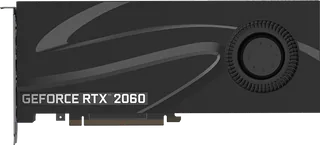
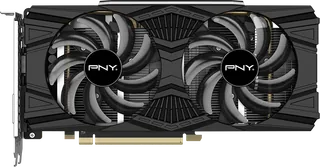
| Architecture | NVIDIA reference GPU specifications; photo shows PNY's stock-clock 6 GB Blower partner card, whose cooler, dimensions and display connectors differ from the Founders Edition. The later 12 GB card has 2,176 CUDA cores rather than 1,920. | NVIDIA reference/Founders Edition GPU figures; the photo shows PNY's stock-clock Dual Fan partner card |
| Ray tracing | First-generation RT Cores; NVIDIA's original launch specification lists 30 RT Cores and 5 Giga Rays/s for 6 GB | First-generation RT Cores |
| AI cores | Second-generation Tensor Cores; 240 on the original 6 GB model according to NVIDIA's launch specification | Second-generation Tensor Cores |
| Upscaling and frame generation | NVIDIA DLSS 2.0 upscaling; no DLSS Frame Generation | NVIDIA DLSS super resolution; no DLSS frame generation |
| Base clock | 1,365 MHz base and 1,680 MHz boost (6 GB); 1,470 MHz base and 1,650 MHz boost (12 GB) | 1,470 MHz |
| Memory | ||
| Video memory | 6 GB GDDR6 or 12 GB GDDR6 | 8 GB GDDR6 |
| Memory bus | 192-bit | 256-bit (better) |
| Memory bandwidth | 336 GB/s | 448 GB/s (better) |
| Memory detail | 14 Gbps GDDR6 on a 192-bit bus with 336 GB/s bandwidth on both revisions | PNY publishes 14 Gbps GDDR6 and 448 GB/sec bandwidth |
| Connections and power | ||
| Board power | 160 W or 185 W | 175 W |
| Interface | PCIe 3.0 | PCIe 3.0 |
| Display outputs | Original 6 GB NVIDIA page lists DisplayPort 1.4a, HDMI 2.0b, USB-C/VirtualLink and DVI-DL. The 12 GB regional table lists DisplayPort, HDMI and DVI-DL without USB-C; the current combined comparison table also omits USB-C. Up to 4 displays; HDCP 2.2. Partner connectors vary. | NVIDIA's original Founders Edition manual shows 2 × DisplayPort, HDMI, DVI and USB-C; its current comparison table omits USB-C. Pictured PNY Dual Fan lists DisplayPort 1.4, HDMI 2.0b and DVI-D, with no USB-C listed. |
| Maximum resolution | 7680 × 4320; original specification states 4K 144 Hz or 8K 60 Hz over DisplayPort with DSC | 7680 × 4320; NVIDIA specifies support for four displays |
| Power connector | 1 × PCIe 8-pin for both reference specifications | 1 × 8-pin |
| Recommended power supply | 500 W (6 GB); 550 W (12 GB); NVIDIA reference power specifications | NVIDIA specifies 550 W; requirements depend on the system |
| Slot width | 2-slot (original 6 GB Founders Edition); 12 GB partner cards vary | Two slots for the Founders Edition and pictured PNY Dual Fan |
| Size (reference card) | 228.60 × 112.6 mm, 2-slot (original 6 GB Founders Edition). NVIDIA's regional table repeats these dimensions for 12 GB, but no separate 12 GB Founders Edition design was verified. | NVIDIA reference/Founders Edition is 228.60 × 112.6 mm; pictured PNY Dual Fan is 1.65 × 9.25 × 4.4 inches |
| Video encode and decode | Seventh-generation NVENC, fourth-generation NVDEC (NVIDIA comparison table); no hardware AV1 encode | Seventh-generation NVIDIA Encoder and fourth-generation Decoder; PNY specifies PCIe 3.0 x16. NVIDIA specifies no NVLink support. |
More comparisons
- NVIDIA GeForce RTX 2060 SUPER vs NVIDIA GeForce RTX 5050
- NVIDIA GeForce RTX 2060 vs NVIDIA GeForce RTX 5050
- NVIDIA GeForce RTX 2060 vs NVIDIA GeForce RTX 5060
- NVIDIA GeForce RTX 2060 SUPER vs NVIDIA GeForce RTX 5060
- NVIDIA GeForce RTX 2060 SUPER vs NVIDIA GeForce RTX 5060 Ti
- NVIDIA GeForce RTX 2060 vs NVIDIA GeForce RTX 5060 Ti
- NVIDIA GeForce RTX 2060 SUPER vs NVIDIA GeForce RTX 5070
- NVIDIA GeForce RTX 2060 vs NVIDIA GeForce RTX 5070
- NVIDIA GeForce RTX 2060 SUPER vs NVIDIA GeForce RTX 5070 Ti
- NVIDIA GeForce RTX 2060 vs NVIDIA GeForce RTX 5070 Ti
- NVIDIA GeForce RTX 2060 SUPER vs NVIDIA GeForce RTX 5080
- NVIDIA GeForce RTX 2060 SUPER vs NVIDIA GeForce RTX 5090
- NVIDIA GeForce RTX 2060 vs NVIDIA GeForce RTX 5080
- NVIDIA GeForce RTX 2060 vs NVIDIA GeForce RTX 5090
- NVIDIA GeForce RTX 2060 SUPER vs NVIDIA GeForce RTX 4080 SUPER
- NVIDIA GeForce RTX 2060 vs NVIDIA GeForce RTX 4080 SUPER