NVIDIA GeForce RTX 2080 SUPER vs NVIDIA GeForce RTX 5070 Ti
Better figure, where one is clearly better
| NVIDIAGeForce RTX 2080 SUPER | NVIDIAGeForce RTX 5070 Ti | |
|---|---|---|
| Overview | ||
| Released | July 2019 | February 2025 |
| Performance | ||
| Chip maker | NVIDIA | NVIDIA |
| Architecture | Turing | Blackwell |
| Shader cores | 3,072 | 8,960 |
| Boost clock | 1,815 MHz | 2,452 MHz (better) |
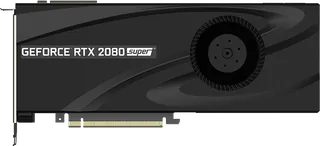
| Architecture | NVIDIA reference specifications. The photo shows PNY's stock-clock 8 GB Blower, whose cooler differs from the Founders Edition geometry below. | GB203 GPU; 70 SMs |
| Manufacturing process | – | TSMC 4nm (4N NVIDIA custom process); 45.6 billion transistors; 378 mm² die |
| Ray tracing | Hardware RT Cores | 70 fourth-generation RT Cores; 133 RT TFLOPS |
| AI cores | Tensor Cores | 280 fifth-generation Tensor Cores; 1406 AI TOPS |
| Upscaling and frame generation | NVIDIA DLSS upscaling; no DLSS Frame Generation | DLSS 4.5 with Super Resolution, DLAA, Ray Reconstruction, Frame Generation, Multi Frame Generation and Dynamic Multi Frame Generation |
| Base clock | 1650 MHz base; 1815 MHz boost | 2.30 GHz |
| Cache | – | 48 MB L2 |
| Memory | ||
| Video memory | 8 GB GDDR6 | 16 GB GDDR7 (better) |
| Memory bus | 256-bit | 256-bit |
| Memory bandwidth | 496 GB/s | 896 GB/s (better) |
| Memory detail | 15.5 Gbps GDDR6 | GDDR7 at 28 Gbps |
| Connections and power | ||
| Board power | 250 W (better) | 300 W |
| Interface | PCIe 3.0 | PCIe 5.0 |
| Display outputs | NVIDIA lists DisplayPort 1.4a and HDMI 2.0b, up to 4 displays and HDCP 2.2. Its feature list includes USB-C while the connector table omits it; the pictured PNY Blower specifies 3 × DisplayPort 1.4 and 1 × HDMI 2.0b without USB-C. Check the board manufacturer for its connectors. | 3 × DisplayPort 2.1b (UHBR20), 1 × HDMI 2.1b; up to 4 displays; HDCP 2.3 |
| Maximum resolution | 7680 × 4320; DisplayPort supports 4K 144 Hz or 8K 60 Hz with DSC | 4K at 480 Hz or 8K at 165 Hz with DSC |
| Power connector | 1 × PCIe 6-pin and 1 × PCIe 8-pin (reference) | 1 × 300 W or greater PCIe Gen 5 cable, or 2 × PCIe 8-pin cables with the adapter in the box |
| Recommended power supply | 650 W, based on NVIDIA's 3.2 GHz Intel Core i7 test system | 750 W |
| Slot width | 2-slot (Founders Edition) | – |
| Size (reference card) | 266.74 × 115.7 mm, 2-slot (Founders Edition) | – |
| Video encode and decode | Turing NVENC; no hardware AV1 encoding | 2 × ninth-generation NVENC, 1 × sixth-generation NVDEC; AV1 encode and decode |

More comparisons
- NVIDIA GeForce RTX 5050 vs NVIDIA GeForce RTX 5070 Ti
- NVIDIA GeForce RTX 2080 SUPER vs NVIDIA GeForce RTX 5050
- NVIDIA GeForce RTX 5060 vs NVIDIA GeForce RTX 5070 Ti
- NVIDIA GeForce RTX 2080 SUPER vs NVIDIA GeForce RTX 5060
- NVIDIA GeForce RTX 5060 Ti vs NVIDIA GeForce RTX 5070 Ti
- NVIDIA GeForce RTX 2080 SUPER vs NVIDIA GeForce RTX 5060 Ti
- AMD Radeon RX 9070 XT vs NVIDIA GeForce RTX 5070 Ti
- NVIDIA GeForce RTX 2080 SUPER vs NVIDIA GeForce RTX 5070
- NVIDIA GeForce RTX 5070 vs NVIDIA GeForce RTX 5070 Ti
- NVIDIA GeForce RTX 4070 Ti vs NVIDIA GeForce RTX 5070 Ti
- NVIDIA GeForce RTX 3080 Ti vs NVIDIA GeForce RTX 5070 Ti
- NVIDIA GeForce RTX 4070 Ti SUPER vs NVIDIA GeForce RTX 5070 Ti
- NVIDIA GeForce RTX 5070 Ti vs NVIDIA GeForce RTX 5080
- NVIDIA GeForce RTX 4080 SUPER vs NVIDIA GeForce RTX 5070 Ti
- NVIDIA GeForce RTX 5070 Ti vs NVIDIA GeForce RTX 5090
- NVIDIA GeForce RTX 4070 SUPER vs NVIDIA GeForce RTX 5070 Ti