NVIDIA GeForce RTX 2080 vs NVIDIA GeForce RTX 5090
Better figure, where one is clearly better
| NVIDIAGeForce RTX 2080 | NVIDIAGeForce RTX 5090 | |
|---|---|---|
| Overview | ||
| Released | September 2018 | January 2025 |
| Performance | ||
| Chip maker | NVIDIA | NVIDIA |
| Architecture | Turing | Blackwell |
| Shader cores | 2,944 | 21,760 |
| Boost clock | 1,710 MHz or 1,800 MHz | 2,407 MHz |
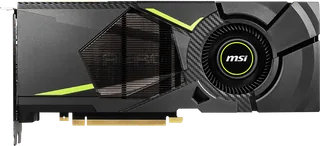
| Architecture | Main figures follow NVIDIA's reference specification. Founders Edition raises boost clock and board power. Photo shows MSI's stock-clocked RTX 2080 AERO 8G partner board, which uses a blower rather than the Founders Edition's dual axial fans. | GB202 GPU; 170 SMs, 680 texture units, 176 ROPs |
| Manufacturing process | – | TSMC 4nm (4N NVIDIA custom process); 92.2 billion transistors; 750 mm² die |
| Ray tracing | Dedicated first generation RT Cores | 170 fourth-generation RT Cores; 318 RT TFLOPS |
| AI cores | Dedicated Tensor Cores | 680 fifth-generation Tensor Cores; 3352 AI TOPS |
| Upscaling and frame generation | NVIDIA DLSS Super Resolution; no DLSS Frame Generation | DLSS 4.5 with Super Resolution, DLAA, Ray Reconstruction, Frame Generation, Multi Frame Generation and Dynamic Multi Frame Generation |
| Base clock | 1515 MHz for both reference and Founders Edition | 2.01 GHz |
| Cache | – | 96 MB L2 |
| Memory | ||
| Video memory | 8 GB GDDR6 | 32 GB GDDR7 (better) |
| Memory bus | 256-bit | 512-bit (better) |
| Memory bandwidth | 448 GB/s | 1,792 GB/s (better) |
| Memory detail | 14 Gbps GDDR6 | GDDR7 at 28 Gbps |
| Connections and power | ||
| Board power | 215 W or 225 W | 575 W |
| Interface | PCIe 3.0 | PCIe 5.0 |
| Display outputs | Founders Edition supports DisplayPort 1.4, HDMI 2.0b and USB-C/VirtualLink; up to 4 displays; HDCP 2.2. MSI AERO 8G has 3 × DisplayPort 1.4a, 1 × HDMI 2.0b and 1 × USB-C. | 3 × DisplayPort 2.1b (UHBR20), 1 × HDMI 2.1b; up to 4 displays; HDCP 2.3 |
| Maximum resolution | 7680 × 4320 | 4K at 480 Hz or 8K at 165 Hz with DSC |
| Power connector | 1 × 6-pin and 1 × 8-pin | 1 × 600 W PCIe Gen 5 cable, or 4 × PCIe 8-pin cables with the adapter in the box |
| Recommended power supply | 650 W | 1000 W |
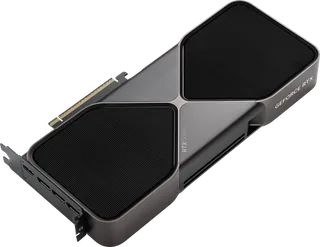
| Slot width | 2 slots (Founders Edition) | 2-slot (Founders Edition) |
| Size (reference card) | 266.74 × 115.7 mm (Founders Edition); 268 × 114 × 41 mm and 879 g (pictured MSI AERO 8G partner board) | 304 × 137 mm, 2-slot (Founders Edition) |
| Video encode and decode | Turing NVENC encoder | 3 × ninth-generation NVENC, 2 × sixth-generation NVDEC; AV1 encode and decode |
More comparisons
- NVIDIA GeForce RTX 5050 vs NVIDIA GeForce RTX 5090
- NVIDIA GeForce RTX 2080 vs NVIDIA GeForce RTX 5050
- NVIDIA GeForce RTX 5060 vs NVIDIA GeForce RTX 5090
- NVIDIA GeForce RTX 2080 vs NVIDIA GeForce RTX 5060
- NVIDIA GeForce RTX 5060 Ti vs NVIDIA GeForce RTX 5090
- NVIDIA GeForce RTX 2080 vs NVIDIA GeForce RTX 5060 Ti
- NVIDIA GeForce RTX 2080 vs NVIDIA GeForce RTX 5070
- NVIDIA GeForce RTX 5070 vs NVIDIA GeForce RTX 5090
- NVIDIA GeForce RTX 5070 Ti vs NVIDIA GeForce RTX 5090
- NVIDIA GeForce RTX 2080 vs NVIDIA GeForce RTX 5070 Ti
- NVIDIA GeForce RTX 3090 vs NVIDIA GeForce RTX 5090
- NVIDIA GeForce RTX 5080 vs NVIDIA GeForce RTX 5090
- NVIDIA GeForce RTX 4090 vs NVIDIA GeForce RTX 5090
- NVIDIA GeForce RTX 4080 SUPER vs NVIDIA GeForce RTX 5090
- NVIDIA GeForce RTX 4070 Ti SUPER vs NVIDIA GeForce RTX 5090
- NVIDIA GeForce RTX 4070 SUPER vs NVIDIA GeForce RTX 5090