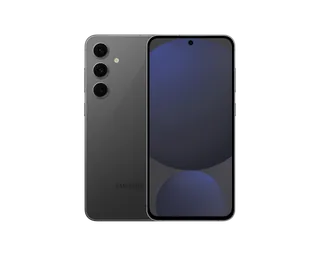
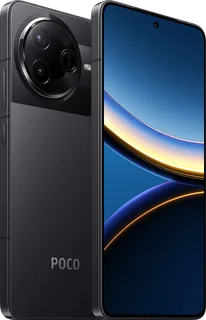
Samsung Galaxy S24 FE vs Xiaomi POCO F7 Pro
Better figure, where one is clearly better
| SamsungGalaxy S24 FE | XiaomiPOCO F7 Pro | |
|---|---|---|
| Overview | ||
| Released | October 2024 | March 2025 |
| Display | ||
| Screen size | 6.7″ | 6.67″ |
| Resolution | 2340 × 1080 | 3200 × 1440 (better) |
| Sharpness | 385 pixels per inch | 526 pixels per inch (better) |
| Panel | OLED | OLED |
| Refresh rate | 120 Hz | 120 Hz |
| Peak brightness | 1,900 nits | 3,200 nits (better) |
| Display type | FHD+ Dynamic AMOLED 2X (2,340 × 1,080); 120 Hz adaptive refresh (60/120 Hz); 6.7 inches as a full rectangle, 6.5 inches with rounded corners | WQHD+ Flow AMOLED, 12-bit colour, 68 billion colours and 5,000,000:1 contrast |
| Pixel density | 385 ppi (Samsung UK) | 526 ppi |
| Brightness detail | 1,900 nits peak | 1,800 nits high-brightness mode and 3,200 nits peak covering 25% of the screen |
| Screen protection | Corning Gorilla Glass Victus+ front and back | Corning Gorilla Glass 7i |
| Display features | Vision Booster | DCI-P3, Dolby Vision, HDR10+, circular polarisation, 3,840 Hz PWM dimming, 16,000 brightness levels, 480 Hz touch sampling and 2,560 Hz instant touch sampling in Game Turbo; Original Colour PRO, Pro HDR and TÜV low-blue-light, flicker-free and circadian-friendly certifications |
| Performance | ||
| Chip | Exynos 2400e | Qualcomm Snapdragon 8 Gen 3 |
| Memory | 8 GB | 12 GB (better) |
| Storage | 128 GB, 256 GB | 256 GB, 512 GB (better) |
| CPU | Exynos 2400e, 4 nm, deca-core (3.1 GHz, 2.9 GHz, 2.6 GHz, 1.95 GHz); 8 GB of RAM | TSMC 4 nm; one Cortex-X4-based prime core up to 3.3 GHz, three Cortex-A720-based performance cores up to 3.2 GHz, two Cortex-A720-based performance cores up to 3.0 GHz and two Cortex-A520-based efficiency cores up to 2.3 GHz; Qualcomm AI engine |
| GPU | – | Qualcomm Adreno GPU; maker does not give a numeric model suffix |
| Storage type | 128 GB (104.5 GB available) or 256 GB (231.7 GB available); no microSD slot | LPDDR5X RAM and UFS 4.1 storage; 12 GB/256 GB or 12 GB/512 GB; no microSD slot, confirmed by Tech Advisor |
| Cooling | – | LiquidCool Technology 4.0, 5,400 mm² 3D dual-channel IceLoop system with separate thermal loops for processor and camera; 12 temperature sensors |
| Cameras | ||
| Main camera | 50 MP | 50 MP |
| Ultra wide camera | 12 MP | 8 MP |
| Telephoto camera | 8 MP | None |
| Optical zoom | 3× (better) | None |
| Front camera | 10 MP | 20 MP (better) |
| Main camera | 50 MP wide, OIS, F1.8, 84° | Light Fusion 800, 50 MP, f/1.6, 1/1.55-inch sensor, 6-element lens, OIS and 4-in-1 binning to 2.0 µm pixels |
| Ultra wide camera | 12 MP, F2.2, 123° | 8 MP, f/2.2 |
| Telephoto camera | 8 MP, 3x optical zoom, OIS, F2.4, 32° | – |
| Front camera | 10 MP, F2.4, 80° | 20 MP |
| Zoom | 3x optical zoom | – |
| Video recording | 8K at 30 fps | 8K at 24 fps, 4K at 24/30/60 fps, Full HD at 30/60 fps and HD at 30 fps; slow motion Full HD at 120/240/960 fps or HD at 120/240/480/960/1,920 fps |
| Front video | – | Full HD at 30/60 fps, HD at 30 fps and HD slow motion at 120 fps |
| Camera features | Nightography; Instant Slow-mo; Generative Edit | Dynamic shots, motion capture and tracking focus, film camera, night, portrait, documents, Pro, panorama, Burst Shot Mode 2.0, long exposure, HDR, video teleprompter, Director Mode, Dual Video and ShootSteady; AI gallery editing varies by software and region |
| Battery and charging | ||
| Battery | 4,700 mAh | 6,000 mAh (better) |
| Video playback (maker's claim) | Up to 28 hours | – |
| Wired charging | Up to 25 W | Up to 90 W (better) |
| Wireless charging | Yes (wattage not published) | None |
| Battery life detail | 4,700 mAh typical, 4,565 mAh rated; video playback up to 28 hours | 6,000 mAh typical; maker laboratory claims over 16 hours video playback and at least 80% capacity after 1,600 full charge cycles; Surge P3 charging and Surge G1 battery-management chips |
| Wired charging | Up to 50% in around 30 minutes with a 25 W adapter (sold separately) and 3 A USB-C cable | 90 W HyperCharge; maker laboratory claim of 1–100% in 37 minutes with Top Speed enabled, screen off and approximately 25°C room temperature; UK box excludes adaptor despite generic measurement footnote mentioning one |
| Wireless charging | Fast Wireless Charging | – |
| Charges other devices | Wireless PowerShare | – |
| Design | ||
| Type | Standard | Standard |
| Weight | 213 g | 206 g (better) |
| Thickness | 8 mm (better) | 8.12 mm |
| Height × width | 162 × 77.3 mm | 160.26 × 74.95 mm |
| Water and dust resistance | IP68 | IP68 |
| Materials | – | Metal middle frame and glass back with gloss/matt finish |
| Colours | Blue, Graphite, Grey, Mint, Yellow | Black, Blue and Silver |
| Water resistance detail | IP68 | IP68; maker test at 2.5 m in static freshwater for 30 minutes; resistance can decline with wear |
| Biometrics | In-screen fingerprint sensor, face recognition | Ultrasonic in-display fingerprint reader and AI Face Unlock |
| Sensors | Accelerometer, barometer, fingerprint, gyro, geomagnetic, Hall, light, virtual proximity sensing | Proximity, ambient light, accelerometer, electronic compass, gyroscope, IR blaster and flicker sensor; X-axis linear vibration motor |
| Speakers | – | Stereo speakers, three-microphone array, Dolby Atmos, Hi-Res Audio and Hi-Res Wireless Audio |
| Software | ||
| Operating system | Android | Android |
| Software at launch | Android 14, One UI 6.1 | Xiaomi HyperOS 2; Android 15 confirmed by Tech Advisor and Trusted Reviews |
| In the box | – | Phone, USB-C cable, SIM tool, protective case, quick-start guide, warranty card, safety information and desiccant; no UK adaptor; launch purchase promotion offered a separate 120 W adaptor gift |
| Software updates | Seven generations of OS upgrades and seven years of security updates | – |
| AI features | Galaxy AI | – |
| Safety features | Auto Blocker; Samsung Knox, Knox Vault and Knox Matrix; passkeys | – |
| Connectivity | ||
| Mobile network | 5G, LTE | Dual nano-SIM; 5G SA/NSA, LTE, WCDMA and GSM, 4×4 MIMO; 5G SA n1/n2/n3/n5/n7/n8/n20/n26/n28/n38/n40/n41/n48/n66/n77/n78; Surge T1S antenna tuner |
| SIM | Nano-SIM plus a second nano-SIM or eSIM; dual eSIM also supported | Dual nano-SIM |
| Wi-Fi | Wi-Fi 6E (802.11a/b/g/n/ac/ax), 2.4, 5 and 6 GHz, HE160, MIMO, 1024-QAM | Wi-Fi 7/6/5/4, 2.4/5 GHz, 2×2 MIMO, Wi-Fi Direct and Miracast; Wi-Fi 7/6 availability depends on region, network and applicable software updates |
| Bluetooth | Bluetooth 5.3 | Bluetooth 5.4, Dual-Bluetooth; SBC, AAC, aptX, aptX HD, aptX Adaptive, LDAC, LHDC 5.0, LC3, ASHA and Auracast |
| NFC | Yes | Supported; regional functions vary |
| USB | USB Type-C, USB 3.2 Gen 1 | USB-C |
| Positioning | GPS, Glonass, BeiDou, Galileo, NavIC, QZSS | GPS L1/L5, BeiDou B1I/B1C/B2a, Galileo E1/E5a, GLONASS G1, QZSS L1/L5 and NavIC L5; assisted positioning |
More comparisons
- Samsung Galaxy S24 FE vs Samsung Galaxy S26 FE
- Samsung Galaxy S24 FE vs Samsung Galaxy S26
- Samsung Galaxy S24 FE vs Samsung Galaxy S26 Ultra
- Samsung Galaxy S24 FE vs Samsung Galaxy S26+
- Xiaomi POCO F7 Pro vs Xiaomi POCO F8 Pro
- Motorola edge 70 vs Xiaomi POCO F7 Pro
- Xiaomi POCO F7 Pro vs Xiaomi POCO F8 Ultra
- Apple iPhone Air vs Xiaomi POCO F7 Pro
- Samsung Galaxy S24 FE vs Samsung Galaxy S25 FE
- Nothing Phone (3) vs Xiaomi POCO F7 Pro
- Xiaomi POCO F7 vs Xiaomi POCO F7 Pro
- iQOO iQOO Neo 10 (India) vs Xiaomi POCO F7 Pro
- Samsung Galaxy S25 Edge vs Xiaomi POCO F7 Pro
- Samsung Galaxy S24 FE vs Samsung Galaxy S25 Edge
- Xiaomi POCO F6 Pro vs Xiaomi POCO F7 Pro
- Xiaomi POCO F5 Pro vs Xiaomi POCO F7 Pro