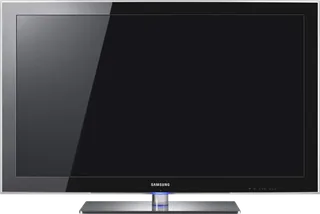
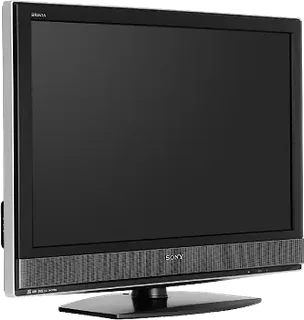
Samsung LED B8000 vs Sony BRAVIA W2000
Better figure, where one is clearly better
| SamsungLED B8000 | SonyBRAVIA W2000 | |
|---|---|---|
| Overview | ||
| Released | 2009 | 2006 |
| Display | ||
| Panel | LED LCD | LCD |
| Panel detail | Edge-lit LCD. Samsung's 200 Hz Motion Plus is a motion-processing label; the UK manual lists 1080p at 60 Hz as optimal PC input timing, not a native panel refresh rate. | WCG-CCFL fluorescent backlight and a 16:9 Full HD LCD panel. Native panel refresh is not published in the read maker specifications; mains and accepted input frequencies are not panel refresh rates. |
| Resolution | 1920 × 1080 (Full HD) | 1920 × 1080 (Full HD) |
| HDR formats | None | None |
| Screen finish | Glossy screen on the reviewed 46-inch unit (Les Numériques) | – |
| Picture processing | Samsung 200 Hz Motion Plus offers separate blur and judder controls on the reviewed 46-inch set (AVForums). Its 3D colour-management menu refers to colour axes, not stereoscopic 3D. | BRAVIA ENGINE and Live Colour Creation; adjustable backlight, light sensor and MPEG noise reduction. |
| Picture modes | Samsung's manual lists Dynamic, Standard, Natural and Movie picture modes. AVForums found Movie more accurate than the default Dynamic setting on its 46-inch test set. | Vivid, Standard and Custom. |
| Motion handling | What Hi-Fi? finds film pans stable with Motion Plus, while AVForums says Game Mode disables that processing and can make 24p films judder. Les Numériques measured less visible trailing than the related B7000. | Native refresh omitted. Secrets reports some smearing in dark scenes; neither mains frequency nor the manual's PC signal chart establishes native refresh. |
| Sizes | ||
| Sizes | 40, 46″ | 40, 46″ |
| Largest size | 46″ | 46″ |
| Gaming | ||
| HDMI ports | 4 (0 HDMI 2.1 at 4K 120 Hz+) | 2 (0 HDMI 2.1 at 4K 120 Hz+) |
| Variable refresh rate | None | None |
| HDMI detail | Four HDMI inputs in the GB/IE manual, with DVI supported on HDMI 1. The manual also covers VGA, component, composite and SCART through supplied adaptors. HDMI 2.1 and 4K input were not part of this model. | Two HDMI inputs accept 1080p, 1080i, 720p, 576p/i and 480p/i. Two RGB SCART inputs, component, composite, S-Video and D-sub PC input. UK manual limits component to 1080i; the German web table also lists component 1080p, so the exact UK manual is followed. TechRadar incorrectly describes the TV as stopping short of Full HD; the maker confirms 1920 × 1080 and HDMI 1080p. |
| Game features | Manual Game Mode on AVForums' 46-inch review unit. It suppresses some video processing but also turns off Motion Plus and film cadence detection; there is no maker-confirmed VRR or automatic low-latency mode. | – |
| Smart TV and sound | ||
| Smart TV platform | Samsung Smart TV | None (no smart platform) |
| Processor | – | BRAVIA ENGINE |
| Speakers | 20 W | 20 W |
| Wi-Fi | Optional 802.11a/b/g/n through a separately sold Samsung Wireless LAN USB adapter | – |
| Speaker detail | Two 10 W speakers for both sizes according to Samsung's GB/IE manual. What Hi-Fi? considers the sound serviceable; Les Numériques finds it weak. | Two 10 W speakers, 20 W total. |
| Audio features | Optical digital audio output and SRS TruSurround HD in Samsung's GB/IE manual. | BBE Digital, SRS TruSurround XT and Virtual Dolby; stereo analogue audio and headphone outputs. |
| Casting | The GB/IE manual covers DLNA local media sharing, Internet@TV widgets and a Content Library. Original internet service availability can change after launch. | – |
| TV tuners | Analogue, DVB-T and DVB-C in the GB/IE manual; the reviewed UK 46-inch set has Freeview standard-definition reception. DVB-T2/Freeview HD is not stated in the manual. | Analogue PAL/SECAM and DVB-T MPEG-2; EPG and conditional-access module slot. The manual does not guarantee compatibility with future DVB-T services. |
| USB | Two USB ports in the GB/IE manual, one marked for a USB hard drive; media playback and software updates are supported. The optional wireless adapter uses a USB port. | – |
| Ethernet | Wired LAN port in the GB/IE manual. | – |
| Optical audio out | Optical digital audio output in the GB/IE manual. | – |
| Design and power | ||
| Size | Without stand, width × depth × height from Samsung's GB/IE manual: 40-inch 998.2 × 31 × 612.8 mm; 46-inch 1130.9 × 31 × 687.5 mm. The manual lists only with-stand weights, so configuration weights remain empty. | 40-inch without stand: 988 × 665 × 105 mm, 23 kg; with stand: 988 × 715 × 266 mm, 27.5 kg. 46-inch without stand: 1120 × 755 × 118 mm, 30 kg; with stand: 1120 × 805 × 334 mm, 36 kg. Configuration weights exclude stand. |
| Stand | Stand swivels 20° either way. With stand, the 40-inch set is 998.2 × 257.2 × 677 mm and 20 kg; the 46-inch is 1130.9 × 277.2 × 757 mm and 24.2 kg, from the GB/IE manual. | Table-top stand included; optional SU-WL51 wall-mount bracket. |
| Power use | Samsung's GB/IE manual gives under 0.1 W standby for both sizes; it directs readers to each unit's label for operating power. | 40-inch: 185 W; 46-inch: 225 W. Standby: 0.3 W after internal processes finish. |
| Colours | – | Black screen surround and silver speaker fascia. |
| In the box | GB/IE manual lists the stand, remote, batteries, cleaning cloth and component and SCART adaptor cables. The wireless LAN adapter is sold separately. | RM-ED008 remote, AA batteries, mains lead, coaxial cable, cable holder and securing belt. Sony's September 2006 Swedish notice planned W-series market introduction for October; actual first-sale month remains unverified, so release uses 2006. |
More comparisons
- Sony BRAVIA 7 II vs Sony BRAVIA W2000
- Sony BRAVIA 9 II vs Sony BRAVIA W2000
- LG OLED evo C6 vs Sony BRAVIA W2000
- LG OLED evo C6 vs Samsung LED B8000
- Sony BRAVIA 3 II vs Sony BRAVIA W2000
- Sony BRAVIA 8 II vs Sony BRAVIA W2000
- Samsung LED B8000 vs Samsung Neo QLED QN90F
- Sony BRAVIA 5 vs Sony BRAVIA W2000
- Sony BRAVIA 3 vs Sony BRAVIA W2000
- Sony BRAVIA 9 vs Sony BRAVIA W2000
- Sony BRAVIA 8 vs Sony BRAVIA W2000
- Samsung LED B8000 vs Samsung LED H8000
- Samsung LED B8000 vs Samsung LED F8000
- Samsung LED B8000 vs Samsung LED ES8000 (2012)
- Samsung LED B8000 vs Samsung LED D8000 (2011)
- Samsung LED B8000 vs Samsung LED C8000