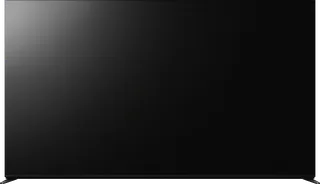
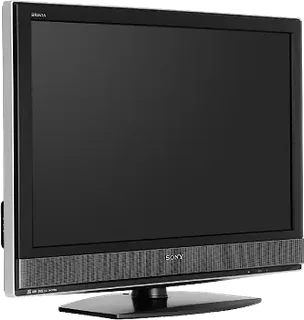
Sony BRAVIA 9 vs Sony BRAVIA W2000
Better figure, where one is clearly better
| SonyBRAVIA 9 | SonyBRAVIA W2000 | |
|---|---|---|
| Overview | ||
| Released | May 2024 | 2006 |
| Display | ||
| Panel | Mini-LED | LCD |
| Panel detail | Quantum-dot LCD with Mini LED backlight and XR Backlight Master Drive; native 120 Hz reported by TechRadar | WCG-CCFL fluorescent backlight and a 16:9 Full HD LCD panel. Native panel refresh is not published in the read maker specifications; mains and accepted input frequencies are not panel refresh rates. |
| Resolution | 3840 × 2160 (4K) (better) | 1920 × 1080 (Full HD) |
| Refresh rate | 120 Hz | – |
| HDR formats | Dolby Vision, HDR10, HLG | None |
| Screen finish | X-Anti Reflection | – |
| Colour range | XR Triluminos Pro | – |
| Picture processing | XR Contrast Booster 30, High Peak Luminance, XR 4K Upscaling and ambient-light sensor | BRAVIA ENGINE and Live Colour Creation; adjustable backlight, light sensor and MPEG noise reduction. |
| Picture modes | – | Vivid, Standard and Custom. |
| Motion handling | XR Motion Clarity | Native refresh omitted. Secrets reports some smearing in dark scenes; neither mains frequency nor the manual's PC signal chart establishes native refresh. |
| Viewing angle | X-Wide Angle | – |
| Sizes | ||
| Sizes | 65, 75, 85″ | 40, 46″ |
| Largest size | 85″ (better) | 46″ |
| Gaming | ||
| HDMI ports | 4 (2 HDMI 2.1 at 4K 120 Hz+) (better) | 2 (0 HDMI 2.1 at 4K 120 Hz+) |
| Variable refresh rate | HDMI VRR | None |
| Auto low latency mode | Yes | – |
| HDMI detail | HDMI 3 and 4 support 4K at 120 Hz; HDMI 3 also serves eARC (RTINGS). Maker lists VRR, ALLM and SBTM | Two HDMI inputs accept 1080p, 1080i, 720p, 576p/i and 480p/i. Two RGB SCART inputs, component, composite, S-Video and D-sub PC input. UK manual limits component to 1080i; the German web table also lists component 1080p, so the exact UK manual is followed. TechRadar incorrectly describes the TV as stopping short of Full HD; the maker confirms 1920 × 1080 and HDMI 1080p. |
| Game features | Game Menu, automatic HDR tone mapping and Auto Genre Picture Mode with a PlayStation 5 | – |
| Smart TV and sound | ||
| Smart TV platform | Google TV | None (no smart platform) |
| Processor | XR Processor | BRAVIA ENGINE |
| Speakers | 70 W, 2.2.2 channels (better) | 20 W |
| Dolby Atmos | Yes | – |
| DTS:X | Yes | – |
| eARC | Yes | – |
| Wi-Fi | IEEE 802.11ax/ac/a/b/g/n | – |
| Speaker detail | Acoustic Multi-Audio+; two midrange drivers, two tweeters, two subwoofers and two upward-firing beam tweeters; 70 W total | Two 10 W speakers, 20 W total. |
| Audio features | Acoustic Center Sync with compatible Sony audio systems; Voice Zoom 3, 3D Surround Upscaling, S-Master amplifier and automatic room/position sound calibration | BBE Digital, SRS TruSurround XT and Virtual Dolby; stereo analogue audio and headphone outputs. |
| TV tuners | – | Analogue PAL/SECAM and DVB-T MPEG-2; EPG and conditional-access module slot. The manual does not guarantee compatibility with future DVB-T services. |
| Voice assistants | Hands-free Google Assistant; works with Alexa and Apple HomeKit | – |
| Casting | Google Cast and Apple AirPlay | – |
| USB | 2 USB ports; Japanese models support USB hard-drive recording | – |
| Ethernet | One 100BASE-TX/10BASE-T port | – |
| Optical audio out | One optical audio output, shared with the S-Center speaker input | – |
| Design and power | ||
| Size | Japanese maker specifications without stand; 65-inch 1443 × 835 × 48 mm, 75-inch 1667 × 960 × 48 mm, 85-inch 1888 × 1085 × 49 mm. Listed configuration weights also exclude the stand | 40-inch without stand: 988 × 665 × 105 mm, 23 kg; with stand: 988 × 715 × 266 mm, 27.5 kg. 46-inch without stand: 1120 × 755 × 118 mm, 30 kg; with stand: 1120 × 805 × 334 mm, 36 kg. Configuration weights exclude stand. |
| Stand | Four-position stand with wide/narrow feet and raised soundbar positions; weights including stand are 34.8 kg (65-inch), 45 kg (75-inch) and 55.7 kg (85-inch), from Japanese maker specifications | Table-top stand included; optional SU-WL51 wall-mount bracket. |
| Power use | Japanese models rated 350 W (65-inch), 456 W (75-inch), 512 W (85-inch); standby 0.5 W. Regional power ratings differ | 40-inch: 185 W; 46-inch: 225 W. Standby: 0.3 W after internal processes finish. |
| Colours | – | Black screen surround and silver speaker fascia. |
| In the box | – | RM-ED008 remote, AA batteries, mains lead, coaxial cable, cable holder and securing belt. Sony's September 2006 Swedish notice planned W-series market introduction for October; actual first-sale month remains unverified, so release uses 2006. |
More comparisons
- Sony BRAVIA 7 II vs Sony BRAVIA 9
- Sony BRAVIA 9 vs Sony BRAVIA 9 II
- Sony BRAVIA 7 II vs Sony BRAVIA W2000
- Sony BRAVIA 9 II vs Sony BRAVIA W2000
- LG OLED evo C6 vs Sony BRAVIA W2000
- Sony BRAVIA 3 II vs Sony BRAVIA 9
- Sony BRAVIA 3 II vs Sony BRAVIA W2000
- Sony BRAVIA 8 II vs Sony BRAVIA 9
- Sony BRAVIA 8 II vs Sony BRAVIA W2000
- Sony BRAVIA 5 vs Sony BRAVIA W2000
- Sony BRAVIA 3 vs Sony BRAVIA 9
- Sony BRAVIA 5 vs Sony BRAVIA 9
- Sony BRAVIA 3 vs Sony BRAVIA W2000
- Samsung Neo QLED QN85A (2021) vs Sony BRAVIA 9
- Samsung Neo QLED QN85B (2022) vs Sony BRAVIA 9
- Samsung Neo QLED QN85C (2023) vs Sony BRAVIA 9