SEGA Saturn vs Sony PlayStation
Better figure, where one is clearly better
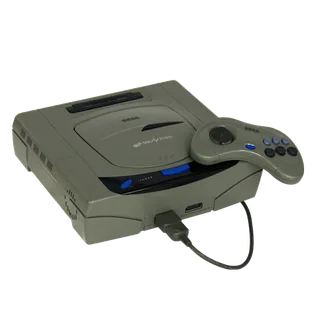
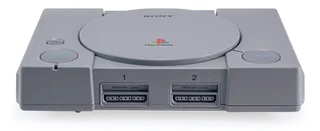
| SEGASaturn | SonyPlayStation | |
|---|---|---|
| Overview | ||
| Released | July 1995 | September 1995 |
| Performance | ||
| Type | Home console | Home console |
| CPU | 2 × Hitachi SH-2, 28.6 MHz | MIPS R3000A-compatible, 33.87 MHz |
| GPU | SEGA VDP1 and VDP2 | PlayStation GPU |
| Memory | 4 MB (better) | 3 MB |
| Disc drive | Yes | Yes |
| CPU | Two Hitachi SH-2 at 28.6 MHz (25 MIPS each); Motorola 68EC000 at 11.3 MHz for sound | Custom 32-bit R3000A-based CPU at 33.8688 MHz; a Geometry Transformation Engine coprocessor handles 3D calculations (Sony developer manual) |
| GPU | VDP1 (sprites and polygons) and VDP2 (backgrounds); up to 16.77 million colours; up to 5 scroll planes; flat and Gouraud shading | PlayStation GPU with textured and Gouraud-shaded polygons; up to 360,000 polygons per second (Sony) |
| Memory detail | 16 Mbit (2 MB) work RAM, 12 Mbit (1.5 MB) video RAM; separately 4 Mbit sound RAM, 4 Mbit CD buffer and 256 Kbit backup RAM | 2 MB main RAM, 1 MB video RAM, 512 KB sound RAM and a 512 KB operating system ROM (Sony developer manual) |
| Storage detail | Double-speed CD-ROM drive; saves in internal backup RAM (battery-backed) | Double-speed (2×) CD-ROM drive; saves on removable 128 KB memory cards (two slots) |
| Storage expansion | Cartridge slot (backup memory, RAM expansion); communication expansion port | – |
| Display and video | ||
| Built-in screen | No built-in screen | No built-in screen |
| Video output | A/V out; 320 × 224 and others | AV Multi Out for composite and RGB; separate composite video and stereo audio RCA outputs on the original SCPH-1002 |
| Audio | 32-channel PCM or FM sound (16-bit, up to 44.1 kHz) with audio DSP | 16-bit Sony sound processor, 24 ADPCM channels at up to 44.1 kHz; analogue stereo out; plays audio CDs |
| Connections | ||
| Ports | 2 × control ports, A/V out, cartridge slot, communication expansion port | 2 × controller ports and 2 × memory card slots on the front; serial I/O, parallel I/O and AV Multi Out on the back (serial and parallel ports dropped on later models) |
| Controller | Control Pad with D-pad, six face buttons, L, R and Start | PlayStation controller at launch; later bundles came with the DUALSHOCK analogue controller |
| Design and power | ||
| Power use | About 15 W (Japanese model HST-3210, 100 V) | – |
More comparisons
- Sony PlayStation vs Sony PlayStation 5 Pro
- Sony PlayStation vs Sony PlayStation Portal
- Sony PlayStation vs Sony PlayStation 5 Slim
- Sony PlayStation vs Sony PlayStation 5
- Sony PlayStation vs Sony PlayStation 4 Pro
- Sony PlayStation vs Sony PlayStation 4 Slim
- Sony PlayStation vs Sony PlayStation 4 (CUH-1200)
- Sony PlayStation vs Sony PlayStation 4
- Sony PlayStation vs Sony PlayStation 2
- Sony PlayStation vs Sony PS one
- SEGA Saturn vs Sony PS one
- SEGA Dreamcast vs SEGA Saturn
- Nintendo Nintendo 64 vs SEGA Saturn
- Nintendo Nintendo 64 vs Sony PlayStation
- Nintendo Super Nintendo Entertainment System (SNES) vs Sony PlayStation
- SEGA Mega Drive vs SEGA Saturn