Sony BRAVIA 3 II vs Sony BRAVIA X90C
Better figure, where one is clearly better
| SonyBRAVIA 3 II | SonyBRAVIA X90C | |
|---|---|---|
| Overview | ||
| Released | 2026 | 2015 |
| Display | ||
| Panel | LED LCD | LED LCD |
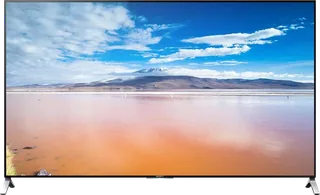
| Panel detail | Direct LED backlight with frame dimming, without local dimming | Edge-lit IPS LCD on the independently reviewed 65-inch set. Sony calls the X90C an ultra-slim design, with its upper section about 4.9 mm thick. No maker-confirmed native refresh rate was found; Motionflow XR processing must not be read as a panel rate. |
| Resolution | 3840 × 2160 (4K) | 3840 × 2160 (4K) |
| Refresh rate | 120 Hz | – |
| HDR formats | Dolby Vision, HDR10, HLG | HDR10 |
| HDR extras | – | Sony UK lists HDR10 for X90C streaming, HDMI and USB playback in its compatibility table; HDR support arrived by software update after launch. The table does not list Dolby Vision. |
| Screen finish | RTINGS reports matte coating on US 65-inch and 75-inch models; other sizes are glossy | Glossy, as observed by FlatpanelsHD on its 65-inch review sample |
| Peak brightness | 520 nits on a 10% HDR window in Professional mode (Tom's Guide, 65-inch US model) | – |
| Colour range | XR Triluminos Pro and Live Colour | – |
| Picture processing | XR Clear Image, Dynamic Contrast Enhancer and light sensor | Sony 4K Processor X1, 4K X-Reality PRO upscaling and TRILUMINOS Display; FlatpanelsHD found good colour and detail on the 65-inch model. |
| Picture modes | Vivid, Standard, Cinema, Game, Professional, Graphics, Photo and Dolby Vision modes; calibrated modes for Netflix, Sony Pictures Core and Prime Video | – |
| Motion handling | Motionflow XR 480; native panel refresh is 120 Hz | Motionflow processing is available; a native panel Hz value was not established from Sony's published material. |
| Viewing angle | RTINGS identifies an IPS panel on its 65-inch US test unit and a VA panel on the 50-inch; other sizes' panel types are unconfirmed | FlatpanelsHD found wider side viewing angles than VA LCDs on its IPS-equipped 65-inch review sample, with weaker dark-room contrast. |
| Sizes | ||
| Sizes | 43, 50, 55, 65, 75, 85, 100″ | 55, 65″ |
| Largest size | 100″ (better) | 65″ |
| Gaming | ||
| HDMI ports | 4 (all HDMI 2.1 at 4K 120 Hz+) (better) | 4 (0 HDMI 2.1 at 4K 120 Hz+) |
| Variable refresh rate | HDMI VRR | None |
| Auto low latency mode | Yes | – |
| HDMI detail | All four inputs support 4K 120 Hz, VRR and ALLM; eARC and Source-Based Tone Mapping supported; HDCP 2.3 on all inputs | Four HDMI inputs; the Sony reference guide identifies MHL support. This predates HDMI 2.1 and 4K 120 Hz inputs. |
| Input lag | – | 34.6 ms in Game mode on FlatpanelsHD's 65-inch sample; a reviewer measurement, not a maker specification. |
| Game features | PS5 Auto HDR Tone Mapping and Auto Genre Picture Mode; Dolby Vision Game mode | Game mode; no VRR or ALLM claim in the Sony reference material. |
| Smart TV and sound | ||
| Smart TV platform | Google TV | Android TV |
| Processor | XR Processor | 4K Processor X1 |
| Speakers | 20 W | – |
| Dolby Atmos | Yes | – |
| DTS:X | Yes | – |
| eARC | Yes | – |
| Wi-Fi | Wi-Fi 6E | Built-in Wi-Fi |
| Bluetooth | 5.3 | – |
| Speaker detail | Two full-range X-Balanced bass reflex speakers | The thin chassis left limited room for speakers; both full reviews found the built-in audio light for films. |
| Audio features | Dolby Audio, Dolby Atmos and DTS:X support | – |
| Voice assistants | Voice search and built-in microphone with an off switch; Gemini availability depends on region, language and software | – |
| Casting | Google Cast, Apple AirPlay and Apple HomeKit | Google Cast built into Android TV, confirmed by the full FlatpanelsHD review. |
| TV tuners | US variants use ATSC, Clear QAM and analogue M; one terrestrial/cable tuner, no satellite input. Regional tuner systems and availability differ; these specifications do not establish a UK launch | Terrestrial, cable and satellite reception. The Sony reference guide shows two satellite feeds for twin-tuner mode; recording functions were still pending a software update when FlatpanelsHD tested it in August 2015. |
| USB | Two USB ports; no USB hard disk recording on US variants | Three USB ports on the 65-inch set, per FlatpanelsHD. |
| Ethernet | One Ethernet input | One Ethernet input on the 65-inch set, per FlatpanelsHD. |
| Optical audio out | One digital audio output | One digital optical output on the 65-inch set, per FlatpanelsHD. |
| Design and power | ||
| Size | Without stand, 43-inch 958 × 564 × 69 mm; 50-inch 1111 × 651 × 69 mm; 55-inch 1225 × 717 × 70 mm; 65-inch 1447 × 841 × 70 mm; 75-inch 1670 × 967 × 72 mm; 85-inch 1892 × 1092 × 74 mm; 100-inch 2230 × 1284 × 75 mm. Configuration weights exclude the stand | Without stand, Sony reference guide wall-mount table: 55″ 1232 × 712 mm and 65″ 1451 × 835 mm (width × height). FlatpanelsHD describes the 65-inch lower electronics housing as about 39 mm deep. |
| Stand | Black Slim T Shape Blade Stand with one position | Two narrow feet can be positioned at the edges or closer to the centre, and Sony supplies a close-fit wall-mount bracket. |
| VESA pattern | 43-inch 200 × 200 mm; 50-inch, 55-inch and 65-inch 300 × 300 mm; 75-inch and 85-inch 400 × 400 mm; 100-inch 600 × 400 mm (Sony's 2026 wall-mount compatibility chart) | – |
| Power use | 0.5 W standby; US power specification is AC 120 V, 60 Hz | Sony energy table standard mode: 55″ 138 W; 65″ 157 W. These are size-specific and are not a single series value. |
| Colours | Black | – |
| In the box | Table-top stand, voice remote, batteries, AC power cord and guides | Sony reference guide lists a supplied wall-mount bracket; FlatpanelsHD found both a touch remote and conventional remote with the 65-inch set, but no 3D glasses. |

More comparisons
- Hisense E7S PRO vs Sony BRAVIA 3 II
- Sony BRAVIA 3 II vs TCL C7L
- Sony BRAVIA 3 II vs Sony BRAVIA 7 II
- Sony BRAVIA 3 II vs Sony BRAVIA 9 II
- Sony BRAVIA 7 II vs Sony BRAVIA X90C
- Sony BRAVIA 9 II vs Sony BRAVIA X90C
- Hisense A7S vs Sony BRAVIA X90C
- Sony BRAVIA 3 vs Sony BRAVIA 3 II
- Samsung QLED Q7F vs Sony BRAVIA 3 II
- Hisense E7Q PRO vs Sony BRAVIA 3 II
- Sony BRAVIA 3 II vs Sony BRAVIA 8 II
- Sony BRAVIA 3 II vs Sony BRAVIA 5
- Sony BRAVIA 3 II vs Sony BRAVIA 9
- Sony BRAVIA 3 II vs Sony BRAVIA 8
- Sony A95L vs Sony BRAVIA 3 II
- Sony BRAVIA 3 II vs Sony X90L