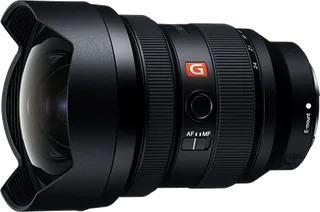
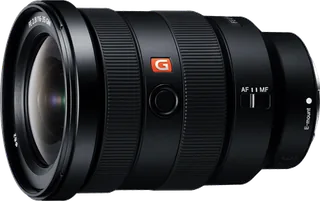
Sony FE 12-24mm F2.8 GM vs Sony FE 16-35mm F2.8 GM
Better figure, where one is clearly better
| SonyFE 12-24mm F2.8 GM | SonyFE 16-35mm F2.8 GM | |
|---|---|---|
| Overview | ||
| Released | July 2020 | July 2017 |
| Optics | ||
| Lens type | Zoom | Zoom |
| Focal length | 12–24 mm | 16–35 mm |
| Maximum aperture | f/2.8 | f/2.8 |
| Minimum aperture | f/22 | f/22 |
| Optical construction | 17 elements in 14 groups | Sixteen elements in thirteen groups; floating focus mechanism with independently driven groups |
| Special elements | Three XA extreme-aspherical elements, one aspherical element, three ED and two Super ED glass elements | Five aspherical elements in total including two XA elements; two ED elements |
| Coatings | Nano AR Coating II; fluorine coating on front element | Sony Nano AR coating and front-element fluorine coating |
| Diaphragm | Nine rounded blades | Eleven rounded blades |
| Angle of view | 122°–84° full frame; 99°–61° APS-C | 107°–63° full frame; 83°–44° APS-C |
| Mount and compatibility | ||
| Mounts | Sony E | Sony E |
| Image circle | Full frame | Full frame |
| Image circle detail | Full-frame coverage; 18–36 mm equivalent field of view on APS-C | Full-frame coverage; 24–52.5 mm equivalent field of view on APS-C |
| Teleconverter support | Not compatible with SEL14TC or SEL20TC | Not compatible with Sony E-mount teleconverters |
| Focus and stabilisation | ||
| Autofocus | Yes | Yes |
| Minimum focus distance | 0.28 m | 0.28 m |
| Maximum magnification | 0.14× | 0.19× |
| Optical stabilisation | No | No |
| Autofocus detail | Four XD linear motors, two per floating focus group; internal focusing | Two direct-drive SSM units drive the floating focusing groups |
| Focus distance detail | Minimum focus 0.28 m throughout the zoom range; Linear Response MF | 0.28 m minimum focus distance |
| Magnification detail | Maximum magnification 0.14× | 0.19× maximum magnification |
| Stabilisation detail | No lens stabilisation; compatible bodies provide stabilisation | No optical stabilisation; compatible camera body stabilisation can be used |
| Video features | – | Constant F2.8 maximum aperture and quiet direct-drive SSM focusing |
| Design | ||
| Dust and moisture resistant | Yes | Yes |
| Filter diameter | – | 82 mm |
| Maximum diameter | 97.6 mm | 88.5 mm |
| Length | 137 mm | 121.6 mm |
| Weight | 847 g | 680 g (better) |
| Controls | AF/MF switch, one customisable focus-hold button, zoom and focus rings; no aperture ring | Manual-focus and zoom rings, AF/MF switch and customisable focus-hold button; hood release button |
| Filter detail | No front filter thread; rear holder accepts cut sheet filters, with cutting template supplied | 82 mm front filter thread |
| Weather resistance | Dust- and moisture-resistant design; not guaranteed completely dust- or moisture-proof | Dust and moisture resistant design with rubber mount ring; not guaranteed to prevent all ingress |
| Dimensions detail | – | 88.5 mm maximum diameter × 121.6 mm maker length; lens extends at wider zoom settings (Photography Blog and OpticalLimits) |
| Weight detail | Approximately 847 g lens with integral hood; separate caps excluded | Approximately 680 g lens; separate hood and caps excluded |
| Lens hood | Fixed petal hood integrated into the lens | ALC-SH149 petal bayonet hood, supplied |
| In the box | Locking front cap, ALC-R1EM rear cap, soft carrying case and filter template | ALC-SH149 hood, ALC-F82S front cap, ALC-R1EM rear cap and soft carrying case |
| Release detail | Sony Australia specified late July 2020 availability; Sony UK specified August for Europe and Japan specified 7 August, separate from 14 July pre-orders. Main date uses the earliest maker-confirmed July precision. TechRadar’s 24–48 mm APS-C equivalent is inconsistent with maker18–36 mm; Photography Blog’s focal-range section uses the APS-C angles, with maker full-frame angles retained here. Review distortion and corner-darkening differences are preserved | Sony Canada announcement dated 17 May 2017 initially specifies August; revised Sony Japan maker release of 14 July brings Japan sale forward to 28 July 2017. Main date uses July, exact first global day unconfirmed. Two independent full reviews read: Photography Blog Mark Goldstein and OpticalLimits Klaus Schroiff, both Alpha 7R II. Differing edge sharpness, autofocus speed and balance assessments retained; OL sample centring good. OL optical table undercounts asphericals, maker five total including two XA used; Blog full-frame angle mistakenly uses APS-C83–44degree figures, maker107–63 used. No inferred predecessor link |
More comparisons
- Sony FE 12-24mm F2.8 GM vs Sony FE 8–14mm F3.5 Fisheye G
- Sony FE 12-24mm F2.8 GM vs Sony FE 16-25mm F2.8 G
- Sony FE 16-35mm F2.8 GM vs Sony FE 16–35mm F2.8 GM II
- Sony FE 12-24mm F2.8 GM vs Sony FE 16–35mm F2.8 GM II
- Sony FE 16-35mm F2.8 GM vs Sony FE PZ 16-35mm F4 G
- Sony FE 12-24mm F2.8 GM vs Sony FE 14mm F1.8 GM
- Sony FE 12-24mm F2.8 GM vs Sony FE 12-24mm F4 G
- Sony FE 16-35mm F2.8 GM vs Sony Vario-Tessar T* FE 16-35mm F4 ZA OSS
- Sony FE 12-24mm F4 G vs Sony FE 16-35mm F2.8 GM