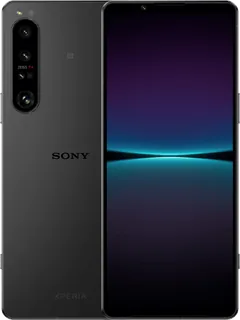
Sony Xperia 1 IV vs Sony Xperia XZ
Better figure, where one is clearly better
| SonyXperia 1 IV | SonyXperia XZ | |
|---|---|---|
| Overview | ||
| Released | June 2022 | October 2016 |
| Display | ||
| Screen size | 6.5″ | 5.2″ |
| Resolution | 3840 × 1644 (better) | 1920 × 1080 |
| Sharpness | 643 pixels per inch (better) | 424 pixels per inch |
| Panel | OLED | LCD |
| Refresh rate | 120 Hz | – |
| Display type | 4K HDR OLED, 21:9 | 5.2-inch Full HD TRILUMINOS TFT LCD |
| Screen protection | Corning Gorilla Glass Victus front and rear | Corning Gorilla Glass |
| Display features | 120 Hz refresh; 240 Hz motion blur reduction and touch scanning; Creator mode powered by CineAlta; Sony says about 50% brighter than Xperia 1 III | X-Reality for mobile |
| Performance | ||
| Chip | Snapdragon 8 Gen 1 | Snapdragon 820 |
| Memory | 12 GB (better) | 3 GB |
| Storage | 256 GB (better) | 32 GB |
| CPU | – | Qualcomm MSM8996 quad-core with 2.2 GHz and 1.6 GHz clusters |
| GPU | – | Adreno 530 |
| Storage type | 256 GB UFS in UK specification; microSDXC slot supports up to 1 TB | 32 GB flash on the F8331; microSDXC expansion |
| Cameras | ||
| Main camera | 12 MP | 23 MP (better) |
| Ultra wide camera | 12 MP | None |
| Telephoto camera | 12 MP | None |
| Optical zoom | 5.2× (better) | None |
| Front camera | 12 MP | 13 MP (better) |
| Main camera | 12 MP, 24 mm, ƒ/1.7, 1/1.7-inch Exmor RS sensor | 23 MP Exmor RS camera with ƒ/2.0 lens and flash |
| Ultra wide camera | 12 MP, 16 mm, ƒ/2.2, 1/2.5-inch Exmor RS sensor | – |
| Telephoto camera | 12 MP, continuous 85–125 mm, ƒ/2.3–2.8, 1/3.5-inch Exmor RS sensor | – |
| Front camera | 12 MP, ƒ/2.0, 1/2.9-inch Exmor RS sensor | 13 MP Exmor RS camera with 1080p video |
| Zoom | Continuous 85–125 mm optical telephoto (about 3.5–5.2× relative to 24 mm main); 15.6× hybrid zoom | – |
| Video recording | 4K HDR at 24, 25, 30, 60 or 120 fps on all three rear cameras; Cinematography Pro and Videography Pro | 4K rear video and 1080p front video |
| Camera features | Photography Pro; ZEISS T* coating; up to 20 fps AF/AE burst; Real-time Eye AF and subject tracking; 3D iToF sensor | Triple image sensing combines predictive hybrid autofocus, laser distance sensing and RGBC-IR colour sensing; five-axis video stabilisation |
| Battery and charging | ||
| Battery | 5,000 mAh (better) | 2,900 mAh |
| Video playback (maker's claim) | – | Up to 11 hours |
| Wired charging | Up to 30 W | – |
| Wireless charging | Up to 15 W (better) | None |
| Battery life detail | – | Sony's F8331 white paper lists a 2,900 mAh minimum embedded battery and up to 11 hours of video playback |
| Wired charging | USB Power Delivery; Sony claims 50% charge in 30 minutes; 30 W maximum reported by Stuff | – |
| Wireless charging | Qi wireless charging; 15 W maximum reported by Stuff | – |
| Charges other devices | Battery Share charges other Qi devices | – |
| Design | ||
| Type | Standard | Standard |
| Weight | 185 g | 161 g (better) |
| Thickness | 8.2 mm | 8.1 mm (better) |
| Height × width | 165 × 71 mm | 146 × 72 mm |
| Water and dust resistance | IP68 | IP68 |
| Materials | – | ALKALEIDO metal back |
| Colours | Black, Ice White, Purple | Mineral Black, Platinum, Forest Blue, Deep Pink |
| Buttons | Power, volume and dedicated two-stage camera shutter | – |
| Water resistance detail | IPX5/IPX8 water resistance and IP6X dust resistance | IP65/IP68 dust and water protection; the capless USB port must be dry before charging |
| Biometrics | Fingerprint sensor | Side-mounted fingerprint reader in the power button on UK models |
| Speakers | Front-facing full-stage stereo speakers; Dolby Atmos, 360 Reality Audio Upmix and DSEE Ultimate | Front-facing stereo speakers with High-Resolution Audio and DSEE HX |
| Software | ||
| Operating system | Android | Android |
| Software at launch | Android 12 | Android 6.0 Marshmallow; Sony's revised 2017 white paper lists the later Android 8.0 update |
| In the box | Sony says no charger or cable is included | – |
| Connectivity | ||
| Mobile network | Sub-6 GHz 5G and 4G LTE | 4G LTE Cat 9 on F8331; LTE bands 1, 2, 3, 4, 5, 7, 8, 12, 13, 17, 19, 20, 26, 28, 29, 32, 38, 39, 40 and 41 |
| SIM | Dual SIM, nano-SIM and eSIM | Nano-SIM |
| Wi-Fi | Wi-Fi 6E, 2.4/5/6 GHz | – |
| Bluetooth | Bluetooth 5.2 and LE Audio | Bluetooth 4.2 |
| NFC | Yes | Yes |
| USB | USB-C 3.2 at 5 Gbps with DisplayPort 4K/60 output; separate 3.5 mm headphone socket | USB-C with USB 2.0 and USB host; 3.5 mm headphone socket |

More comparisons
- Sony Xperia 1 IV vs Sony Xperia 1 VIII
- Sony Xperia 1 VIII vs Sony Xperia XZ
- Sony Xperia 1 IV vs Sony Xperia 1 VII
- Sony Xperia 1 VII vs Sony Xperia XZ
- Sony Xperia 1 IV vs Sony Xperia 1 VI
- Sony Xperia 1 VI vs Sony Xperia XZ
- Sony Xperia 1 IV vs Sony Xperia 5 V
- Sony Xperia 5 V vs Sony Xperia XZ
- Sony Xperia 1 IV vs Sony Xperia 1 V
- Sony Xperia 1 V vs Sony Xperia XZ
- Sony Xperia 1 IV vs Xiaomi Xiaomi 13
- Google Pixel 7 Pro vs Sony Xperia 1 IV
- Sony Xperia 1 IV vs Sony Xperia 5 IV
- Sony Xperia 5 IV vs Sony Xperia XZ
- Sony Xperia 1 III vs Sony Xperia 1 IV
- Sony Xperia 1 IV vs vivo X80 Pro