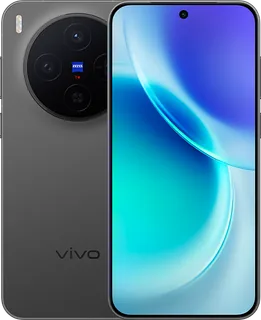
vivo X100 Ultra vs vivo X300
Better figure, where one is clearly better
| vivoX100 Ultra | vivoX300 | |
|---|---|---|
| Overview | ||
| Released | May 2024 | October 2025 |
| Display | ||
| Screen size | 6.78″ | 6.31″ |
| Resolution | 3200 × 1440 (better) | 2640 × 1216 |
| Sharpness | 518 pixels per inch (better) | 461 pixels per inch |
| Panel | LTPO OLED | LTPO OLED |
| Refresh rate | 120 Hz | 120 Hz |
| Peak brightness | 3,000 nits | 4,500 nits (better) |
| Display type | E7 AMOLED; LTPO confirmed by Android Central, up to 120 Hz | Q10 plus 8T LTPO AMOLED, adaptive 1–120 Hz |
| Pixel density | 517 ppi | 460 ppi |
| Brightness detail | 3,000 nits local peak | 4,500 nits local peak; minimum 1 nit |
| Display features | 103% NTSC, DCI-P3, 1.07 billion colours, HDR and 8,000,000:1 contrast; 1,440 Hz PWM requires developer-mode setting | 100% P3, 1.07 billion colours, 2,160 Hz PWM and DC dimming |
| Performance | ||
| Chip | Qualcomm Snapdragon 8 Gen 3 | MediaTek Dimensity 9500 |
| Memory | 12 GB – 16 GB | 12 GB – 16 GB |
| Storage | 256 GB, 512 GB, 1 TB (better) | 256 GB, 512 GB |
| CPU | Eight cores, 1 × 3.3 GHz + 2 × 3.0 GHz + 3 × 3.2 GHz + 2 × 2.3 GHz; 4 nm process | Eight cores, 1 × 4.21 GHz + 3 × 3.5 GHz + 4 × 2.7 GHz; 3 nm process |
| GPU | Qualcomm Adreno 750 | – |
| Storage type | LPDDR5X four-channel RAM and UFS 4.0; China-market 12 GB/256 GB, 16 GB/512 GB and 16 GB/1 TB; virtual RAM is separate; no storage expansion | Global 12 GB/256 GB and 16 GB/512 GB, LPDDR5X Ultra RAM and UFS 4.1; virtual RAM up to 12 GB or 16 GB is separate; no storage expansion |
| Cameras | ||
| Main camera | 50 MP | 200 MP (better) |
| Ultra wide camera | 50 MP | 50 MP |
| Telephoto camera | 200 MP | 50 MP |
| Optical zoom | 3.7× (better) | None |
| Front camera | 50 MP | 50 MP |
| Main camera | 50 MP, one-inch sensor, f/1.75, 23 mm equivalent and gimbal OIS with CIPA 4.5 stabilisation | 200 MP HPB, 1/1.4-inch sensor, f/1.68, autofocus, OIS and CIPA 4.5 stabilisation |
| Ultra wide camera | 50 MP, f/2.2 and 116° field of view | 50 MP JN1, 1/2.76-inch sensor, f/2.0 and autofocus |
| Telephoto camera | 200 MP, 1/1.4-inch sensor, f/2.67, 85 mm equivalent, ZEISS APO and OIS with CIPA 4.5 stabilisation | 50 MP LYT-602, 1/1.95-inch sensor, f/2.57, autofocus, OIS and CIPA 4.5 stabilisation |
| Front camera | 50 MP, f/2.45 and autofocus | 50 MP JN1, 1/2.76-inch sensor, f/2.0, autofocus, 20 mm equivalent and 92° field of view |
| Zoom | 3.7× optical and up to 100× digital zoom; advertised 20× telephoto macro is not an optical zoom ratio | Periscope telephoto camera; optional 2.35× telephoto extender is a separate accessory; built-in optical ratio not established from the cited maker sheet |
| Video recording | Main and telephoto 4K at 120 fps, 4K at 60 fps Dolby Vision HDR and 8K recording | 4K60 portrait video |
| Camera features | Physical 6 nm vivo V3+ imaging chip, ZEISS T* coating, multifocal portraits and telephoto macro | ZEISS T* coating, multifocal portraits, stage and Street Photography modes; V3+ imaging capabilities integrated into Dimensity 9500 |
| Battery and charging | ||
| Battery | 5,500 mAh | 6,040 mAh (better) |
| Wired charging | Up to 80 W | Up to 90 W (better) |
| Wireless charging | Up to 30 W | Up to 40 W (better) |
| Battery life detail | Second-generation silicon battery with semi-solid technology; 5,500 mAh typical at 3.8 V, 20.90 Wh; 5,400 mAh rated, 20.52 Wh | Single-cell overseas model excluding Europe, 6,040 mAh/22.78 Wh typical and 5,925 mAh/22.34 Wh rated at 3.77 V; Austria and Hungary 5,360 mAh/19.68 Wh typical and 5,255 mAh/19.29 Wh rated at 3.67 V; maker laboratory claims 24.1 hours YouTube or 15.8 hours navigation |
| Wired charging | 80 W FlashCharge | 90 W FlashCharge; adapter 11 V/8.2 A, compatible with 9 V/1.3 A or 5–11 V/5 A maximum |
| Wireless charging | 30 W wireless FlashCharge | Up to 40 W with separately purchased vivo Vertical Wireless Charger 2 |
| Design | ||
| Type | Standard | Standard |
| Weight | 229 g | 190 g (better) |
| Thickness | 9.23 mm | 7.95 mm (better) |
| Height × width | 164.07 × 75.57 mm | 150.57 × 71.92 mm |
| Water and dust resistance | IP69 | IP68 |
| Materials | Glass rear; Titanium colour name does not establish a titanium frame | Glass rear and metal frame |
| Colours | Titanium, White and Grey | Black, Pink, Blue, Purple and Red on global sheet; availability varies by market |
| Water resistance detail | Maker confirms both IP68 and IP69 | IP68 and IP69 under IEC 60529; resistance can diminish with use |
| Biometrics | In-display ultrasonic fingerprint sensor | 3D ultrasonic fingerprint sensor |
| Sensors | Accelerometer, ambient light, proximity, gyroscope, compass, front/rear colour temperature, ultrasonic fingerprint, laser focus, infrared blaster, flicker and multispectral sensors; X-axis linear motor | Accelerometer, ambient light, compass, proximity, front and rear colour temperature, gyroscope, laser focus, Hall, infrared blaster and flicker sensors; linear vibration motor |
| Speakers | Stereo speakers; three microphones and four recording channels | – |
| Software | ||
| Operating system | Android | Android |
| Software at launch | Android 14 with OriginOS 4, China market | Global Android 16 with OriginOS 6 |
| Software updates | – | Five OS upgrades and seven years of security updates |
| AI features | – | OriginOS AI and Office Kit functions; availability depends on region and software |
| Safety features | – | Private Space |
| In the box | – | Phone, quick start guide, USB cable, SIM eject tool, case, applied protective film and warranty card; charger included outside Europe and omitted in Europe |
| Connectivity | ||
| Mobile network | China model; GSM 850/900/1800/1900 MHz, CDMA BC0; WCDMA B1/2/4/5/6/8/19; LTE FDD B1/2/3/4/5/7/8/12/17/18/19/20/25/26/28/66, TDD B34/38/39/40/41/42; 5G n1/2/3/5/7/8/12/20/25/26/28/38/40/41/66/77/78/79 | GSM 850/900/1800/1900 MHz; WCDMA B1/2/4/5/8; LTE FDD B1/2/3/4/5/7/8/12/17/18/19/20/25/26/28/32/66, TDD B38/39/40/41/42; 5G n1/2/3/5/7/8/20/25/26/28/38/40/41/66/75/77/78 |
| SIM | Two nano-SIMs, dual SIM dual standby | Two physical SIMs, physical SIM plus eSIM, or dual eSIM; overseas dual standby, India dual active subject to supported bands and carrier deployment |
| Wi-Fi | Wi-Fi 6 and 7, 2.4/5 GHz, 2 × 2 MIMO, MU-MIMO and simultaneous 2.4/5 GHz connection | Wi-Fi 6 and 7, Wi-Fi Display, 2 × 2 MIMO, MU-MIMO and concurrent 2.4/5 GHz or 2.4/6 GHz |
| Bluetooth | Bluetooth 5.4; SBC, AAC, aptX, aptX HD, aptX Adaptive, aptX Lossless, LDAC and LHDC 5.0 | Bluetooth 6.0 |
| NFC | Supported | Reader/writer and card emulation including HCE and NFC-SIM; SIM payment requires SIM1 |
| Satellite features | Tiantong satellite communication on the 16 GB/1 TB version only; regional service requirements apply | – |
| USB | USB 3.2 Gen 1, OTG and DisplayPort video output | USB 3.2 Gen 1 and OTG |
| Positioning | GPS L1/L5, BeiDou B1C/B1I/B2a, GLONASS G1, Galileo E1/E5a, QZSS L1/L5, A-GPS, cellular and Wi-Fi positioning | GPS, BeiDou, GLONASS, Galileo, QZSS, NavIC, A-GPS, cellular and Wi-Fi positioning |

More comparisons
- Google Pixel 11 vs vivo X300
- vivo X100 Ultra vs vivo X300 Ultra
- vivo X300 vs vivo X300 Ultra
- Samsung Galaxy S26 vs vivo X300
- vivo X300 vs vivo X300 FE
- vivo X100 Ultra vs vivo X300 FE
- vivo X300 vs Xiaomi Xiaomi 17
- vivo X200 vs vivo X300
- vivo X300 vs vivo X300 Pro
- Apple iPhone 17 vs vivo X300
- OnePlus OnePlus Ace 5 Racing Edition vs vivo X300
- Google Pixel 9 vs vivo X300
- iQOO iQOO Neo 10 (India) vs vivo X300
- vivo X200 FE vs vivo X300
- vivo X200 Ultra vs vivo X300
- vivo X200 Pro vs vivo X300