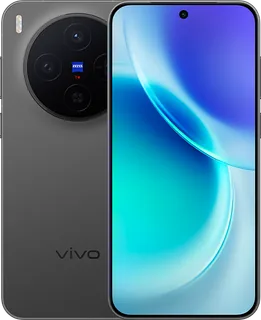
OnePlus OnePlus Ace 5 Racing Edition vs vivo X300
Better figure, where one is clearly better
| OnePlusOnePlus Ace 5 Racing Edition | vivoX300 | |
|---|---|---|
| Overview | ||
| Released | May 2025 | October 2025 |
| Display | ||
| Screen size | 6.77″ | 6.31″ |
| Resolution | 2392 × 1080 | 2640 × 1216 (better) |
| Sharpness | 388 pixels per inch | 461 pixels per inch (better) |
| Panel | OLED | LTPO OLED |
| Refresh rate | 120 Hz | 120 Hz |
| Peak brightness | 1,300 nits | 4,500 nits (better) |
| Display type | Flat OLED (AnTuTu exact-model review; maker table does not name panel technology); 60/90/120 Hz switching. 94.1% screen-to-body ratio; no LTPO claim | Q10 plus 8T LTPO AMOLED, adaptive 1–120 Hz |
| Pixel density | 387 ppi | 460 ppi |
| Brightness detail | Maker typical full-screen maximum 800 nits normal and 1,300 nits triggered; not an unqualified small-window peak | 4,500 nits local peak; minimum 1 nit |
| Screen protection | OPPO Crystal Shield glass | – |
| Display features | 10-bit colour, 100% DCI-P3 in vivid/cinema modes and 100% sRGB in natural mode; always-on display, sunlight mode and sleep mode. PWM/DC dimming; overview states high-frequency PWM and one-pulse DC without a PWM frequency. Touch chip up to 3000 Hz instantaneous sampling was promised for a June OTA; deployment not independently verified | 100% P3, 1.07 billion colours, 2,160 Hz PWM and DC dimming |
| Performance | ||
| Chip | MediaTek Dimensity 9400e | MediaTek Dimensity 9500 |
| Memory | 12 GB – 16 GB | 12 GB – 16 GB |
| Storage | 256 GB, 512 GB | 256 GB, 512 GB |
| CPU | 4 nm, eight cores (four prime and four large); maximum 3.4 GHz | Eight cores, 1 × 4.21 GHz + 3 × 3.5 GHz + 4 × 2.7 GHz; 3 nm process |
| GPU | ARM Immortalis G720 | – |
| AI engine | MediaTek NPU790 | – |
| Memory | 12 or 16 GB LPDDR5X | – |
| Storage type | UFS 4.0; 256 GB or 512 GB. Four published RAM/storage configurations | Global 12 GB/256 GB and 16 GB/512 GB, LPDDR5X Ultra RAM and UFS 4.1; virtual RAM up to 12 GB or 16 GB is separate; no storage expansion |
| Cooling | Maker Ice River vapour chamber and graphite cooling; vapour chamber over 7,000 mm² and total cooling area 29,772 mm² are separate maker figures | – |
| Cameras | ||
| Main camera | 50 MP | 200 MP (better) |
| Ultra wide camera | None | 50 MP |
| Telephoto camera | None | 50 MP |
| Optical zoom | None | None |
| Front camera | 16 MP | 50 MP (better) |
| Main camera | 50 MP Sony IMX882 (maker overview), f/1.8, 26 mm equivalent, five-element lens; autofocus, phase detection and two-axis OIS | 200 MP HPB, 1/1.4-inch sensor, f/1.68, autofocus, OIS and CIPA 4.5 stabilisation |
| Ultra wide camera | – | 50 MP JN1, 1/2.76-inch sensor, f/2.0 and autofocus |
| Telephoto camera | – | 50 MP LYT-602, 1/1.95-inch sensor, f/2.57, autofocus, OIS and CIPA 4.5 stabilisation |
| Front camera | 16 MP, f/2.4, 23 mm equivalent, four-element lens; maker does not identify sensor | 50 MP JN1, 1/2.76-inch sensor, f/2.0, autofocus, 20 mm equivalent and 92° field of view |
| Zoom | No optical telephoto; up to 20× digital zoom | Periscope telephoto camera; optional 2.35× telephoto extender is a separate accessory; built-in optical ratio not established from the cited maker sheet |
| Video recording | 4K/1080p 30/60 fps and 720p 30 fps, with stabilisation at those listed modes. Slow motion 1080p 120 fps or 720p 120/240 fps; time-lapse 1080p 30 and cinema 2384 × 1080 at 30 fps | 4K60 portrait video |
| Front video | 1080p 30/60 fps or 720p 30 fps with stabilisation; beauty processing on by default | – |
| Camera features | Additional 2 MP portrait camera, f/2.4, 22 mm equivalent, three-element lens; not ultrawide or macro. Rear and front JPG/HEIF; rear single-colour-temperature LED flash. Portrait, night, professional, panorama, slow motion, tilt-shift, live-photo and AI editing modes | ZEISS T* coating, multifocal portraits, stage and Street Photography modes; V3+ imaging capabilities integrated into Dimensity 9500 |
| Battery and charging | ||
| Battery | 7,100 mAh (better) | 6,040 mAh |
| Wired charging | Up to 80 W | Up to 90 W (better) |
| Wireless charging | None | Up to 40 W (better) |
| Battery life detail | Non-removable single cell: 7,100 mAh / 27.84 Wh typical; 6,930 mAh / 27.17 Wh rated. Maker claims seven hours of unspecified popular games and 26 hours of series viewing from laboratory tests with incomplete published conditions; not general runtime | Single-cell overseas model excluding Europe, 6,040 mAh/22.78 Wh typical and 5,925 mAh/22.34 Wh rated at 3.77 V; Austria and Hungary 5,360 mAh/19.68 Wh typical and 5,255 mAh/19.29 Wh rated at 3.67 V; maker laboratory claims 24.1 hours YouTube or 15.8 hours navigation |
| Wired charging | Up to 80 W SUPERVOOC; supplied adapter rated 80 W. Gaming bypass power supported. AnTuTu measured full charging in 57 minutes in its May 2025 review; exact initial charge not stated for Racing in that paragraph | 90 W FlashCharge; adapter 11 V/8.2 A, compatible with 9 V/1.3 A or 5–11 V/5 A maximum |
| Wireless charging | – | Up to 40 W with separately purchased vivo Vertical Wireless Charger 2 |
| Design | ||
| Type | Standard | Standard |
| Weight | 200 g | 190 g (better) |
| Thickness | 8.17 mm | 7.95 mm (better) |
| Height × width | 163.58 × 76.02 mm | 150.57 × 71.92 mm |
| Water and dust resistance | IP64 | IP68 |
| Materials | Crystal Shield front glass; exact maker table does not specify frame or back material | Glass rear and metal frame |
| Colours | 逐浪白 (white), 磐石黑 (black), 旷野绿 (green); English descriptions translate Chinese names. Black/green 8.17 mm thick, white 8.27 mm. Approximately 200 g with maker finish/manufacturing tolerances | Black, Pink, Blue, Purple and Red on global sheet; availability varies by market |
| Water resistance detail | IP64 under GB/T 4208-2017 / IEC 60529; maker specifies everyday splash protection, not immersion. Wear can reduce protection; immersion damage excluded from warranty | IP68 and IP69 under IEC 60529; resistance can diminish with use |
| Biometrics | Optical in-display fingerprint reader | 3D ultrasonic fingerprint sensor |
| Sensors | Compass, proximity, ambient light, gyroscope and accelerometer; infrared remote transmitter | Accelerometer, ambient light, compass, proximity, front and rear colour temperature, gyroscope, laser focus, Hall, infrared blaster and flicker sensors; linear vibration motor |
| Microphones | Two microphones; OReality Audio sound processing | – |
| Software | ||
| Operating system | Android | Android |
| Software at launch | Chinese ColorOS 15.0 based on Android; maker does not state Android major version. First sale 27 May 2025 alongside announcement; distinct from original Ace Racing Edition and Ace 5 Ultra | Global Android 16 with OriginOS 6 |
| Software updates | Maker promises four years and three major versions; cited wording does not separately specify security-update duration | Five OS upgrades and seven years of security updates |
| AI features | Chinese assistant screen recognition/memory, game tools, file sharing and text cleanup; some listed features required OTA updates at launch, and supported applications vary | OriginOS AI and Office Kit functions; availability depends on region and software |
| Safety features | – | Private Space |
| In the box | Phone, charger, cable, SIM ejector, protective case and quick-start guide | Phone, quick start guide, USB cable, SIM eject tool, case, applied protective film and warranty card; charger included outside Europe and omitted in Europe |
| Connectivity | ||
| Mobile network | GSM 850/900/1800; WCDMA 1/5/8; LTE FDD 1/3/4/5/8/19/28A/66 and TDD 34/38/39/40/41/42/48; 5G n1/n3/n5/n8/n28A/n38/n40/n41/n48/n66/n77/n78. Maker explicitly lists SA; NSA not separately stated. Exact Chinese list lacks LTE band 20 | GSM 850/900/1800/1900 MHz; WCDMA B1/2/4/5/8; LTE FDD B1/2/3/4/5/7/8/12/17/18/19/20/25/26/28/32/66, TDD B38/39/40/41/42; 5G n1/2/3/5/7/8/20/25/26/28/38/40/41/66/75/77/78 |
| SIM | Dual nano-SIM, dual 5G standby/active; Chinese operator and dual-SIM VoLTE conditions apply | Two physical SIMs, physical SIM plus eSIM, or dual eSIM; overseas dual standby, India dual active subject to supported bands and carrier deployment |
| Wi-Fi | Wi-Fi 7/6/5 and a/b/g/n; 2×2 MIMO, up to 160 MHz at 5 GHz; WLAN display, tethering and simultaneous 2.4/5 GHz operation. Gaming Wi-Fi chip and nine antennas in overview. Two years of OPPO Smart Cloud game-network acceleration from redemption; continued use afterwards requires purchase | Wi-Fi 6 and 7, Wi-Fi Display, 2 × 2 MIMO, MU-MIMO and concurrent 2.4/5 GHz or 2.4/6 GHz |
| Bluetooth | Bluetooth 5.4 and low energy; SBC, AAC, aptX, aptX HD, LDAC and LHDC 5.0. Maker 400 m long-range claim requires suitable OPPO/OnePlus earphones and an unobstructed interference-free setting | Bluetooth 6.0 |
| NFC | 13.56 MHz reader/writer, HCE, embedded secure element and NFC-SIM in slot 1; Chinese services vary | Reader/writer and card emulation including HCE and NFC-SIM; SIM payment requires SIM1 |
| USB | USB-C, USB 2.0; digital and analogue USB-C earphones supported | USB 3.2 Gen 1 and OTG |
| Positioning | BeiDou, GPS, GLONASS, Galileo and QZSS; assisted, WLAN and cellular positioning. Maker does not state satellite bands or dual-frequency GPS | GPS, BeiDou, GLONASS, Galileo, QZSS, NavIC, A-GPS, cellular and Wi-Fi positioning |

More comparisons
- Google Pixel 11 vs vivo X300
- OnePlus OnePlus Ace 5 Racing Edition vs OnePlus OnePlus Ace 6 Ultra
- vivo X300 vs vivo X300 Ultra
- Samsung Galaxy S26 vs vivo X300
- vivo X300 vs vivo X300 FE
- vivo X300 vs Xiaomi Xiaomi 17
- OnePlus OnePlus Ace 5 Racing Edition vs OnePlus OnePlus Ace 6T
- OnePlus OnePlus Ace 5 Racing Edition vs OnePlus OnePlus Ace 6
- vivo X200 vs vivo X300
- vivo X300 vs vivo X300 Pro
- Apple iPhone 17 vs vivo X300
- Google Pixel 9 vs vivo X300
- iQOO iQOO Neo 10 (India) vs vivo X300
- vivo X200 FE vs vivo X300
- vivo X200 Ultra vs vivo X300
- vivo X200 Pro vs vivo X300