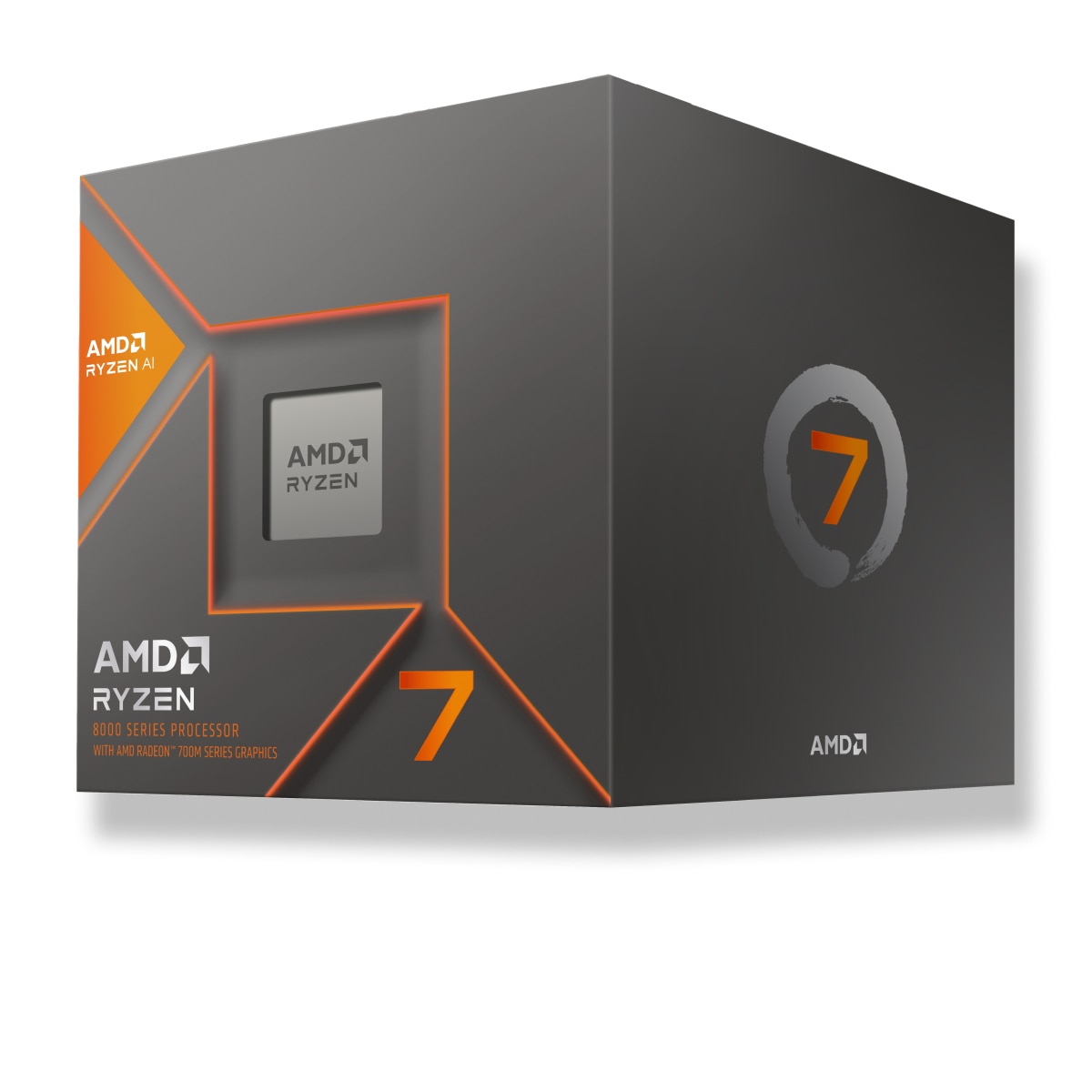
Reviews find a large integrated-graphics improvement over the 5700G, making modest-settings 1080p gaming practical without a separate card. They differ on value: small systems benefit, while TechSpot finds similarly priced CPU-plus-GPU combinations much faster. Ryzen 7000 processors are stronger choices with a discrete GPU, and integrated performance depends heavily on memory speed.
Zen 4; Phoenix; simultaneous multithreading; one monolithic package die.
Clocks
Precision Boost 2; Precision Boost Overdrive and Curve Optimizer supported; configurable TDP 45–65 W.
Cache
8 MB L2; 16 MB L3.
Graphics and AI
Built-in graphics
Yes
Graphics
Radeon 780M; RDNA 3; 12 graphics cores at 2900 MHz; up to four displays; DisplayPort 2.1 and HDMI 2.1; hardware AV1 encode and decode.
AI engine
AMD Ryzen AI; XDNA neural processing unit; up to 16 TOPS.
Platform
Socket
AM5
Base power
65 W
Unlocked
Yes
Memory support
DDR5 UDIMM; two channels; up to 256 GB on the current AMD specification page; ECC requires platform support. Two single- or dual-rank DIMMs: DDR5-5200; four single- or dual-rank DIMMs: DDR5-3600.
PCIe
PCIe 4.0; 20 native lanes, 16 usable; discrete graphics slot up to ×8 (PC Gamer and TechSpot). Two native USB4 40 Gbps, two USB 3.2 Gen 2 10 Gbps and one USB 2.0 port.
Chipsets
AMD lists A620, X670E, X670, B650E, B650, X870E, X870, B840 and B850; motherboard firmware support required.
Process
TSMC 4nm FinFET; 178 mm² CPU compute die.
Cooler
95°C maximum operating temperature. Launch review boxes included a Wraith Spire (PC Gamer); current AMD IDs include SBX and CSX, and the maker notes revised cooler bundles for selected MPK models from August 2025. Verify the exact retail bundle.
Pros and cons
Pros
+Radeon 780M integrated graphics
+Dedicated Ryzen AI engine
+Unlocked CPU multiplier
Cons
−DDR5 memory required
−PCIe 4.0 rather than PCIe 5.0
−Discrete graphics connection limited to eight PCIe lanes