Home Laptops Apple iBook (Early 2000) Apple · iBook
Released February 2000
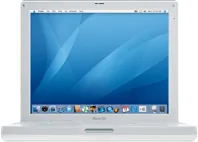
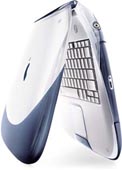
The revised clamshell iBook family, including the Graphite Special Edition, with 64 MB standard memory and a 6 GB drive.
Compare with another laptop Compare with… iBook G4 (12-inch, Mid 2005) (2005) iBook G4 (14-inch, Mid 2005) (2005) iBook G4 (12-inch, Late 2004) (2004) iBook G4 (14-inch, Late 2004) (2004) iBook G4 (12-inch, Early 2004) (2004) iBook G4 (14-inch, Early 2004) (2004) iBook G4 (12-inch, Late 2003) (2003) iBook 12-inch (Early 2003) (2003) iBook 14-inch (Early 2003) (2003) iBook G4 (14-inch, Late 2003) (2003) iBook 12-inch (Late 2002) (2002) iBook 14-inch (Late 2002) (2002) iBook 12-inch (Mid 2002) (2002) iBook 14-inch (Mid 2002) (2002) iBook 14-inch (Early 2002) (2002) iBook (Late 2001) (2001) iBook (Dual USB) (2001) iBook (FireWire) (2000) iBook (1999) (1999) Swift Air 14 (SFA14-I31) (2026) Predator Helios Neo 16 AI (PHN16-I71) (2026) Swift Go 14 AI (SFG14-I71) (2026) MacBook Air 13″ (M5) (2026) MacBook Air 15″ (M5) (2026) MacBook Neo (2026) MacBook Pro 14″ (M5 Pro or M5 Max) (2026) MacBook Pro 16″ (M5 Pro or M5 Max) (2026) MacBook Pro 14″ (M5) (2025) MacBook Air 13″ (M4) (2025) MacBook Air 15″ (M4) (2025) MacBook Pro 14″ (M4 Pro or M4 Max) (2024) MacBook Pro 14″ (M4) (2024) MacBook Pro 16″ (M4 Pro or M4 Max) (2024) MacBook Air 13″ (M3) (2024) MacBook Air 15″ (M3) (2024) MacBook Pro 14″ (M3 Pro / M3 Max) (2023) MacBook Pro 14″ (M3) (2023) MacBook Pro 16″ (M3 Pro / M3 Max) (2023) MacBook Air 15″ (M2) (2023) MacBook Pro 14″ (M2 Pro / M2 Max) (2023) MacBook Pro 16″ (M2 Pro / M2 Max) (2023) MacBook Air 13″ (M2) (2022) MacBook Pro 13″ (M2) (2022) MacBook Pro 14″ (M1 Pro / M1 Max) (2021) MacBook Pro 16″ (M1 Pro / M1 Max) (2021) MacBook Air 13″ (M1) (2020) MacBook Pro 13″ (M1) (2020) MacBook Pro (13-inch, 2020, Four Thunderbolt 3 ports) (2020) MacBook Pro (13-inch, 2020, Two Thunderbolt 3 ports) (2020) MacBook Air (Retina, 13-inch, 2020) (2020) MacBook Pro (16-inch, 2019) (2019) MacBook Air (Retina, 13-inch, 2019) (2019) MacBook Pro (13-inch, 2019, Two Thunderbolt 3 ports) (2019) MacBook Pro (15-inch, 2019) (2019) MacBook Pro (13-inch, 2019, Four Thunderbolt 3 ports) (2019) MacBook Air (Retina, 13-inch, 2018) (2018) MacBook Pro (13-inch, 2018, Four Thunderbolt 3 ports) (2018) MacBook Pro (15-inch, 2018) (2018) MacBook (Retina, 12-inch, 2017) (2017) MacBook Air (13-inch, 2017) (2017) MacBook Pro (13-inch, 2017, Four Thunderbolt 3 ports) (2017) MacBook Pro (13-inch, 2017, Two Thunderbolt 3 ports) (2017) MacBook Pro (15-inch, 2017) (2017) MacBook Pro (13-inch, 2016, Four Thunderbolt 3 ports) (2016) MacBook Pro (15-inch, 2016) (2016) MacBook Pro (13-inch, 2016, Two Thunderbolt 3 ports) (2016) MacBook (Retina, 12-inch, Early 2016) (2016) MacBook Pro (Retina, 15-inch, Mid 2015) (2015) MacBook (Retina, 12-inch, Early 2015) (2015) MacBook Air (11-inch, Early 2015) (2015) MacBook Air (13-inch, Early 2015) (2015) MacBook Pro (Retina, 13-inch, Early 2015) (2015) MacBook Pro (Retina, 13-inch, Mid 2014) (2014) MacBook Pro (Retina, 15-inch, Mid 2014) (2014) MacBook Air (11-inch, Early 2014) (2014) MacBook Air (13-inch, Early 2014) (2014) MacBook Pro (Retina, 13-inch, Late 2013) (2013) MacBook Pro (Retina, 15-inch, Late 2013) (2013) MacBook Air (11-inch, Mid 2013) (2013) MacBook Air (13-inch, Mid 2013) (2013) MacBook Pro (Retina, 13-inch, Early 2013) (2013) MacBook Pro (Retina, 15-inch, Early 2013) (2013) MacBook Pro (Retina, 13-inch, Late 2012) (2012) MacBook Air (11-inch, Mid 2012) (2012) MacBook Air (13-inch, Mid 2012) (2012) MacBook Pro (13-inch, Mid 2012) (2012) MacBook Pro (15-inch, Mid 2012) (2012) MacBook Pro (Retina, 15-inch, Mid 2012) (2012) MacBook Pro (17-inch, Late 2011) (2011) MacBook Pro (13-inch, Late 2011) (2011) MacBook Pro (15-inch, Late 2011) (2011) MacBook Air (11-inch, Mid 2011) (2011) MacBook Air (13-inch, Mid 2011) (2011) MacBook Pro (13-inch, Early 2011) (2011) MacBook Pro (15-inch, Early 2011) (2011) MacBook Pro (17-inch, Early 2011) (2011) MacBook Air (11-inch, Late 2010) (2010) MacBook Air (13-inch, Late 2010) (2010) MacBook (13-inch, Mid 2010) (2010) MacBook Pro (13-inch, Mid 2010) (2010) MacBook Pro (15-inch, Mid 2010) (2010) MacBook Pro (17-inch, Mid 2010) (2010) MacBook (13-inch, Late 2009) (2009) MacBook Air (Mid 2009) (2009) MacBook Pro (13-inch, Mid 2009) (2009) MacBook Pro (15-inch, Mid 2009) (2009) MacBook Pro (17-inch, Mid 2009) (2009) MacBook (13-inch, Mid 2009) (2009) MacBook Pro (17-inch, Early 2009) (2009) MacBook (13-inch, Early 2009) (2009) MacBook Air (Late 2008) (2008) MacBook (13-inch, Aluminum, Late 2008) (2008) MacBook (13-inch, Late 2008) (2008) MacBook Pro (15-inch, Late 2008) (2008) MacBook (13-inch, Early 2008) (2008) MacBook Pro (15-inch, Early 2008) (2008) MacBook Pro (17-inch, Early 2008) (2008) MacBook Air (Original) (2008) MacBook (13-inch, Late 2007) (2007) MacBook Pro (15-inch, Mid 2007) (2007) MacBook Pro (17-inch, Mid 2007) (2007) MacBook (13-inch, Mid 2007) (2007) MacBook (13-inch, Late 2006) (2006) MacBook Pro (17-inch, Late 2006) (2006) MacBook Pro (15-inch, Late 2006) (2006) MacBook (13-inch, Early 2006) (2006) MacBook Pro (17-inch, Early 2006) (2006) MacBook Pro (15-inch, Early 2006) (2006) PowerBook G4 (15-inch, Double-Layer SD) (2005) PowerBook G4 (17-inch, Double-Layer SD) (2005) PowerBook G4 (15-inch, 1.67/1.5GHz) (2005) PowerBook G4 (17-inch, 1.67GHz) (2005) PowerBook G4 (12-inch, 1.5GHz) (2005) PowerBook G4 (12-inch, 1.33GHz) (2004) PowerBook G4 (15-inch, 1.5/1.33GHz) (2004) PowerBook G4 (17-inch, 1.5GHz) (2004) PowerBook G4 (15-inch FW800) (2003) PowerBook G4 (17-inch, 1.33GHz) (2003) PowerBook G4 17-inch (Early 2003) (2003) PowerBook G4 (12-inch DVI) (2003) PowerBook G4 12-inch (Early 2003) (2003) PowerBook G4 (1GHz/867MHz) (2002) PowerBook G4 (DVI) (2002) PowerBook G4 (Gigabit Ethernet) (2001) PowerBook G4 (Original 2001) (2001) PowerBook (FireWire) (2000) PowerBook G3 (Bronze Keyboard) (1999) PowerBook G3 Series (September 1998) (1998) PowerBook G3 Series (Wallstreet, 1998) (1998) Macintosh PowerBook 2400c/240 (1998) PowerBook G3 (Original, 1997) (1997) Macintosh PowerBook 1400c/166 (1997) Macintosh PowerBook 2400c/180 (1997) Macintosh PowerBook 1400c/133 (1997) Macintosh PowerBook 3400c (1997) Macintosh PowerBook 1400cs/133 (1997) Macintosh PowerBook 1400cs/166 (1997) Macintosh PowerBook 1400c/117 (1996) Macintosh PowerBook 1400cs/117 (1996) Macintosh PowerBook Duo 2300c/100 (1995) Macintosh PowerBook 190 (1995) Macintosh PowerBook 190cs (1995) Macintosh PowerBook 5300/100 (1995) Macintosh PowerBook 5300c/100 (1995) Macintosh PowerBook 5300ce/117 (1995) Macintosh PowerBook 5300cs/100 (1995) Macintosh PowerBook 550c (1995) Macintosh PowerBook 150 (1994) Macintosh PowerBook 520 (1994) Macintosh PowerBook 520c (1994) Macintosh PowerBook 540 (1994) Macintosh PowerBook 540c (1994) Macintosh PowerBook Duo 280c (1994) Macintosh PowerBook Duo 280 (1994) Macintosh PowerBook 165 (1993) Macintosh PowerBook 145B (1993) Macintosh PowerBook 180c (1993) Macintosh PowerBook 165c (1993) Macintosh PowerBook Duo 250 (1993) Macintosh PowerBook Duo 270c (1993) Macintosh PowerBook 160 (1992) Macintosh PowerBook 180 (1992) Macintosh PowerBook Duo 210 (1992) Macintosh PowerBook Duo 230 (1992) Macintosh PowerBook 145 (1992) Macintosh PowerBook 100 (1991) Macintosh PowerBook 140 (1991) Macintosh PowerBook 170 (1991) Macintosh Portable (Backlit, 1991) (1991) Macintosh Portable (1989) (1989) Zenbook 14 (UX3480) Intel (2026) ROG Strix G16 (2026) G615 (2026) Zenbook DUO (UX8407) (2026) Zenbook A14 (UX3407, 2026) (2026) Zenbook S14 (UX5406, 2026) (2026) ROG Zephyrus G14 (2026) GU405 (2026) ROG Zephyrus G16 (2026) GU606 (2026) TUF Gaming A14 (2025) (2025) ROG Zephyrus G14 (2025) (2025) ROG Zephyrus G16 (2025, Intel) (2025) Zenbook A14 (UX3407, 2025) (2025) Zenbook S14 (UX5406, 2024) (2024) Zenbook S16 (UM5606WA, 2024) (2024) XPS 13 DX13260 (2026) Dell Pro 14 Premium PA14260 (2026) XPS 14 DA14260 (2026) XPS 16 DA16260 (2026) Alienware 16 Aurora AC16250 (2025) Dell Pro Max 16 MC16250 (2025) Alienware 16 Area-51 AA16250 (2025) Alienware 18 Area-51 AA18250 (2025) Dell Pro 14 PC14250 (2025) Dell Pro 16 PC16250 (2025) Dell 14 Plus DB14250 (2025) Dell 16 Plus DB16250 (2025) XPS 13 9350 (2024) Latitude 7455 (2024) XPS 14 9440 (2024) XPS 16 9640 (2024) XPS 13 Plus 9320 (2022) (2022) XPS 13 9310 (2020) XPS 17 9700 (2020) XPS 15 9500 (2020) XPS 13 L321X (2012) XPS 15 L502X (2011) XPS M1330 (2007) XPS M1530 (2007) ThinkPad T42 (2004) ThinkPad 600 (1998) IdeaPad Slim 3i Gen 11 (15IWC11) (2026) Legion 5a Gen 11 (15AGP11) (2026) ThinkBook 14 2-in-1 Gen 6 (2026) ThinkPad T14s Gen 7 (Intel) (2026) IdeaPad 5i 2-in-1 Gen 11 (14″) (2026) IdeaPad Slim 5x Gen 11 (15″) (2026) ThinkPad X1 Carbon Gen 14 (2026) Yoga Slim 7i Ultra Aura Edition Gen 11 (2026) IdeaPad Pro 5i Gen 11 (14″) (2026) IdeaPad Pro 5i Gen 11 (16″) (2026) IdeaPad Slim 5i Gen 11 (14″) (2026) LOQ Essential 15ARP11 (2026) ThinkBook 14 Gen 9 (Intel) (2026) ThinkBook 16 Gen 9 (Intel) (2026) ThinkPad P14s Gen 6 (Intel) (2025) ThinkPad P16s Gen 4 (Intel) (2025) ThinkBook Plus Gen 6 Rollable (2025) ThinkPad L14 Gen 6 (AMD) (2025) ThinkPad L14 Gen 6 (Intel) (2025) ThinkPad T16 Gen 4 (AMD) (2025) ThinkPad T16 Gen 4 (Intel) (2025) ThinkPad X13 Gen 6 (AMD) (2025) ThinkPad X13 Gen 6 (Intel) (2025) Yoga Pro 9i Gen 10 Aura Edition (16IAH10) (2025) Legion 5i Gen 10 (15IAX10) (2025) ThinkPad P14s Gen 6 (AMD) (2025) ThinkPad P16s Gen 4 (AMD) (2025) ThinkPad T14 Gen 6 (AMD) (2025) ThinkPad T14 Gen 6 (Intel) (2025) ThinkPad E14 Gen 7 (AMD) (2025) ThinkPad E14 Gen 7 (Intel) (2025) ThinkPad E16 Gen 3 (AMD) (2025) ThinkPad E16 Gen 3 (Intel) (2025) Legion Pro 7i Gen 10 (2025) ThinkPad X1 2-in-1 Gen 10 (2025) ThinkPad T14s Gen 6 (AMD) (2024) ThinkPad X1 Carbon Gen 13 (2024) Yoga Slim 7i Aura Edition (15ILL9) (2024) ThinkPad T14s Gen 6 (Snapdragon) (2024) ThinkPad X1 Carbon Gen 9 (2021) ThinkPad T14 Gen 1 (AMD) (2020) ThinkPad T14 Gen 1 (Intel) (2020) ThinkPad T490 (2019) ThinkPad X390 (2019) ThinkPad T480 (2018) ThinkPad X280 (2018) ThinkPad X1 Carbon Gen 6 (2018) ThinkPad X270 (2017) ThinkPad T470 (2017) ThinkPad T460 (2016) ThinkPad X260 (2016) ThinkPad T450 (2015) ThinkPad X250 (2015) ThinkPad T440 (2013) ThinkPad X240 (2013) ThinkPad T430 (2012) ThinkPad X230 (2012) ThinkPad X220 (2011) ThinkPad T420 (2011) ThinkPad X201 (2010) ThinkPad T410 (2010) ThinkPad T510 (2010) ThinkPad T400 (2008) ThinkPad T500 (2008) ThinkPad X200 (2008) ThinkPad X61 (2007) ThinkPad T61 (2007) ThinkPad T60 (2006) ThinkPad X60 (2006) Surface Laptop 13.8″ (8th Edition) (2026) Surface Laptop 15″ (8th Edition) (2026) Surface Laptop 13″ (1st Edition) (2025) Cyborg 15 (B2RW) (2025) Vector 16 HX AI (A2XW) (2025) Blade 16 (2026) (2026) Galaxy Book6 Pro (14″) (2026) Galaxy Book6 Pro (16″) (2026) VAIO Z (VPCZ21M9E) (2011) VAIO F (VPCF11Z1E) (2010) VAIO P (VPCP11S1E) (2010) VAIO Z (VPCZ11Z9E) (2010) VAIO P (VGN-P11Z) (2009) VAIO TT (VGN-TT11WN/B) (2008) VAIO Z (VGN-Z11WN/B) (2008) VAIO TZ (VGN-TZ11XN/B) (2007) VAIO TX (VGN-TX5XN) (2007) VAIO UX (VGN-UX1XN) (2007) VAIO TX (VGN-TX1XP/B) (2005) VAIO type T (VGN-T70B/L) (2004) VAIO TR (PCG-TR1MP) (2003) VAIO PCG-C1 (1998) VAIO PCG-505 (1997) Model history · 2 models, 1999–2000 1999 iBook (1999) Compare 2000 iBook (Early 2000)
Size 12.1″
Display –
Processor PowerPC G3 300 MHz (iBook Early 2000) or PowerPC G3 366 MHz (iBook Early 2000)
Memory 64 MB – 320 MB
Weight –
Battery 6 h Display
Screen size 12.1″
Resolution 800 × 600
Touchscreen No
Display type 12.1-inch active-matrix TFT SVGA display supporting millions of colours at 800 × 600. Exact panel technology, brightness and built-in refresh unpublished.
Processor PowerPC G3 300 MHz (iBook Early 2000) or PowerPC G3 366 MHz (iBook Early 2000)
CPU cores 1
Graphics ATI Rage Mobility (4 MB SDRAM)
Memory 64 MB or 320 MB
Storage 6 GB
CPU 300 MHz PowerPC G3 in the Blueberry and Tangerine stocks, or 366 MHz in the Graphite Special Edition; 66 MHz data path, 64 KB L1 cache and 512 KB L2 cache. Exact supplier and silicon model omitted.
GPU ATI Rage Mobility with 4 MB SDRAM and AGP 2× support.
Memory type 64 MB onboard and one SO-DIMM slot; maker-supported maximum 320 MB total.
Storage type 6 GB IDE hard drive and 24× CD-ROM drive throughout this February 2000 generation. Battery and size
Battery life (maker's claim) Up to 6 hours
Battery capacity 45 Wh
Battery life detail 45 Wh lithium-ion battery; maker claim up to six hours. The retained maker sheet publishes 6.7 pounds and dimensions 11.6 H × 13.5 W × 1.8 D inches. No metric values calculated.
Materials Rubber-coated translucent enclosure, pull-out carrying handle and latchless closing mechanism.
Colours Blueberry and Tangerine at 300 MHz; Graphite Special Edition at 366 MHz. Connections
Ports USB-A, Ethernet, headphone jack
Wi-Fi Optional AirPort 802.11b
Operating system macOS
Port detail One USB port, 10/100BASE-T Ethernet, internal 56K modem and stereo headphone output. No FireWire, video-out, PC Card slot or audio input. AirPort requires an optional internal card.
External displays No built-in external display output
Keyboard Built-in full-size keyboard (EveryMac exact-model page).
Trackpad Built-in trackpad with a separate button
Speakers Single built-in speaker
Microphones No built-in microphone
In the box Mac OS 9 and a YoYo-style power adapter. All three colour configurations available immediately according to the 16 February 2000 maker notice. Configurations Processor Memory Storage Graphics PowerPC G3 300 MHz (iBook Early 2000) 64 MB 6 GB ATI Rage Mobility (4 MB SDRAM) PowerPC G3 300 MHz (iBook Early 2000) 320 MB 6 GB ATI Rage Mobility (4 MB SDRAM) PowerPC G3 366 MHz (iBook Early 2000) 64 MB 6 GB ATI Rage Mobility (4 MB SDRAM) PowerPC G3 366 MHz (iBook Early 2000) 320 MB 6 GB ATI Rage Mobility (4 MB SDRAM)
Pros and cons Pros + Built-in carrying handle+ Removable battery and accessible memory slot+ Ethernet and internal modemCons − One USB port and no built-in video output− No built-in microphone− Small stock memory and storagePrevious model: iBook (1999) . Newer model: iBook (FireWire) .