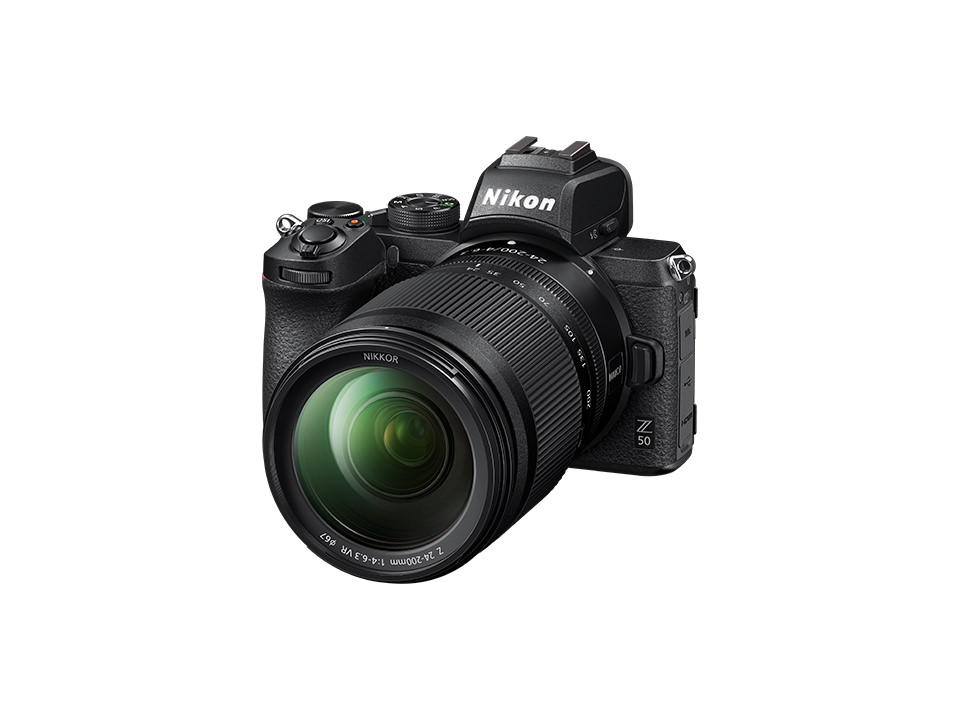
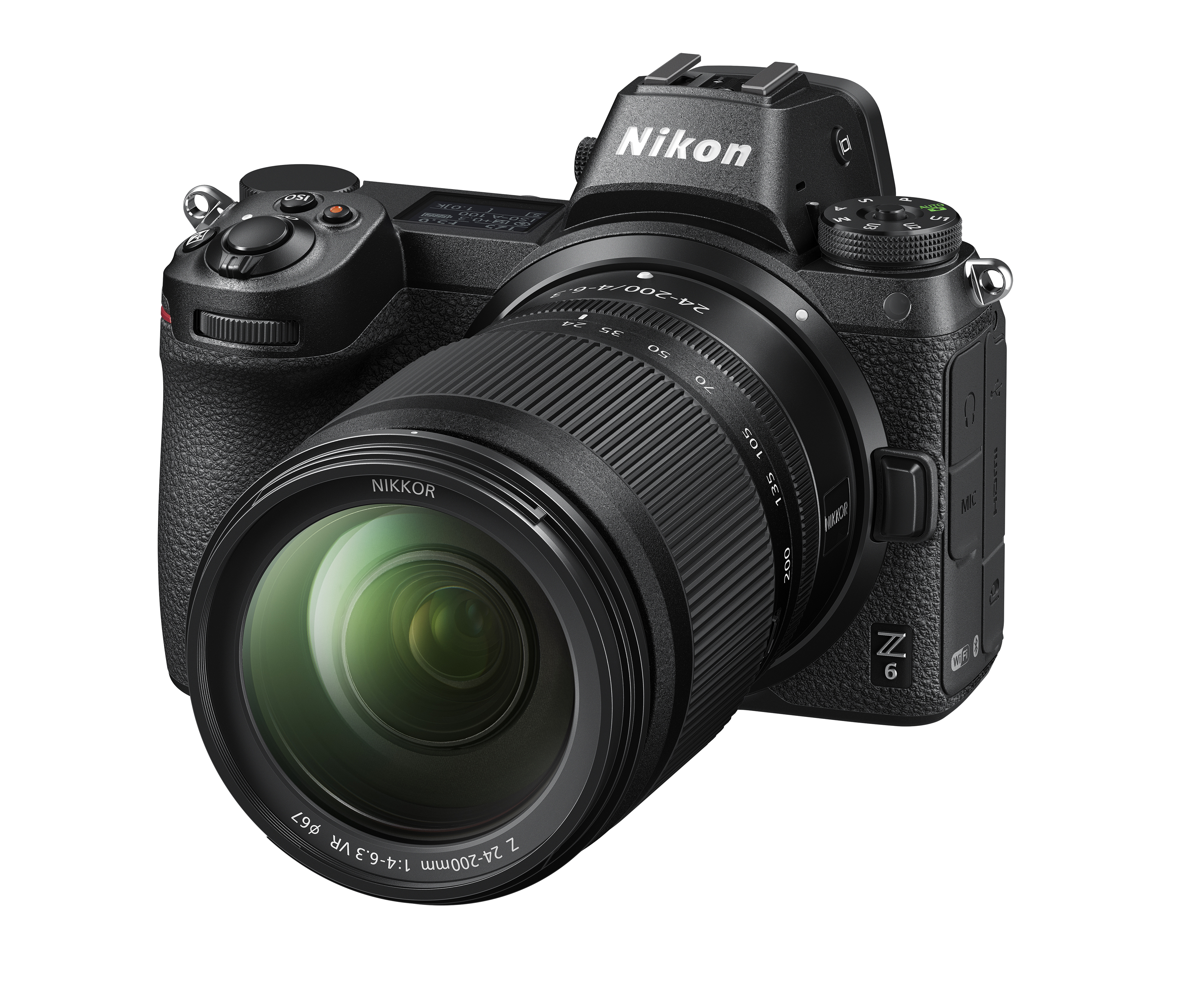
Both find its broad range and relatively compact construction useful for travel, with fast, quiet autofocus and effective stabilisation. Photography Blog finds little colour fringing and pleasing background blur, but sees some softness at the longest setting and shading at 24mm f/4. It warns that the extended lens can feel unbalanced on a small DX body. Digital Camera World finds strong sharpness for a superzoom with little deterioration at longer focal lengths, and praises its handling and build. It notes that low distortion relies on automatic corrections. Both identify the narrowing maximum aperture as a limitation for low-light telephoto work.
Two ED elements, one aspherical ED element and two aspherical elements
Coatings
ARNEO coat and fluorine-coated front element
Aperture detail
Maximum f/4 at wide end and f/6.3 at telephoto end; minimum f/22–36
Diaphragm
Seven rounded blades
Angle of view
FX 84°–12°20′; DX 61°–8°
Mount and compatibility
Mounts
Nikon Z mount
Image circle
Full frame
Compatibility
Nikon Z mount; FX and DX cameras; DX gives the angle of view of a 36–300 mm zoom on full frame
Focus and stabilisation
Autofocus
Yes
Minimum focus distance
0.5 m
Maximum magnification
0.28×
Optical stabilisation
Yes
Autofocus detail
Stepping-motor autofocus, as Nikon Japan specifies
Focus distance detail
Internal focusing; minimum distances from focal plane 0.5 m at 24 mm, 0.54 m at 35 mm, 0.55 m at 50 mm, 0.58 m at 70 mm, 0.65 m at 105 mm, 0.68 m at 135 mm and 0.7 m at 200 mm
Magnification detail
Maximum reproduction ratio 0.28× at 200 mm, as Nikon Japan specifies
Stabilisation detail
Lens-shift VR using voice-coil motors; Nikon UK claims 4.5 stops under CIPA conditions. Nikon Japan's launch release instead states 5 stops in Normal mode on a full-frame mirrorless body at the longest focal length; regional claims differ
Video features
Nikon describes reduced focus breathing and focus shift while zooming, quiet autofocus and smooth aperture changes
Design
Dust and moisture resistant
Yes
Filter diameter
67 mm
Maximum diameter
76.5 mm
Length
114 mm
Weight
570 g
Controls
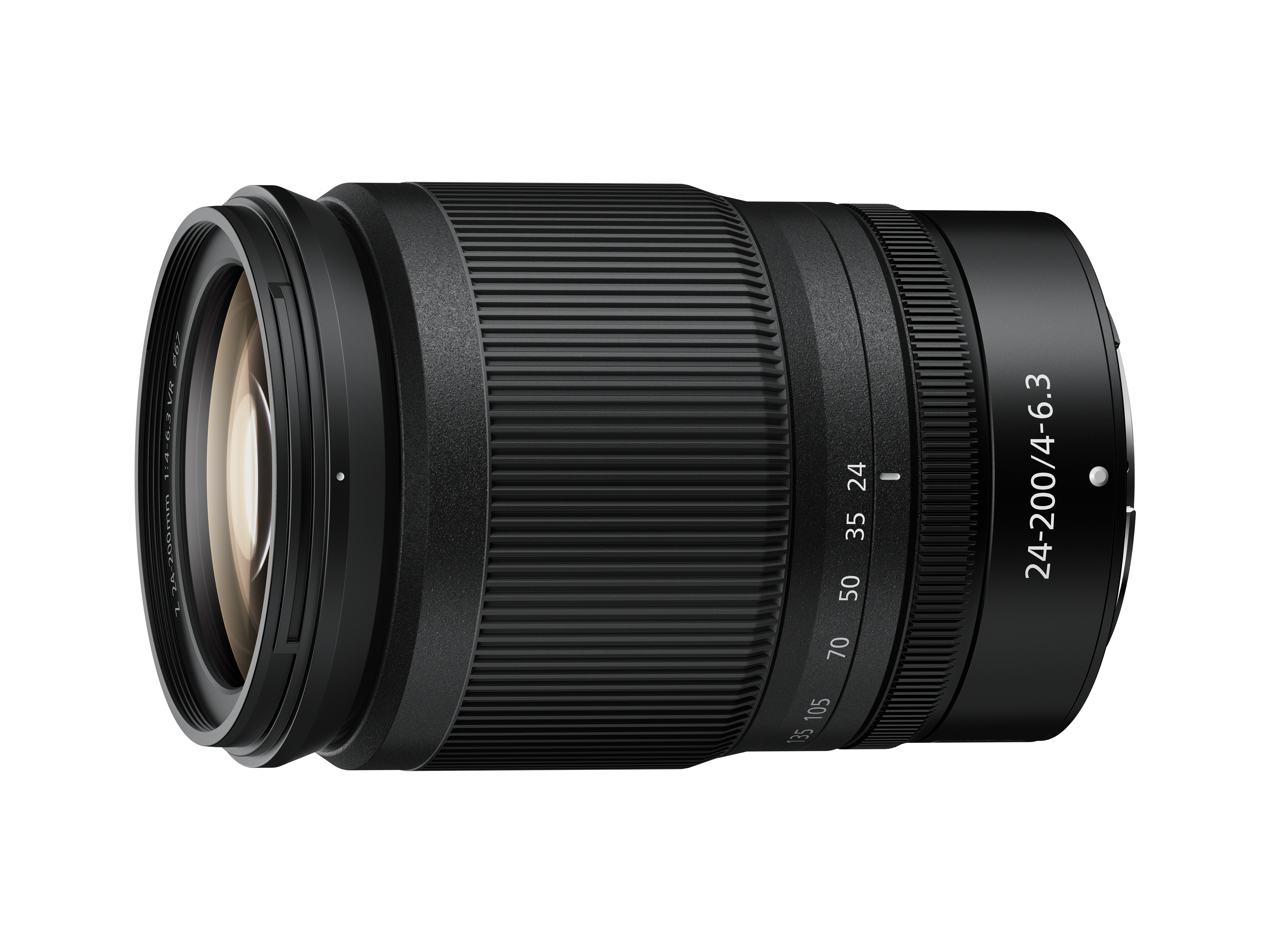
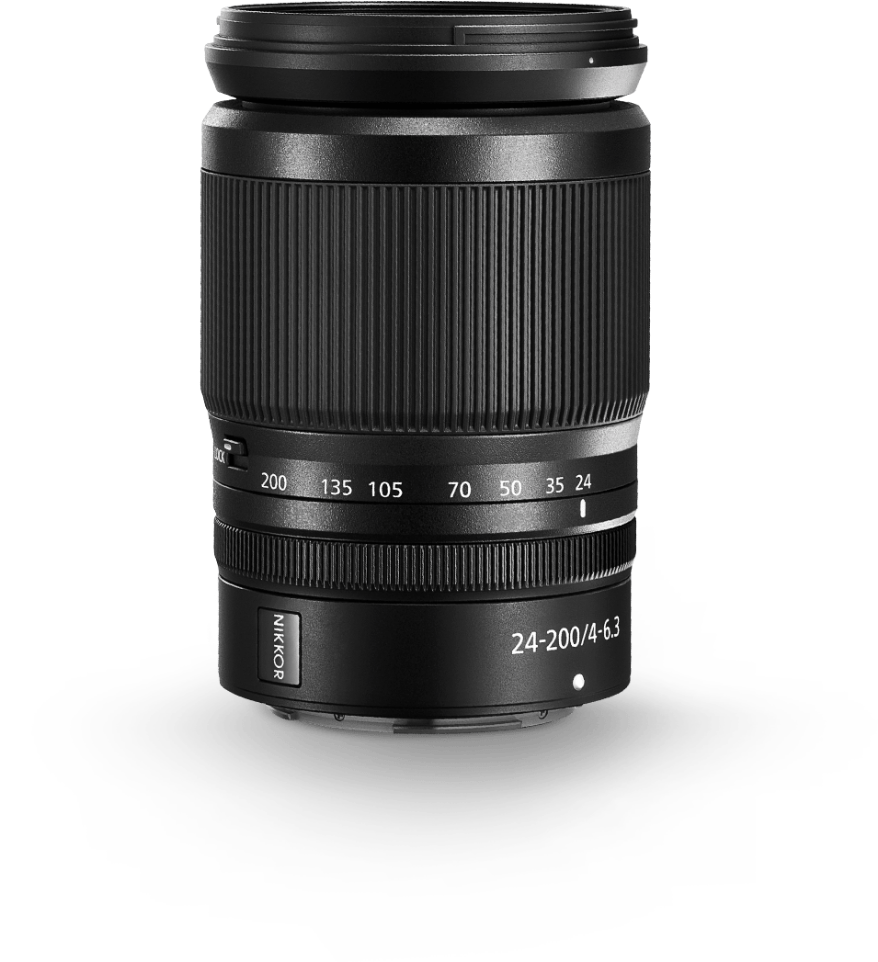
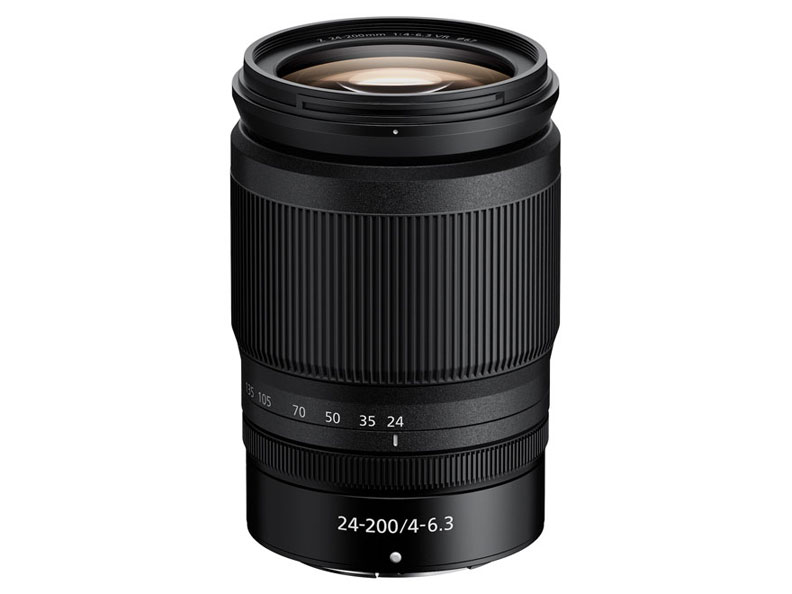
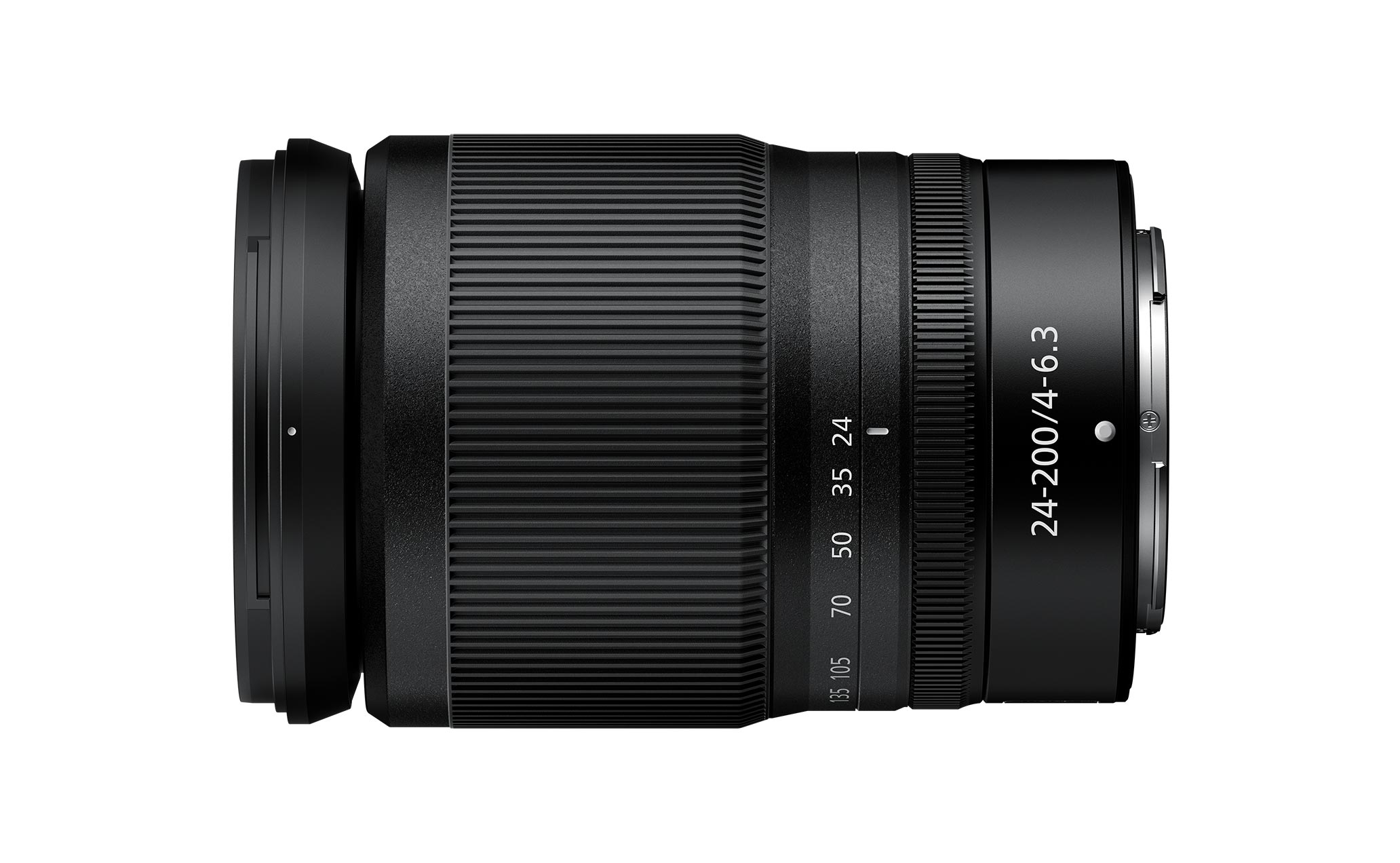
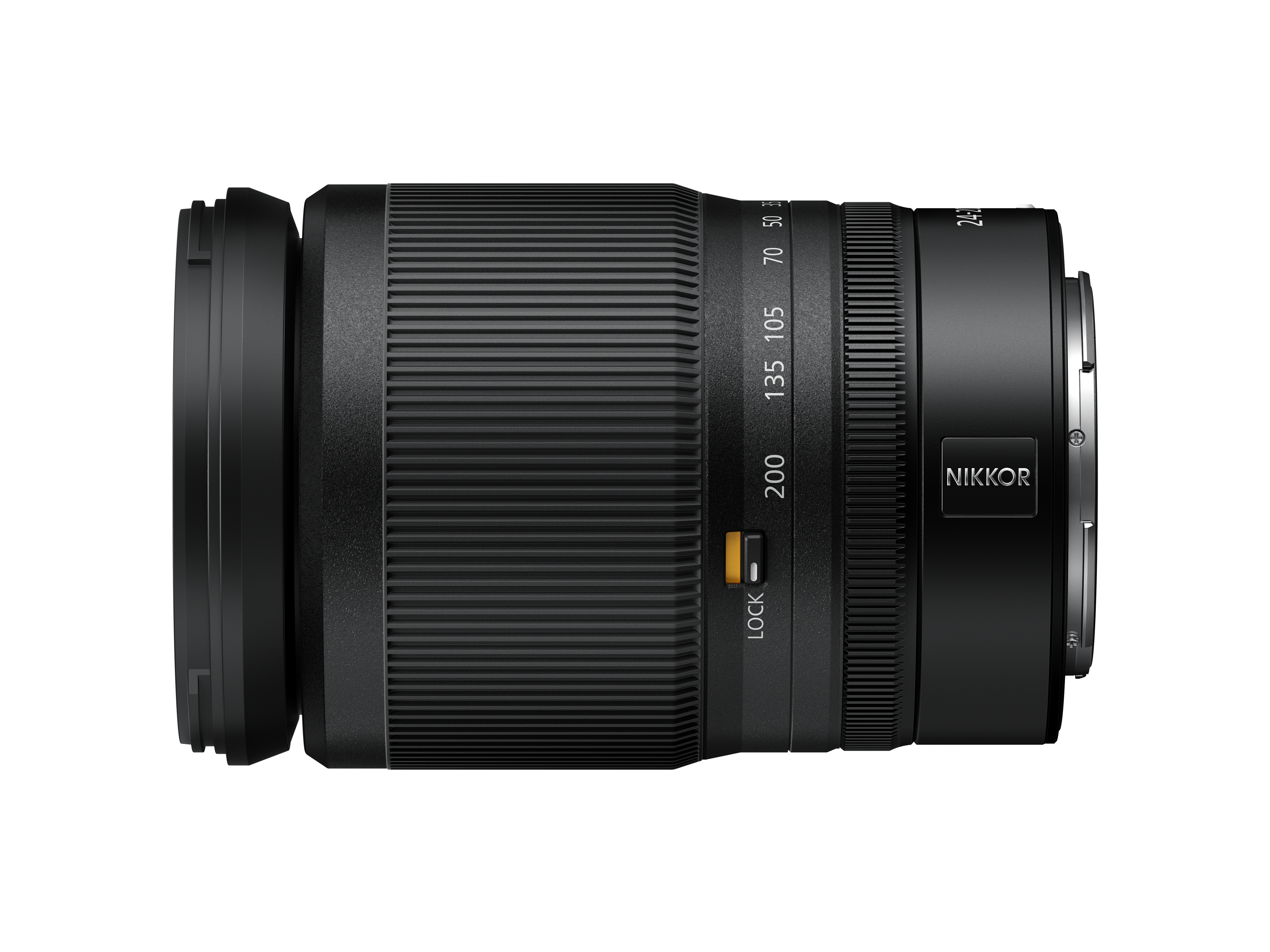
Zoom ring, programmable focus/control ring and zoom lock; autofocus/manual selection through the camera. Control ring can adjust aperture, ISO or exposure compensation, as Digital Camera World describes
Zoom design
Extending zoom barrel; lock holds the retracted 24 mm position, as Photography Blog describes
Filter detail
67 mm screw-on filters, 0.75 mm pitch
Weather resistance
Nikon describes sealing against dust and moisture; no waterproof rating stated
Dimensions detail
Approximately 76.5 × 114 mm, length measured from camera lens mount flange
Weight detail
Approximately 570 g
Lens hood
HB-93 bayonet hood included
In the box
LC-67B front cap, LF-N1 rear cap, HB-93 hood and CL-C1 case
Release detail
Nikon Japan gives 3 July 2020 as the on-sale date; initially planned April availability was postponed
Pros and cons
Pros
+Wide-angle to telephoto range in one lens
+Optical vibration reduction
+Dust and moisture sealing and fluorine-coated front element
Cons
−Maximum aperture narrows to f/6.3 at the telephoto end
−No dedicated focus-mode switch or focus-distance scale