Home Lenses Nikon NIKKOR Z 24-70mm f/4 S Nikon · NIKKOR
Released September 2018
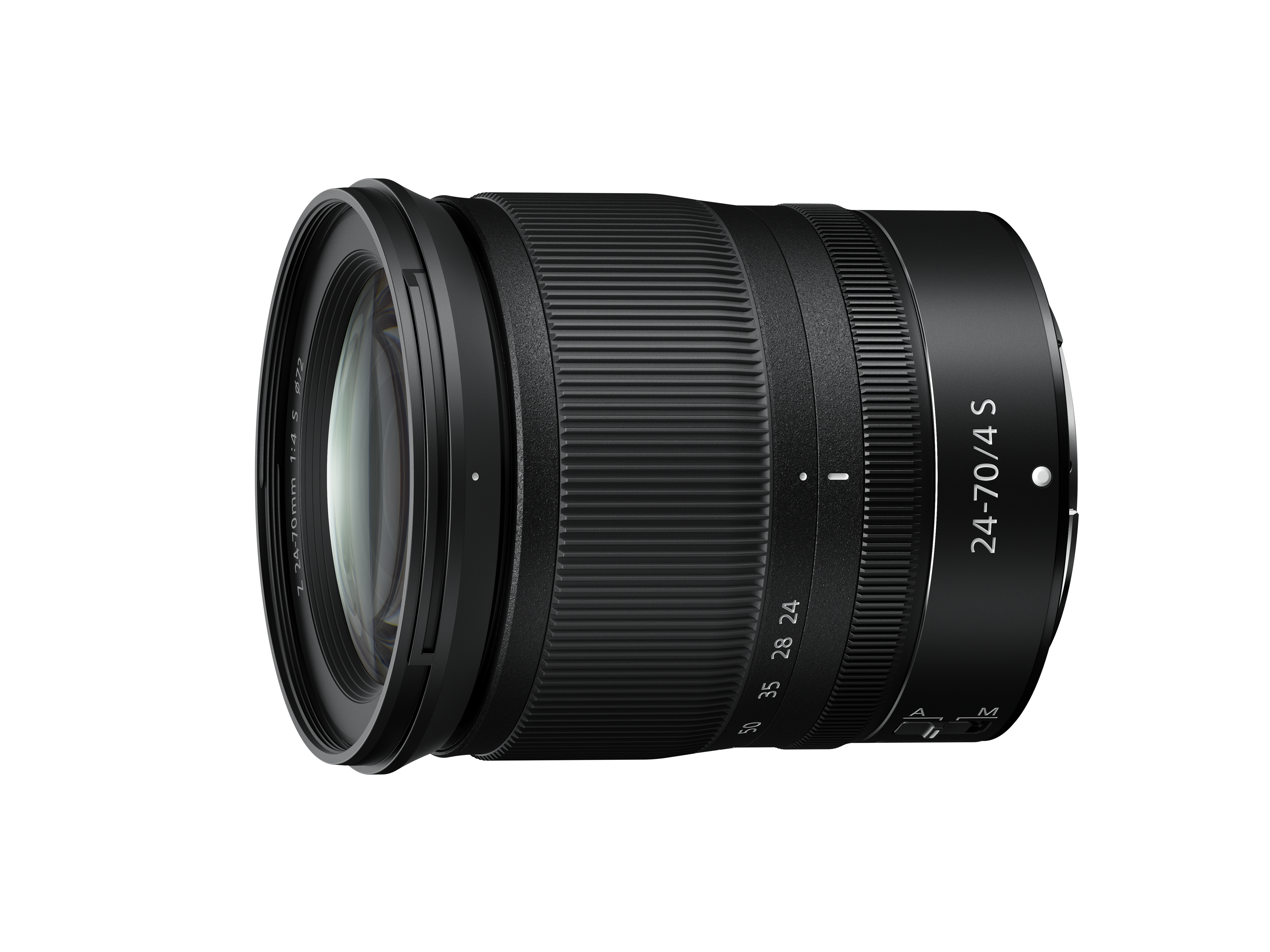
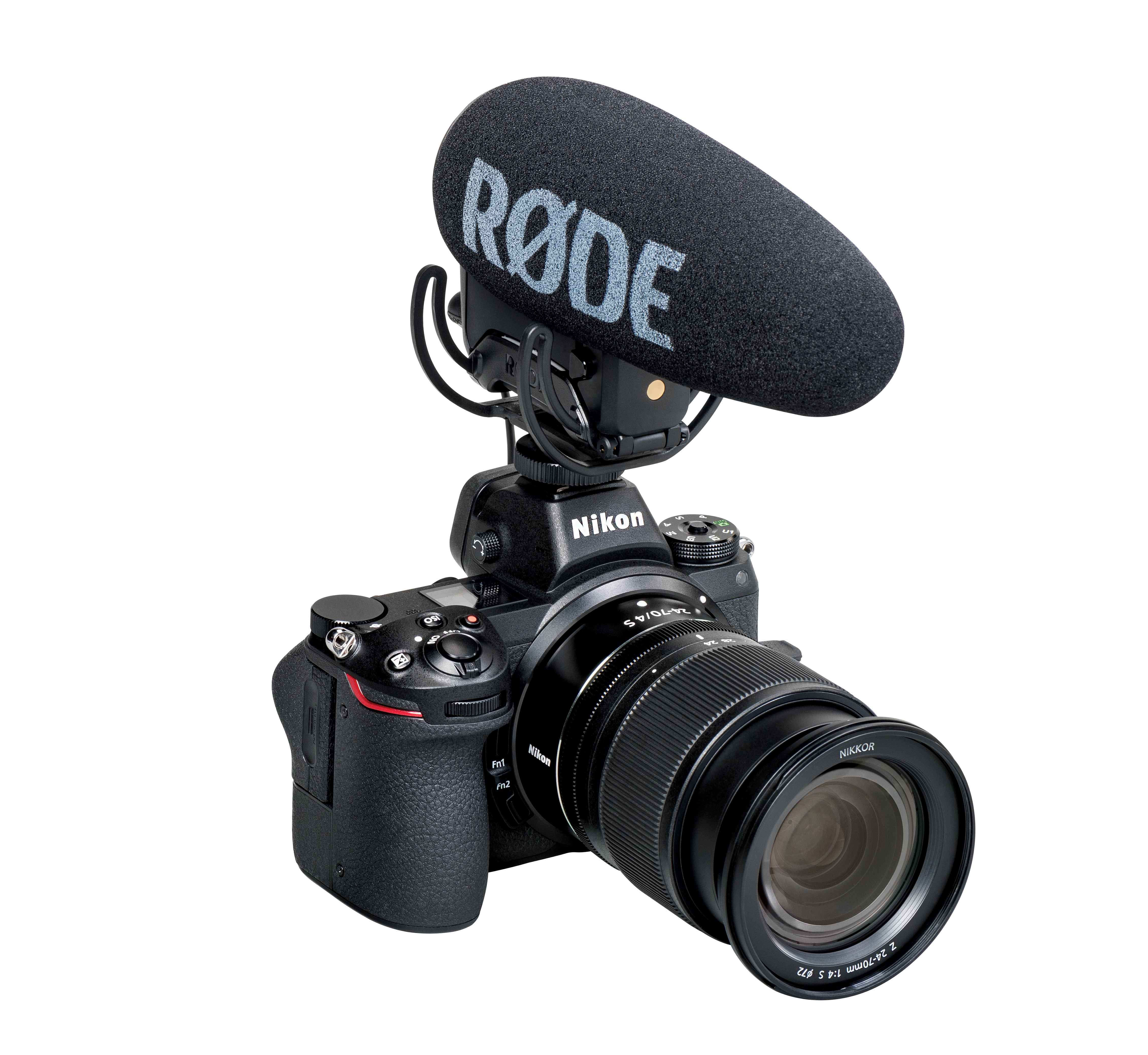
A retractable full-frame Z-mount standard zoom with a constant f/4 aperture, internal focusing and a minimum focus distance of 0.3 m throughout.
Compare with another lens Compare with… NIKKOR Z 70–200mm f/2.8 VR S II (2026) NIKKOR Z 24–105mm f/4–7.1 (2026) NIKKOR Z DX 16–50mm f/2.8 VR (2025) NIKKOR Z DX MC 35mm f/1.7 (2025) NIKKOR Z 24-70mm f/2.8 S II (2025) NIKKOR Z 28-135mm f/4 PZ (2025) NIKKOR Z 35mm f/1.2 S (2025) NIKKOR Z 50mm f/1.4 (2024) NIKKOR Z 35mm f/1.4 (2024) NIKKOR Z 28-400mm f/4-8 VR (2024) NIKKOR Z 135mm f/1.8 S Plena (2023) NIKKOR Z 600mm f/6.3 VR S (2023) NIKKOR Z 180-600mm f/5.6-6.3 VR (2023) NIKKOR Z 70-180mm f/2.8 (2023) NIKKOR Z DX 24mm f/1.7 (2023) NIKKOR Z DX 12-28mm f/3.5-5.6 PZ VR (2023) NIKKOR Z 26mm f/2.8 (2023) NIKKOR Z 85mm f/1.2 S (2023) NIKKOR Z 600mm f/4 TC VR S (2022) NIKKOR Z 17-28mm f/2.8 (2022) NIKKOR Z 400mm f/4.5 VR S (2022) NIKKOR Z 800mm f/6.3 VR S (2022) NIKKOR Z 400mm f/2.8 TC VR S (2022) NIKKOR Z 28-75mm f/2.8 (2022) NIKKOR Z 100-400mm f/4.5-5.6 VR S (2021) NIKKOR Z 24-120mm f/4 S (2021) NIKKOR Z DX 18-140mm f/3.5-6.3 VR (2021) NIKKOR Z 40mm f/2 (2021) NIKKOR Z 28mm f/2.8 (2021) NIKKOR Z MC 105mm f/2.8 VR S (2021) NIKKOR Z MC 50mm f/2.8 (2021) NIKKOR Z 50mm f/1.2 S (2020) NIKKOR Z 14-24mm f/2.8 S (2020) NIKKOR Z 24-50mm f/4-6.3 (2020) NIKKOR Z 70-200mm f/2.8 VR S (2020) NIKKOR Z 24-200mm f/4-6.3 VR (2020) NIKKOR Z 20mm f/1.8 S (2020) NIKKOR Z DX 16-50mm f/3.5-6.3 VR (2019) NIKKOR Z DX 50-250mm f/4.5-6.3 VR (2019) NIKKOR Z 58mm f/0.95 S Noct (2019) NIKKOR Z 24mm f/1.8 S (2019) NIKKOR Z 85mm f/1.8 S (2019) NIKKOR Z 24-70mm f/2.8 S (2019) NIKKOR Z 14-30mm f/4 S (2019) NIKKOR Z 50mm f/1.8 S (2018) NIKKOR Z 35mm f/1.8 S (2018) AF-S NIKKOR 500mm f/5.6E PF ED VR (2018) AF-S NIKKOR 180-400mm f/4E TC1.4 FL ED VR (2018) AF-S NIKKOR 28mm f/1.4E ED (2017) AF-S NIKKOR 70–200mm f/2.8E FL ED VR (2016) AF-S NIKKOR 105mm f/1.4E ED (2016) AF-S NIKKOR 24-70mm f/2.8E ED VR (2015) AF-S NIKKOR 200–500mm f/5.6E ED VR (2015) AF-S NIKKOR 24mm f/1.8G ED (2015) AF-S NIKKOR 500mm f/4E FL ED VR (2015) AF-S NIKKOR 600mm f/4E FL ED VR (2015) AF-S NIKKOR 20mm f/1.8G ED (2014) AF-S NIKKOR 400mm f/2.8E FL ED VR (2014) AF-S DX NIKKOR 18–300mm f/3.5–6.3G ED VR (2014) AF-S NIKKOR 35mm f/1.8G ED (2014) AF-S DX NIKKOR 18-140mm f/3.5-5.6G ED VR (2013) AF-S NIKKOR 800mm f/5.6E FL ED VR (2013) AF-S NIKKOR 28mm f/1.8G (2012) AF-S NIKKOR 85mm f/1.8G (2012) AF-S DX Micro NIKKOR 40mm f/2.8G (2011) AF-S NIKKOR 50mm f/1.8G (2011) AF-S NIKKOR 35mm f/1.4G (2010) AF-S NIKKOR 24–120mm f/4G ED VR (2010) AF-S NIKKOR 85mm f/1.4G (2010) AF-S NIKKOR 24mm f/1.4G ED (2010) AF-S NIKKOR 16–35mm f/4G ED VR (2010) AF-S DX NIKKOR 35mm f/1.8G (2009) AF-S NIKKOR 50mm f/1.4G (2008) AF-S NIKKOR 14–24mm f/2.8G ED (2007) RF 20-50mm F4L IS USM PZ (2026) RF 14mm F1.4L VCM (2026) RF 7-14mm F2.8-3.5L FISHEYE STM (2026) RF 45mm F1.2 STM (2025) RF 85mm F1.4L VCM (2025) RF 75–300mm F4–5.6 (2025) RF 20mm F1.4 L VCM (2025) RF-S 14–30mm F4–6.3 IS STM PZ (2025) RF 16–28mm F2.8 IS STM (2025) RF 24mm F1.4 L VCM (2024) RF 50mm F1.4 L VCM (2024) RF 70-200mm F2.8L IS USM Z (2024) RF 28–70mm F2.8 IS STM (2024) RF 35mm F1.4 L VCM (2024) RF 200–800mm F6.3–9 IS USM (2023) RF 24-105mm F2.8 L IS USM Z (2023) RF-S 10–18mm F4.5–6.3 IS STM (2023) RF 10–20mm F4 L IS STM (2023) RF 28mm F2.8 STM (2023) RF 100–300mm F2.8L IS USM (2023) RF 24–50mm F4.5–6.3 IS STM (2023) RF-S 55–210mm F5–7.1 IS STM (2023) RF 135mm F1.8 L IS USM (2023) RF 15–30mm F4.5–6.3 IS STM (2022) RF 24mm F1.8 MACRO IS STM (2022) RF-S 18–150mm F3.5–6.3 IS STM (2022) RF-S 18–45mm F4.5–6.3 IS STM (2022) RF 1200mm F8L IS USM (2022) RF 800mm F5.6L IS USM (2022) RF 100–400mm F5.6–8 IS USM (2021) RF 16mm F2.8 STM (2021) RF 14–35mm F4 L IS USM (2021) RF 100mm F2.8 L Macro IS USM (2021) RF 400mm F2.8L IS USM (2021) RF 600mm F4L IS USM (2021) RF 70–200mm F4 L IS USM (2021) RF 50mm F1.8 STM (2020) RF 85mm F2 MACRO IS STM (2020) RF 100–500mm F4.5–7.1L IS USM (2020) RF 600mm F11 IS STM (2020) RF 800mm F11 IS STM (2020) RF 24–105mm F4–7.1 IS STM (2020) RF 85mm F1.2 L USM DS (2019) RF 70–200mm F2.8 L IS USM (2019) RF 15–35mm F2.8 L IS USM (2019) RF 24–240mm F4–6.3 IS USM (2019) RF 24–70mm F2.8L IS USM (2019) RF 85mm F1.2 L USM (2019) RF 28–70mm F2 L USM (2018) RF 35mm F1.8 MACRO IS STM (2018) RF 24–105mm F4L IS USM (2018) RF 50mm F1.2 L USM (2018) EF 70–200mm f/2.8L IS III USM (2018) EF 70–200mm f/4L IS II USM (2018) EF 85mm f/1.4L IS USM (2017) EF-S 35mm f/2.8 Macro IS STM (2017) EF-S 18–55mm f/4–5.6 IS STM (2017) EF 16–35mm f/2.8L III USM (2016) EF-S 18–135mm f/3.5–5.6 IS USM (2016) EF 24–105mm f/4L IS II USM (2016) EF 35mm f/1.4L II USM (2015) EF 50mm f/1.8 STM (2015) EF 24–105mm f/3.5–5.6 IS STM (2014) EF-S 24mm f/2.8 STM (2014) EF-S 10–18mm f/4.5–5.6 IS STM (2014) EF-S 55–250mm f/4–5.6 IS STM (2013) EF-S 18–55mm f/3.5–5.6 IS STM (2013) EF 24–70mm f/4L IS USM (2012) EF 35mm f/2 IS USM (2012) EF 24–70mm f/2.8L II USM (2012) EF 24mm f/2.8 IS USM (2012) EF 28mm f/2.8 IS USM (2012) EF-S 18–135mm f/3.5–5.6 IS STM (2012) EF-S 55–250mm f/4–5.6 IS II (2011) EF-S 18–55mm f/3.5–5.6 III (2011) EF-S 18–55mm f/3.5–5.6 IS II (2011) EF 70–200mm f/2.8L IS II USM (2010) EF 100mm f/2.8L Macro IS USM (2009) EF-S 15–85mm f/3.5–5.6 IS USM (2009) EF-S 18–135mm f/3.5–5.6 IS (2009) EF 24mm f/1.4L II USM (2008) EF-S 18–200mm f/3.5–5.6 IS (2008) EF-S 55–250mm f/4–5.6 IS (2007) EF-S 18–55mm f/3.5–5.6 IS (2007) EF 50mm f/1.2L USM (2007) EF 16–35mm f/2.8L II USM (2007) EF 70–200mm f/4L IS USM (2006) EF-S 17–55mm f/2.8 IS USM (2006) EF 85mm f/1.2L II USM (2006) EF-S 18–55mm f/3.5–5.6 II (2005) EF-S 18–55mm f/3.5–5.6 II USM (2005) EF-S 60mm f/2.8 Macro USM (2005) EF 24–105mm f/4L IS USM (2005) EF-S 10–22mm f/3.5–4.5 USM (2004) EF-S 17–85mm f/4–5.6 IS USM (2004) EF-S 18–55mm f/3.5–5.6 USM (2003) EF 24–70mm f/2.8L USM (2002) EF 16–35mm f/2.8L USM (2001) EF 70–200mm f/2.8L IS USM (2001) EF 100mm f/2.8 Macro USM (2000) EF 70–200mm f/4L USM (1999) EF 35mm f/1.4L USM (1998) EF 24mm f/1.4L USM (1997) EF 135mm f/2L USM (1996) EF 200mm f/2.8L II USM (1996) EF 28mm f/1.8 USM (1995) EF 70–200mm f/2.8L USM (1995) EF 50mm f/1.4 USM (1993) EF 85mm f/1.8 USM (1992) EF 200mm f/2.8L USM (1991) EF 50mm f/1.8 II (1990) EF 35mm f/2 (1990) EF 100mm f/2.8 Macro (1990) EF 80–200mm f/2.8L (1989) EF 85mm f/1.2L USM (1989) EF 24mm f/2.8 (1988) EF 28mm f/2.8 (1987) EF 50mm f/1.8 (1987) FE 400mm F4.5 GM OSS (2026) FE 600mm F6.3 GM OSS (2026) FE 8–14mm F3.5 Fisheye G (2026) FE 100–400mm F5.6–8 OSS (2026) FE 100–400mm F4.5 GM OSS (2026) FE 28-70mm F3.5-5.6 OSS II (2026) FE 100mm F2.8 Macro GM OSS (2025) FE 50–150mm F2 GM (2025) FE 16mm F1.8 G (2025) FE 400–800mm F6.3–8 G OSS (2025) FE 28–70mm F2 GM (2024) FE 85mm F1.4 GM II (2024) E PZ 16-50mm F3.5-5.6 OSS II (2024) FE 16-25mm F2.8 G (2024) FE 24-50mm F2.8 G (2024) FE 300mm F2.8 GM OSS (2024) FE 16–35mm F2.8 GM II (2023) FE 70-200mm F4 Macro G OSS II (2023) FE 50mm F1.4 GM (2023) FE 20-70mm F4 G (2023) E 11mm F1.8 (2022) E 15mm F1.4 G (2022) E PZ 10-20mm F4 G (2022) FE 24–70mm F2.8 GM II (2022) FE PZ 16-35mm F4 G (2022) FE 70–200mm F2.8 GM OSS II (2021) FE 14mm F1.8 GM (2021) FE 24mm F2.8 G (2021) FE 40mm F2.5 G (2021) FE 50mm F1.2 GM (2021) FE 50mm F2.5 G (2021) FE 35mm F1.4 GM (2021) FE 28-60mm F4-5.6 (2020) FE 12-24mm F2.8 GM (2020) FE 20mm F1.8 G (2020) E 70-350mm F4.5-6.3 G OSS (2019) E 16-55mm F2.8 G (2019) FE 35mm F1.8 (2019) FE 200-600mm F5.6-6.3 G OSS (2019) FE 600mm F4 GM OSS (2019) FE 135mm F1.8 GM (2019) FE 24mm F1.4 GM (2018) FE 400mm F2.8 GM OSS (2018) E 18-135mm F3.5-5.6 OSS (2018) FE 24-105mm F4 G OSS (2017) FE 100-400mm F4.5-5.6 GM OSS (2017) FE 12-24mm F4 G (2017) FE 16-35mm F2.8 GM (2017) FE 100mm F2.8 STF GM OSS (2017) FE 85mm F1.8 (2017) E PZ 18-110mm F4 G OSS (2016) FE 50mm F2.8 Macro (2016) FE 70-200mm F2.8 GM OSS (2016) Planar T* FE 50mm F1.4 ZA (2016) FE 50mm F1.8 (2016) FE 70-300mm F4.5-5.6 G OSS (2016) FE 24-70mm F2.8 GM (2016) FE 85mm F1.4 GM (2016) FE 90mm F2.8 Macro G OSS (2015) Distagon T* FE 35mm F1.4 ZA (2015) FE 24-240mm F3.5-6.3 OSS (2015) FE 28mm F2 (2015) FE PZ 28-135mm F4 G OSS (2014) Vario-Tessar T* FE 16-35mm F4 ZA OSS (2014) FE 70-200mm F4 G OSS (2014) Vario-Tessar T* FE 24-70mm F4 ZA OSS (2014) E PZ 18-105mm F4 G OSS (2013) Sonnar T* FE 55mm F1.8 ZA (2013) 70-200mm F2.8 G SSM II (2013) Sonnar T* FE 35mm F2.8 ZA (2013) Vario-Tessar T* E 16-70mm F4 ZA OSS (2013) Planar T* 50mm F1.4 ZA SSM (2013) E 20mm F2.8 (2013) E 10-18mm F4 OSS (2012) E 35mm F1.8 OSS (2012) E PZ 18-200mm F3.5-6.3 OSS (2012) E 18-200mm F3.5-6.3 OSS LE (2012) E 50mm F1.8 OSS (2011) Sonnar T* E 24mm F1.8 ZA (2011) DT 16–50mm F2.8 SSM (2011) E 55-210mm F4.5-6.3 OSS (2011) E 30mm F3.5 Macro (2011) DT 35mm F1.8 SAM (2010) E 16mm F2.8 (2010) DT 30mm F2.8 Macro SAM (2009) DT 50mm F1.8 SAM (2009) Vario-Sonnar T* 16-35mm F2.8 ZA SSM (2009) Vario-Sonnar T* 24–70mm F2.8 ZA SSM (2008) Vario-Sonnar T* DT 16–80mm F3.5–4.5 ZA (2007) Planar T* 85mm F1.4 ZA (2006) Sonnar T* 135mm F1.8 ZA (2006) 70–200mm F2.8 G (2006) 50mm F1.4 (2006) 50mm F2.8 Macro (2006)
Mount Nikon Z mount
Focal length 24–70 mm
Max aperture f/4
Stabilisation No
Weight 500 g What reviewers say Both find it a compact, versatile standard zoom with sharp results, little visible colour fringing, good construction and quick, quiet autofocus. Both regard its separate purchase price as high and note the f/4 aperture trade-off. Photography Blog likes it for travel and finds pleasing background blur, but reports slower focusing in very low light on its Z7. TechRadar finds excellent central sharpness and very good edges, with slight wide-open corner shading that is easily corrected.
From photographyblog.com , photographyblog.com and techradar.com
Optics
Lens type Zoom
Focal length 24–70 mm
Maximum aperture f/4
Minimum aperture f/22
Optical construction Fourteen elements in eleven groups
Special elements One ED, one aspherical ED and three aspherical elements
Coatings Nano Crystal Coat and fluorine-coated front element
Aperture detail Constant f/4 maximum; f/22 minimum; electromagnetic diaphragm
Diaphragm Seven rounded blades
Angle of view FX 84°–34°20′; DX 61°–22°50′ Mount and compatibility
Mounts Nikon Z mount
Image circle Full frame
Compatibility Nikon Z mount; full-frame FX and DX cameras Focus and stabilisation
Autofocus Yes
Minimum focus distance 0.3 m
Optical stabilisation No
Autofocus detail Nikon describes smooth, quiet focusing with floating lens elements for close-distance focus
Focus distance detail Internal focusing; minimum 0.3 m from focal plane at all zoom positions; no mechanical end stops on the focus ring, as Photography Blog notes
Stabilisation detail Uses compatible cameras' in-body VR; Nikon's UK page quotes up to five stops for its original camera system, not lens optical VR
Video features Quiet operation, compensation for focus breathing and smooth exposure control according to Nikon's launch announcement Design
Dust and moisture resistant Yes
Filter diameter 72 mm
Maximum diameter 77.5 mm
Length 88.5 mm
Weight 500 g
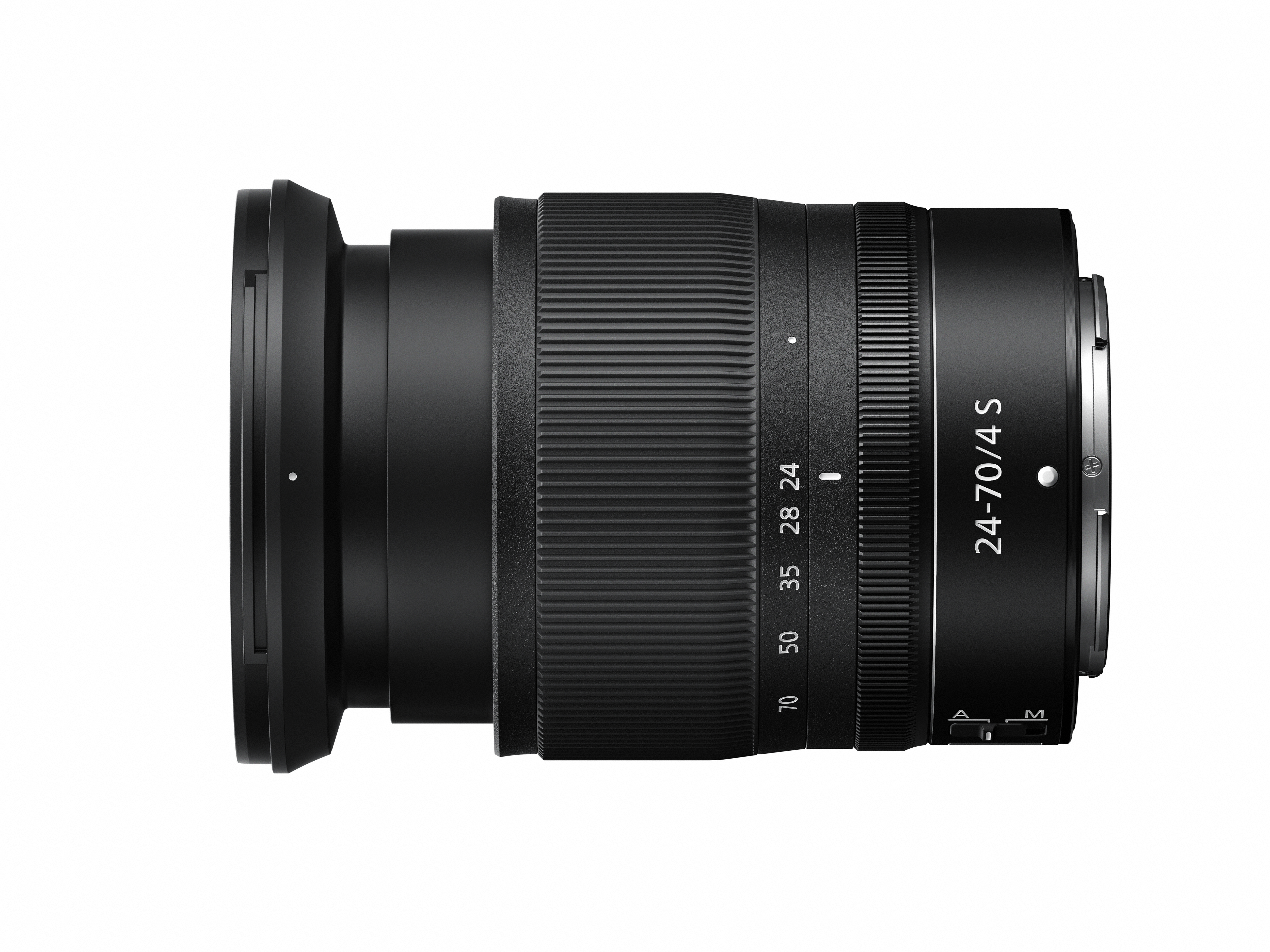
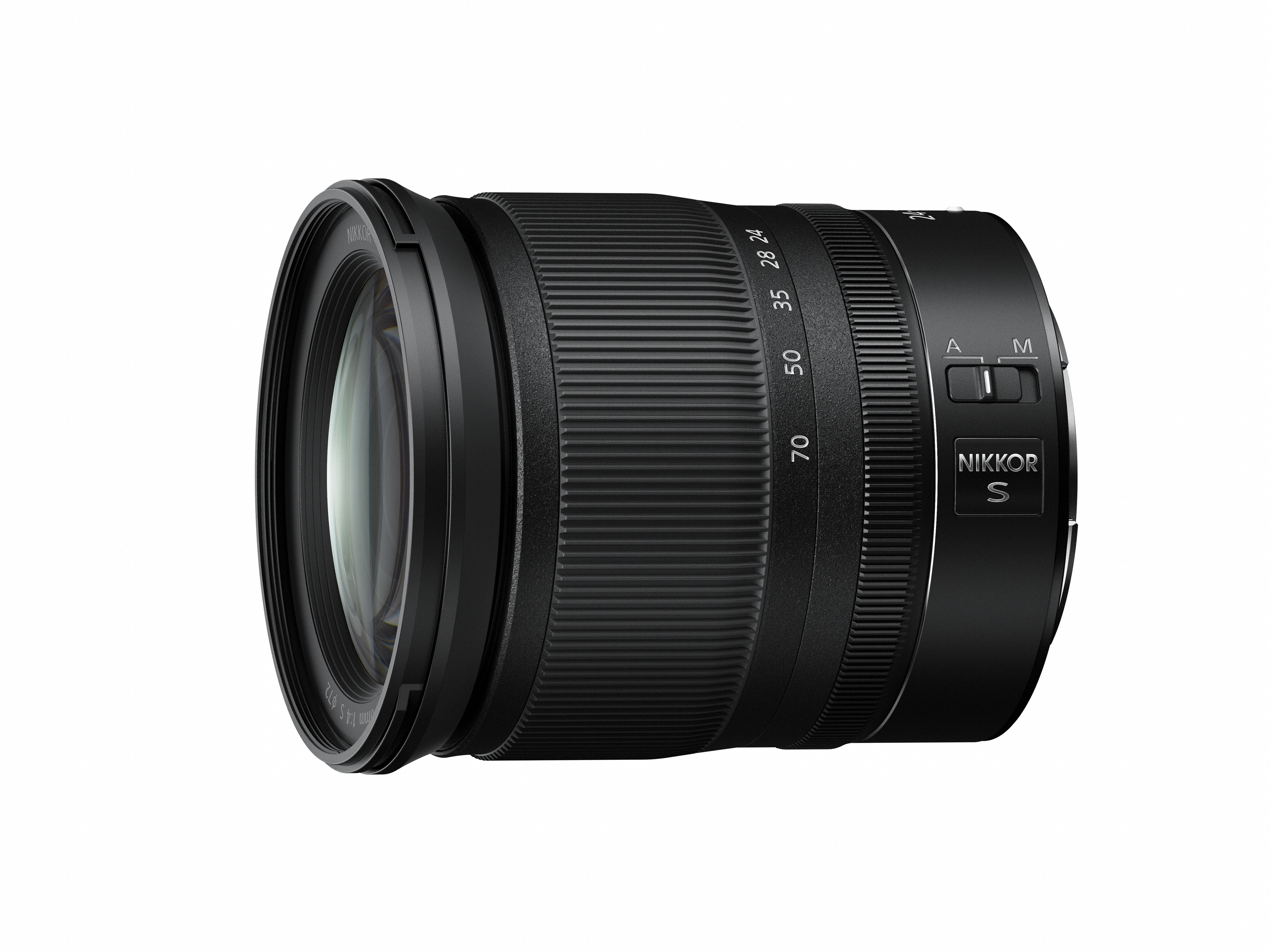
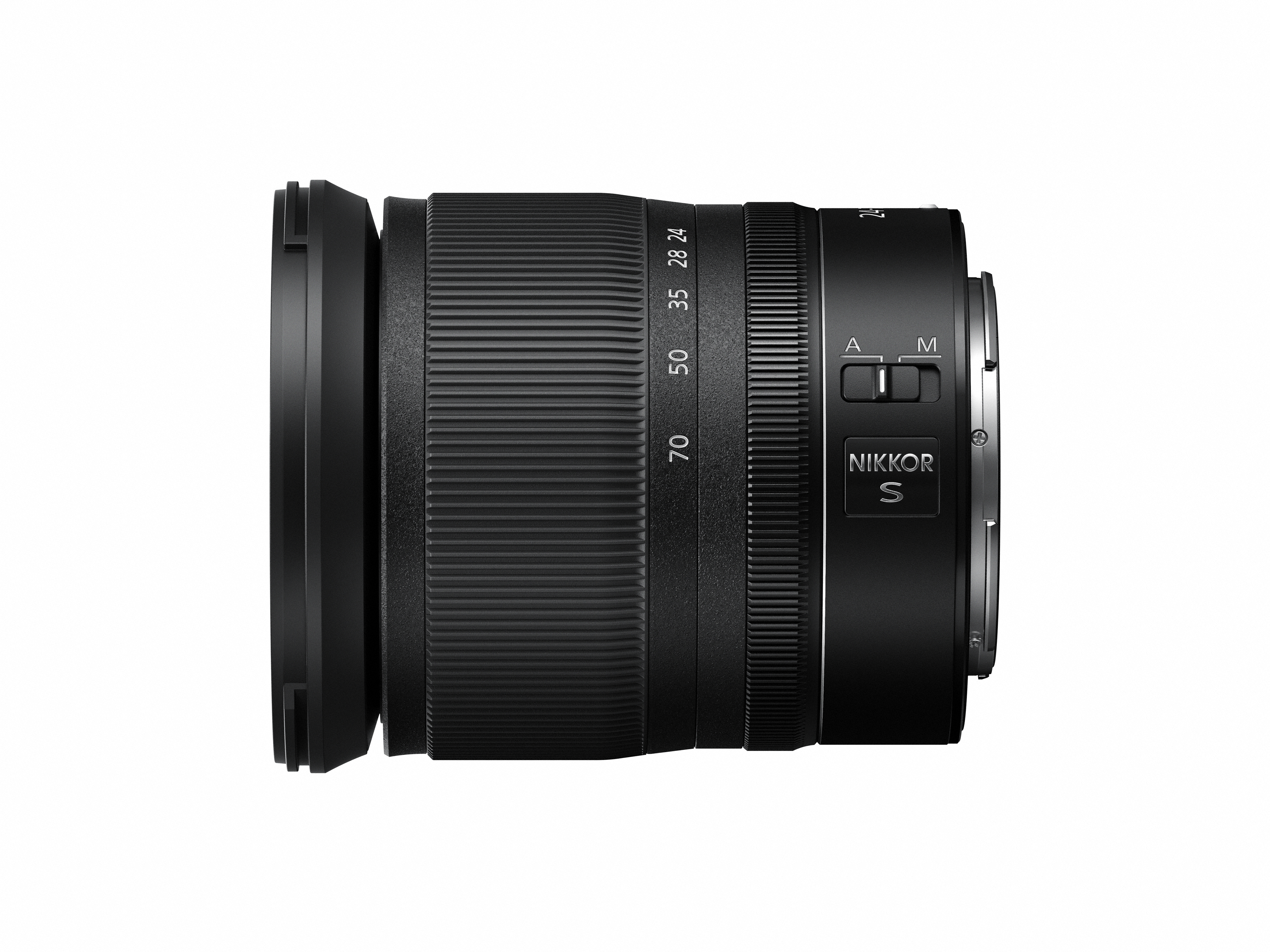
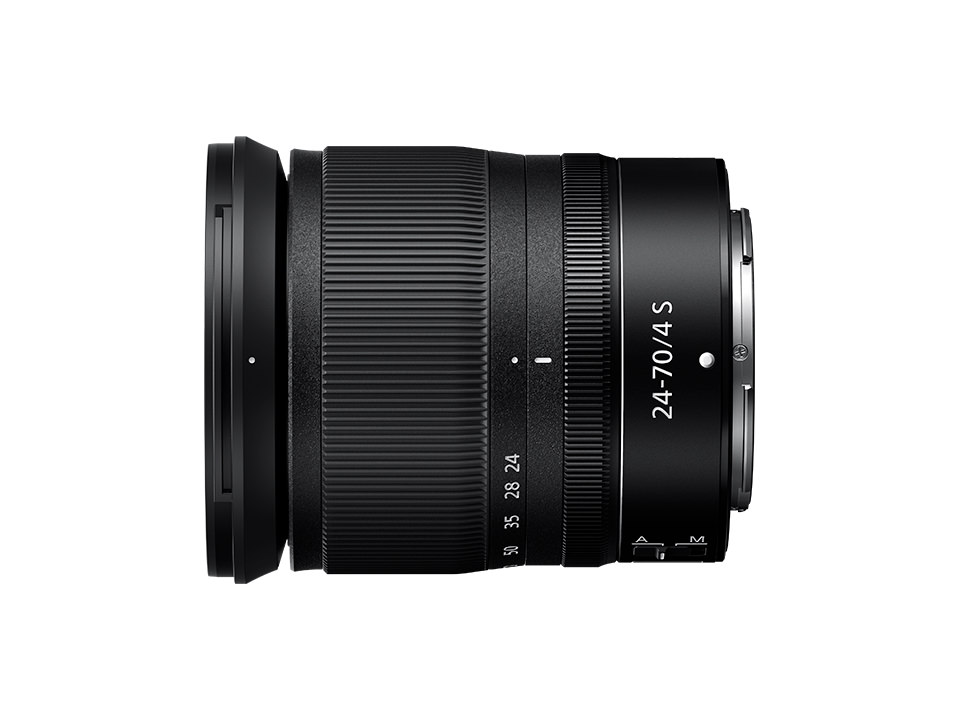
Controls Zoom ring, programmable focus/control ring and A/M switch; no focus-distance scale. Control ring can adjust exposure compensation in AF
Zoom design Retractable barrel, extended by turning the zoom ring without a separate release button; must extend to a shooting focal length before use
Filter detail 72 mm screw-in filters, 0.75 mm pitch
Weather resistance Nikon states sealing of the lens including moving parts for dust and drip resistance; not a waterproof guarantee
Dimensions detail Approximately 77.5 mm maximum diameter × 88.5 mm from the lens mount flange when retracted
Weight detail Approximately 500 g
Lens hood HB-85 included
In the box LC-72B front cap, LF-N1 rear cap, HB-85 hood and CL-C1 case
Release detail Nikon USA's August 2018 announcement gives September 27 availability. This is the retractable f/4 model, distinct from the later f/2.8 zoom Pros and cons Pros + Constant f/4 maximum aperture+ Retractable design and 500 g weight+ Minimum focus distance of 0.3 m throughout the zoom rangeCons − Must be extended before shooting− No focus-distance scale− No optical vibration reduction