Home Monitors Apple Studio Display (15-inch ADC, 2000) Apple · Studio Display
Studio Display (15-inch ADC, 2000) Released July 2000
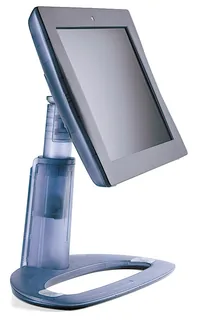
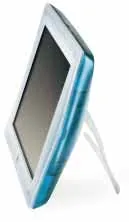
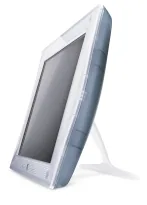
Apple's clear acrylic 15-inch LCD uses one ADC cable for digital video, USB and power, with a tilting easel stand and two-port USB hub.
Compare with another monitor Compare with… Studio Display (2026) (2026) Studio Display (2022) (2022) Studio Display (17-inch LCD, 2001) (2001) Studio Display (17-inch CRT ADC, 2000) (2000) Studio Display (15-inch DVI, 1999) (1999) Studio Display (15-inch LCD, 1999) (1999) Studio Display (17-inch CRT, 1999) (1999) Studio Display (21-inch CRT, 1999) (1999) Studio Display (15-inch LCD, 1998) (1998) Predator X27U F5 (2025) ProCreator PE320QXT (2025) AGON PRO AG326UZD2 (2026) Q27G4SRU (2025) Studio Display XDR (2026) Thunderbolt Display (2011) LED Cinema Display (27-inch) (2010) LED Cinema Display (24-inch) (2008) Cinema HD Display (30-inch, DVI) (2004) Cinema Display (20-inch, DVI) (2004) Cinema HD Display (23-inch, DVI) (2004) Cinema Display (20-inch, ADC) (2003) Cinema HD Display (23-inch, ADC) (2002) Cinema Display (22-inch, ADC) (2000) Cinema Display (22-inch, DVI) (1999) AppleVision 750 Display (1997) AppleVision 850 (1997) AppleVision 850AV (1997) Multiple Scan 720 Display (1997) AppleVision 1710AV (1995) Multiple Scan 14 Display (1995) Multiple Scan 1705 Display (1995) Multiple Scan 15 Display (1994) Multiple Scan 17 Display (1994) Multiple Scan 20 Display (1994) Apple AudioVision 14 Display (1993) Apple Color Plus 14-inch Display (1993) Macintosh Portrait Display (1989) AppleColor High-Resolution RGB Monitor (1987) ROG Swift OLED PG27UCWM (2026) ROG Strix Pulsar XG27AQNGV (2026) ProArt Display PA278CGRV (2025) ProArt Display 6K PA32QCV (2025) ROG Strix OLED XG27UCDMG (2025) ROG Swift OLED PG32UCDM (2024) ZOWIE XQ2566X (2026) MOBIUZ EX321UZ (2026) PD2730S (2025) 24 Low Mount Adjustable Stand Monitor (SE2426HSR) (2026) Alienware 32 240Hz (AW3226DM) (2026) Alienware 34 240Hz (AW3426DWM) (2026) Pro 24 Adjustable Stand Monitor with Speakers (E2426HS) (2026) Pro 24 Monitor (E2426H) (2026) Pro 27 Monitor (E2726H) (2026) 27 Low Mount Adjustable Stand Monitor (SE2726HSR) (2026) Alienware 34 280Hz QD-OLED (AW3426DW) (2026) Alienware 39 5K OLED (AW3926QW) (2026) 27 QHD Monitor (SE2726D) (2026) Alienware 27 240Hz QD-OLED (AW2726DM) (2026) Alienware 27 280Hz (AW2726DL) (2026) Pro 24 Video Conferencing Monitor (E2426HB) (2026) Pro P 24 (P2426H) (2026) Pro P 24 16:10 USB-C Hub (P2426E) (2026) Pro P 24 USB-C Hub (P2426HE) (2026) UltraSharp 32 4K QD-OLED (U3226Q) (2026) 24 Monitor (SE2426H) (2026) 27 Monitor (SE2726H) (2026) UltraSharp 52 Thunderbolt Hub (U5226KW) (2026) 24 240Hz Monitor (SE2426HG) (2026) 27 240Hz Monitor (SE2726HG) (2026) Pro 27 Adjustable Stand Monitor (E2726HS) (2026) Pro 27 QHD Monitor (E2726DS) (2026) 24 Plus Monitor (S2425HSM) (2025) 27 Plus Monitor (S2725HSM) (2025) 27 Plus QHD Monitor (S2725DSM) (2025) 27 Plus QHD USB-C (S2725DC) (2025) Alienware 25 320Hz (AW2525HM) (2025) Alienware 27 280Hz QD-OLED (AW2725D) (2025) Alienware 34 240Hz QD-OLED (AW3425DW) (2025) 27 Plus 4K Monitor (S2725QS) (2025) 27 Plus 4K USB-C (S2725QC) (2025) Pro 24 Monitor (E2425HM) (2025) Pro 24 Plus QHD USB-C Hub (P2425DE) (2025) Pro 27 Plus 4K USB-C Hub (P2725QE) (2025) Pro 27 Plus QHD USB-C Hub (P2725DE) (2025) UltraSharp 27 4K Thunderbolt Hub (U2725QE) (2025) UltraSharp 32 4K Thunderbolt Hub (U3225QE) (2025) Alienware 27 4K QD-OLED (AW2725Q) (2025) Alienware 27 4K Dual-Resolution (AW2725QF) (2024) Pro 24 Plus (P2425H) (2024) Pro 24 Plus USB-C Hub (P2425HE) (2024) Pro 27 Plus (P2725H) (2024) Pro 27 Plus USB-C Hub (P2725HE) (2024) Alienware 27 360Hz QD-OLED (AW2725DF) (2024) UltraSharp 34 Curved Thunderbolt Hub (U3425WE) (2024) Alienware 32 4K QD-OLED Gaming Monitor (AW3225QF) (2024) UltraSharp 40 Curved Thunderbolt Hub (U4025QW) (2024) UltraSharp 27 Monitor (U2724D) (2023) UltraSharp 27 Thunderbolt Hub (U2724DE) (2023) UltraSharp 24 (U2424H) (2023) UltraSharp 24 USB-C Hub (U2424HE) (2023) Alienware 500Hz (AW2524HF) (2023) UltraSharp 27 4K USB-C Hub Monitor (U2723QE) (2022) Alienware 34 Curved QD-OLED (AW3423DW) (2022) Alienware 34 Curved QD-OLED (AW3423DWF) (2022) UltraSharp 27 Monitor (U2722D) (2021) UltraSharp 27 USB-C Hub Monitor (U2722DE) (2021) UltraSharp 27 USB-C Hub Monitor (U2721DE) (2020) UltraSharp 27 4K USB-C Monitor (U2720Q) (2020) UltraSharp 27 USB-C Monitor (U2719DC) (2018) UltraSharp U2719D (2018) UltraSharp 27 4K Monitor (U2718Q) (2017) UltraSharp U2717D (2016) UltraSharp 27 Monitor with PremierColor (UP2716D) (2015) UltraSharp U2415 (2014) UltraSharp U2715H (2014) UltraSharp U2414H (2013) UltraSharp U2713H (2012) UltraSharp U2713HM (2012) UltraSharp U2412M (2011) UltraSharp U2711 (2010) UltraSharp U2410 (2009) G27Q26 (2026) AORUS FO27Q5P (2025) M27UP (2025) MO32U (2024) Series 7 Pro 31.5″ 4K Thunderbolt 4 Docking Monitor (732xk) (2026) HyperX OMEN OLED 27qs (2026) ThinkVision P27UD-40 (2026) Legion 27Q-10 (2025) Legion Pro 32UD-10 (2025) UltraGear evo GX9 (39GX950B) (2026) UltraGear OLED GX7 (27GX790B) (2026) UltraFine evo 6K (32U990A) (2025) UltraGear OLED 34GX900A (2025) UltraGear OLED 27GX700A (2025) UltraGear OLED 45GX950A (2025) UltraGear 27G850A-B (2025) UltraGear OLED GX7 (27GX790A) (2024) UltraFine 27US550 (2024) UltraGear OLED 32GS95UE (2024) UltraGear 27GR83Q-B (2023) UltraGear 27GL850-B (2019) MPG 322UR QD-OLED X24 (2026) MPG 341CQR QD-OLED X36 (2026) PRO MAX 271PHW E14 (2026) PRO MP251 E14L (2025) PRO MP273QW E14 (2025) MAG 274QP QD-OLED X24 (2025) MAG 272QP QD-OLED X50 (2025) MAG 274QRFW E20 (2025) MAG 325QF E18V (2025) MPG 346CQRF X24 (2025) MAG 275UPD E14 (2025) MAG 321CQF E18 (2025) MAG 322URDF E16 (2025) MAG 274F (2025) MAG 275QF X32 (2025) MAG 274QF (2025) MAG 342CQR E2 (2024) MPG 341CQPX QD-OLED (2024) MPG 321URX QD-OLED (2024) Evnia 32M2N8900P (2026) Brilliance 27E3U7903 (2025) Odyssey OLED G8 32″ (G80SH) (2026) ViewFinity S7 (S70H) 27″ (2026) ViewFinity S8 (S80HF) (2026) Odyssey G7 G75F (37″) (2025) Odyssey OLED G6 (G60SF) (2025) Odyssey G9 (G91F) (2025) Odyssey OLED G8 G81SF 27-inch (2025) ViewFinity S8 S80UD (37″) (2025) Odyssey OLED G8 (G80SD) (2024) Odyssey OLED G9 G95SC (2023) Odyssey Neo G9 G95NC (2023) INZONE M10S II (2026) INZONE M10S (2024) INZONE M9 II (2024) INZONE M3 (2022) INZONE M9 (2022) GDM-F520 (2001) GDM-FW900 (2000) ColorPro VP2788-5K (2025) Model history · 4 models, 1998–2000 1998 Studio Display (15-inch LCD, 1998) Compare 1999 Studio Display (15-inch LCD, 1999) Compare 1999 Studio Display (15-inch DVI, 1999) Compare 2000 Studio Display (15-inch ADC, 2000)
Size 15″
Resolution 1024 × 768
PPI 85
Panel LCD
Refresh –
Brightness 230 nits
HDR –
USB-C power – Display
Screen size 15″
Resolution 1024 × 768
Sharpness 85 pixels per inch
Panel LCD (TFT active-matrix LCD; Apple does not identify the panel subtype)
Brightness (typical) 230 nits
Contrast ratio 300:1
Shape Flat
Colour depth 24-bit colour; up to 16.7 million colours
Viewing angles Typical 120° horizontal and 90° vertical Connections
Video inputs Apple Display Connector
USB-C charging None
USB ports 2 × USB-A
Other connections Integrated ADC cable supplies digital video, USB data and power; two downstream powered USB ports. No separate analogue computer, composite, S-video or audio input. Design
Stand adjusts Tilt
Weight with stand 5.2 kg
Size with stand 41 × 40.3 × 17.2–25.9 cm (width × height × depth), from Apple's May 2001 French datasheet; archived support page rounds to 15.8 × 16.1 × 6.7 inches (height × width × depth)
Controls Touch-sensitive system power, sleep and wake control, plus brightness adjustment
Colours Crystal-clear acrylic enclosure with silver-coloured frame Power and support
Power use Maximum 50 W operating; 35 W or less in sleep mode, from Apple datasheet
Power supply Powered through ADC; datasheet specifies 28 V DC ±1.5 V, with no separate monitor mains cord
Software Apple's 19 July 2000 US announcement says available immediately; Japanese first retail was 5 August, so the earlier US sale date is used. Brightness, contrast, weight and metric dimensions follow Apple's surviving May 2001 datasheet for M7928ZM/A. Neither this datasheet nor the archived support page specifies native refresh, so it is omitted. Requires Power Mac G4 or Power Mac G4 Cube with ADC in maker launch documentation; other digital sources require a compatible powered ADC adaptor.
In the box Display with integrated stand and ADC cable Pros and cons Pros + One cable carries video, USB and power+ Two-port USB hub+ Tilting easel standCons − Native resolution limited to 1024 × 768− ADC connection needs a compatible computer or powered adaptorPrevious model: Studio Display (15-inch DVI, 1999) .