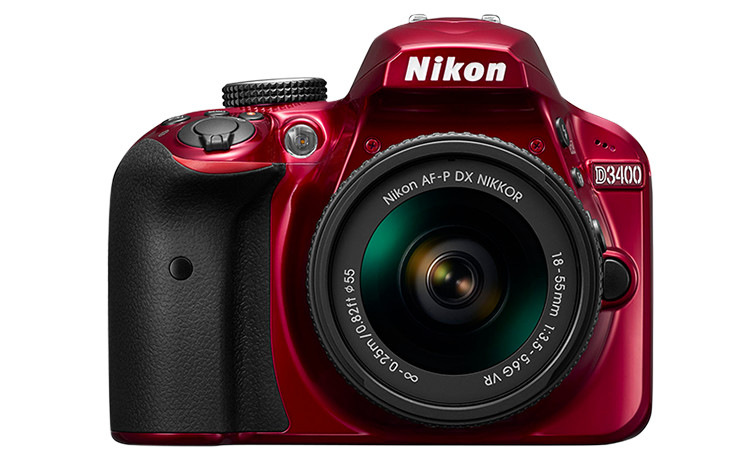
Photo 1 of 16
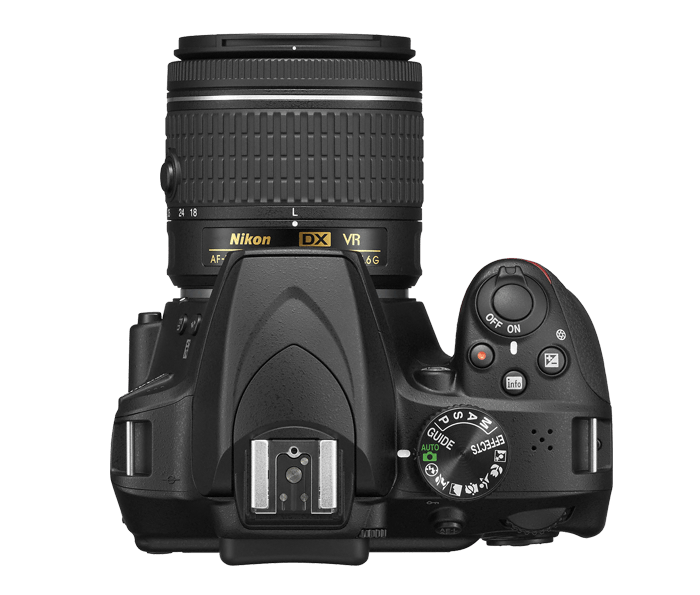
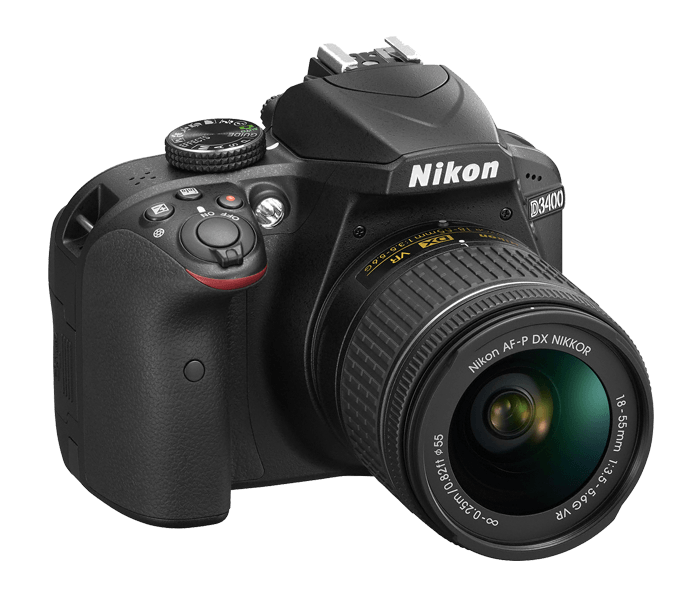
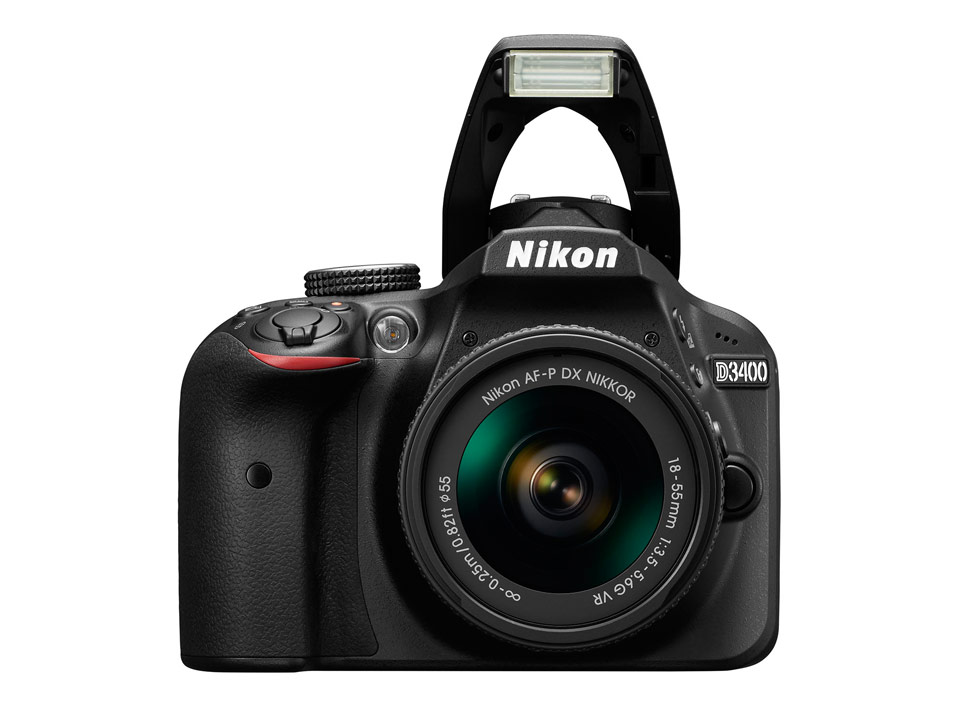
Nikon D3400 · Nikon USA product photograph with AF-P DX 18–55mm VR lens; lens is not part of body specifications
What reviewers say
Both praise image quality and the quieter AF-P kit lens, while seeing limited change from the D3300. Photography Blog values beginner guidance and improved launch pricing, but finds movie autofocus unreliable. Photo Review obtains better video tracking, yet questions the loss of sensor cleaning, microphone input and stronger flash. Both find Bluetooth sharing useful within its restricted features.
From photographyblog.com and photoreview.com.au
Specifications
Report a wrong or missing specImage and sensor
- Camera type
- DSLR
- Sensor format
- APS-C
- Sensor type
- CMOS
- Sensor dimensions
- 23.5 × 15.6 mm
- Effective resolution
- 24.2 MP
- Largest image
- 6000 × 4000
- RAW recording
- Yes
- Standard ISO range
- 100–25600
- Sensor detail
- Nikon DX CMOS with 24.16 million effective and 24.72 million total pixels; no optical low-pass filter; approximately 1.5× lens focal-length equivalent. Image Dust Off reference data uses Capture NX-D; no automatic vibrating sensor-cleaning system
- Image formats
- 12-bit compressed NEF RAW, JPEG and simultaneous RAW plus JPEG; maximum 6000 × 4000 pixels; Standard, Neutral, Vivid, Monochrome, Portrait, Landscape and Flat Picture Controls
- ISO detail
- ISO 100–25600 in one-stop steps; Auto ISO; 25600 is part of the standard range, rather than the D3300's expanded setting
- Image processor
- EXPEED 4
Lens and shooting
- Lens mount
- Nikon F mount
- Stabilisation
- Optical lens stabilisation
- Maximum continuous burst
- 5 fps
- Lens detail
- Autofocus supported with AF-P lenses and type E/G AF-S lenses; no body autofocus motor for screw-drive lenses. Nikon's specification is narrower than Photography Blog's AF-S/AF-I description
- Autofocus
- Multi-CAM 1000; 11 phase-detection points including one cross-type; -1 to +19 EV at ISO 100, 20°C; AF-S/AF-C/AF-A, single-point, dynamic, auto-area and 11-point 3D tracking. Contrast-detection live view supports face, wide, normal and subject-tracking areas
- Shutter
- Electronically controlled focal-plane shutter; 1/4000 to 30 seconds in one-third stops, Bulb and Time; flash sync 1/200 second
- Burst detail
- Approximately 5 fps with manual focus, S/M exposure, 1/250 second or faster and other settings at defaults
- Stabilisation detail
- Optical VR depends on the lens; no sensor-shift stabilisation
- Flash
- Built-in pop-up flash; guide number approximately 7 m at ISO 100, 20°C, or 8 at manual full output; accessory shoe
- Exposure controls
- P/S/A/M, Auto, flash-off Auto, scene and special-effects modes; beginner Guide mode; 420-pixel RGB metering with matrix, centre-weighted and spot modes; ±5 EV compensation; Active D-Lighting on/off
Video
- Highest video resolution
- 1920 × 1080 at 60 fps
- Video detail
- H.264 MOV at Full HD 60p/50p/30p/25p/24p or 720p 60p/50p; actual NTSC rates 59.94/29.97/23.976. Full HD 60p/50p narrows the recorded area. Maximum 29 minutes 59 seconds, reduced to 20 or ten minutes depending on frame-rate/quality settings, or three minutes with Miniature Effect
- Audio
- Built-in mono microphone with adjustable sensitivity and linear PCM recording; no external microphone input. Photography Blog's earlier stereo/external-microphone passage contradicts Nikon's sheet and its own later account of removed ports
Screen and viewfinder
- Viewfinder
- Optical
- Screen size
- 3″
- Screen dots
- 921,000
- Display detail
- Fixed 3-inch TFT; approximately 921000 dots in the US, rounded to 920000 in Japan; 170° viewing angle and approximately 100% coverage; dots count subpixels
- Viewfinder detail
- Pentamirror; approximately 95% coverage, 0.85× magnification with 50mm f/1.4 at infinity and 18 mm eyepoint
Connections and design
- Battery life (maker's claim)
- 1200 photographs
- Body weight
- 395 g
- Release detail
- Nikon Japan records first sale on 16 September 2016; global announcement on 17 August 2016 explicitly describes D3300 as its predecessor
- Recording media
- One SD/SDHC/SDXC slot; UHS-I support for SDHC/SDXC
- Ports
- Hi-Speed Micro-USB and HDMI Type C; no wired accessory terminal or external microphone socket; optional ML-L3 infrared remote
- Wireless connections
- Bluetooth 4.1 with SnapBridge; automatic transfer of JPEGs reduced to two megapixels and smartphone time/location synchronisation. No Wi-Fi; launch specification excludes remote shooting, RAW/TIFF and movie transfer through SnapBridge
- Battery life detail
- EN-EL14a rechargeable lithium-ion battery; approximately 1200 photographs per charge under CIPA testing, with Bluetooth disabled in the launch test and AF-P DX 18–55mm VR lens
- Charging
- External MH-24 charger; optional EH-5b AC adapter with EP-5A power connector
- Dimensions
- Approximately 124 × 98 × 75.5 mm
- Weight detail
- Approximately 395 g body only or 445 g including battery and SD card, excluding body cap
- Colours
- Black or red in the Japanese range
- In the box
- EN-EL14a battery, MH-24 charger, AN-DC3 strap, BF-1B body cap and DK-25 eyecup
Pros and cons
Pros
- 24.2-megapixel sensor without an optical low-pass filter
- Bluetooth automatically transfers reduced-size photographs
- 1200-shot CIPA battery rating
Cons
- Fixed screen without touch control
- No external microphone or wired accessory socket
- No Wi-Fi or remote shooting through SnapBridge
Closest rivals
Model | Type | Sensor | Megapixels | Lens | Video | Body weight | Released |
|---|---|---|---|---|---|---|---|
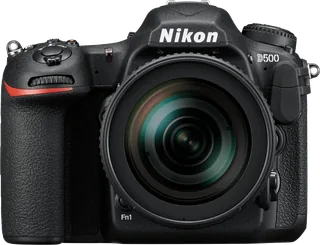
| DSLR | APS-C | 20.9 | Nikon F mount | 3840 × 2160 at 30 fps | 760 g | Apr 2016 | |
| DSLR | APS-C | 24.2 | Nikon F mount | 1920 × 1080 at 60 fps | 415 g | Nov 2016 | |
| DSLR | APS-C | 24.1 | Canon EF / EF-S | 1920 × 1080 at 29.97 fps | 427 g | Mar 2018 |


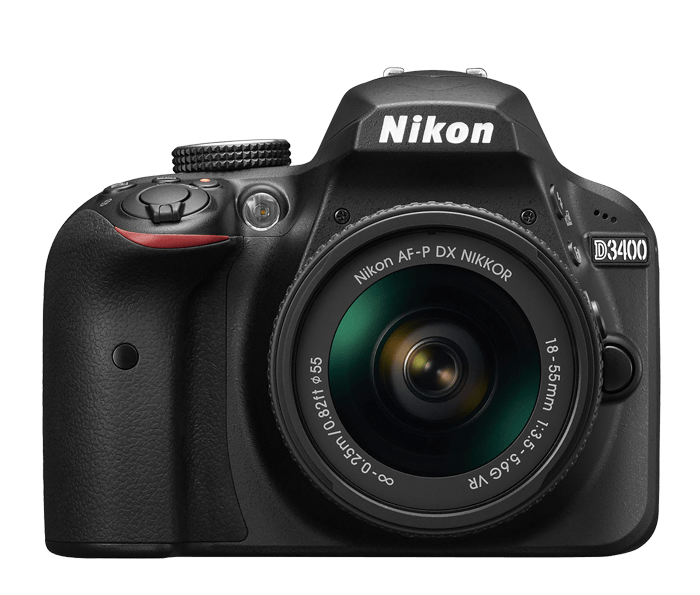
Previous model: D3300.
Sources
- nij.nikon.com/products/lineup/slr/d3400/spec.html
- nij.nikon.com/products/lineup/slr/d3400
- nikonusa.com/p/d3400/V1569/overview
- nikon.com/company/news/2016/0817_dslr_01
Photo: Nikon USA product photograph with AF-P DX 18–55mm VR lens; lens is not part of body specifications
- D3400 Black top with AF-P DX 18–55mm VR lens: Nikon official product photograph
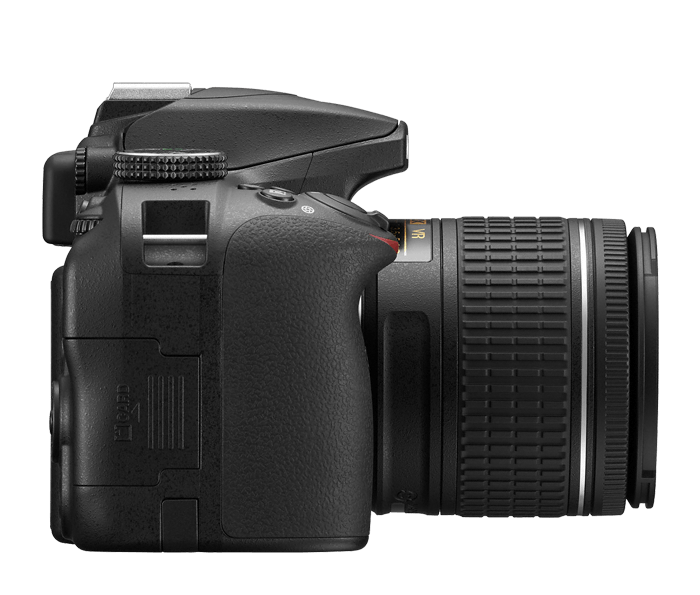
- D3400 Black right side with AF-P DX 18–55mm VR lens: Nikon official product photograph
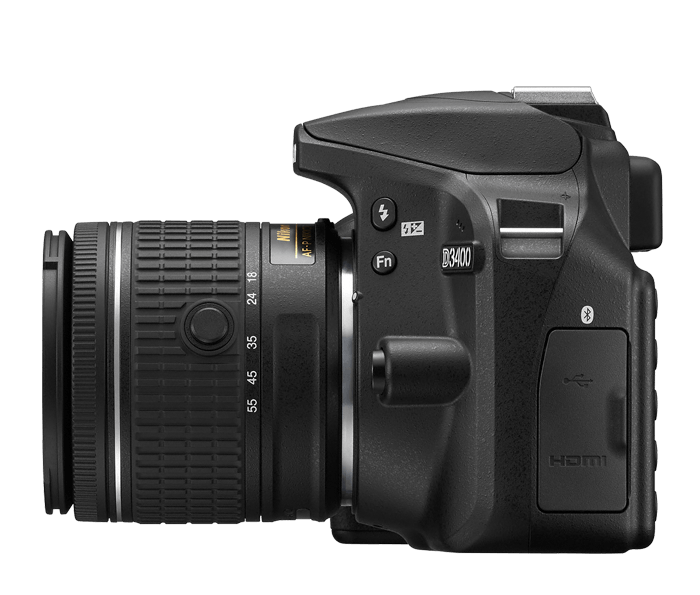
- D3400 Black left side with AF-P DX 18–55mm VR lens: Nikon official product photograph
- D3400 Black front oblique with AF-P DX 18–55mm VR lens: Nikon official product photograph
- D3400 Black opposite front oblique with AF-P DX 18–55mm VR lens: Nikon official product photograph
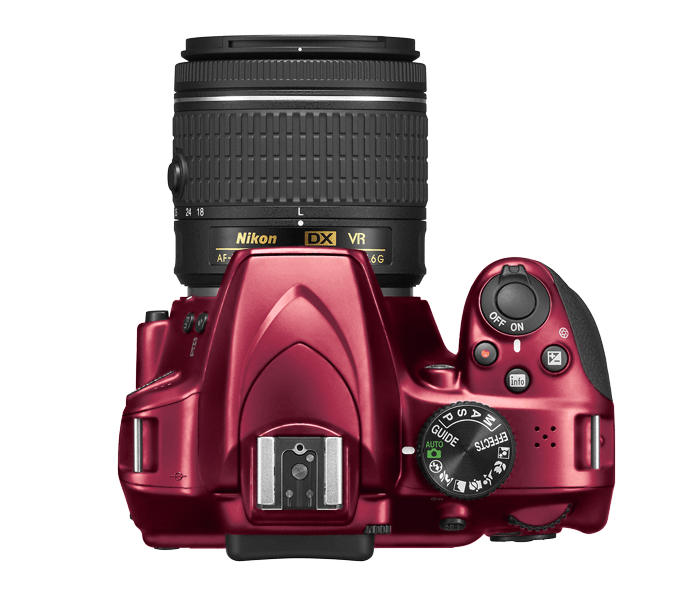
- D3400 Red top with AF-P DX 18–55mm VR lens: Nikon official product photograph
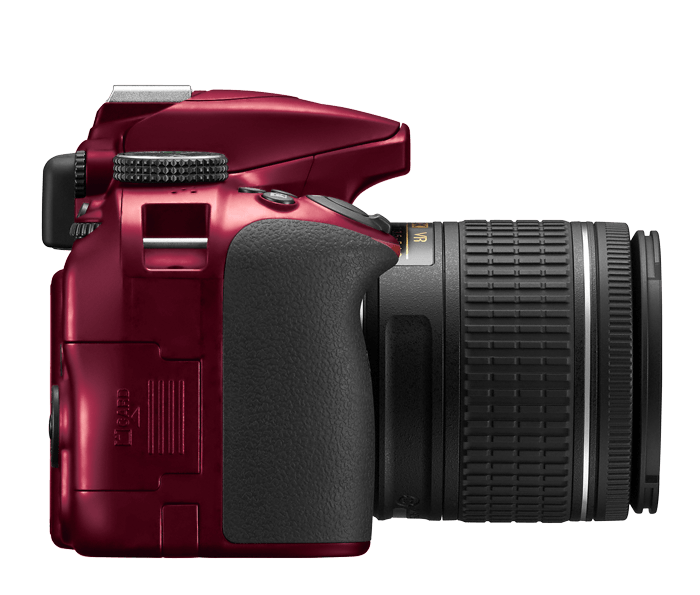
- D3400 Red right side with AF-P DX 18–55mm VR lens: Nikon official product photograph
- D3400 Red left side with AF-P DX 18–55mm VR lens: Nikon official product photograph
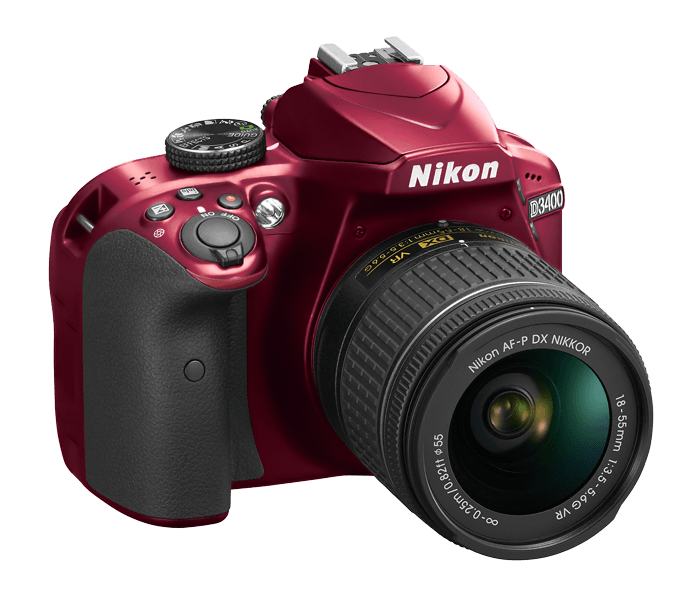
- D3400 Red front oblique with AF-P DX 18–55mm VR lens: Nikon official product photograph
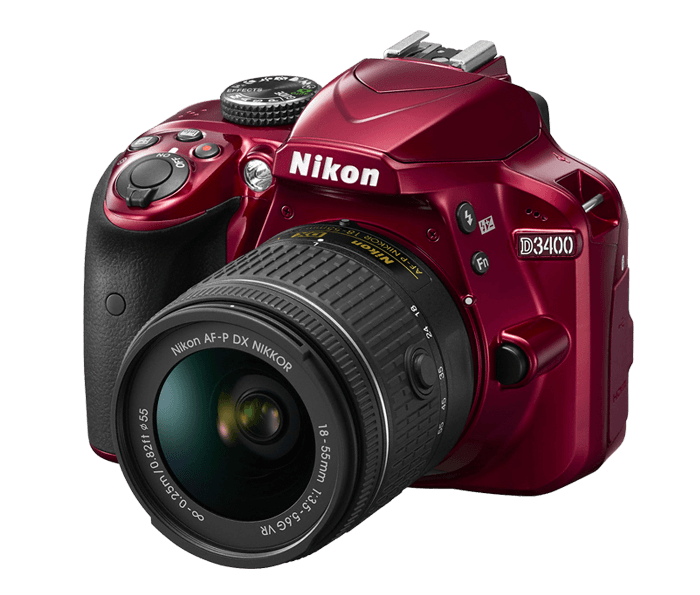
- D3400 Red opposite front oblique with AF-P DX 18–55mm VR lens: Nikon official product photograph
- D3400 Black front with raised pop-up flash and AF-P DX 18–55mm VR lens: Nikon official product photograph
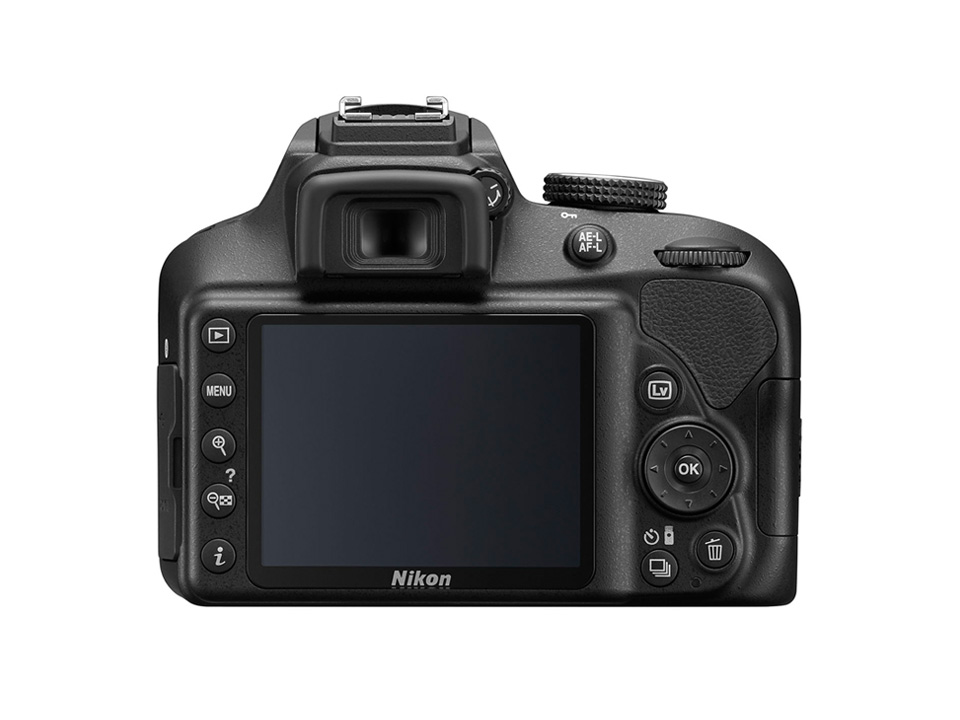
- D3400 Black rear with LCD: Nikon official product photograph
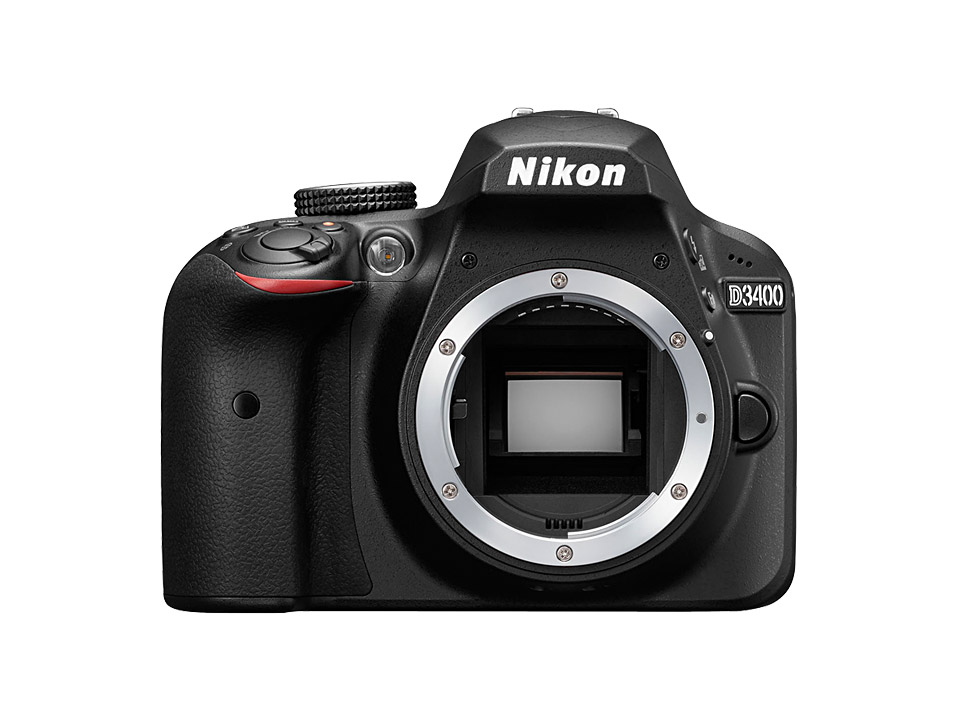
- D3400 Black front with lens removed: Nikon official product photograph
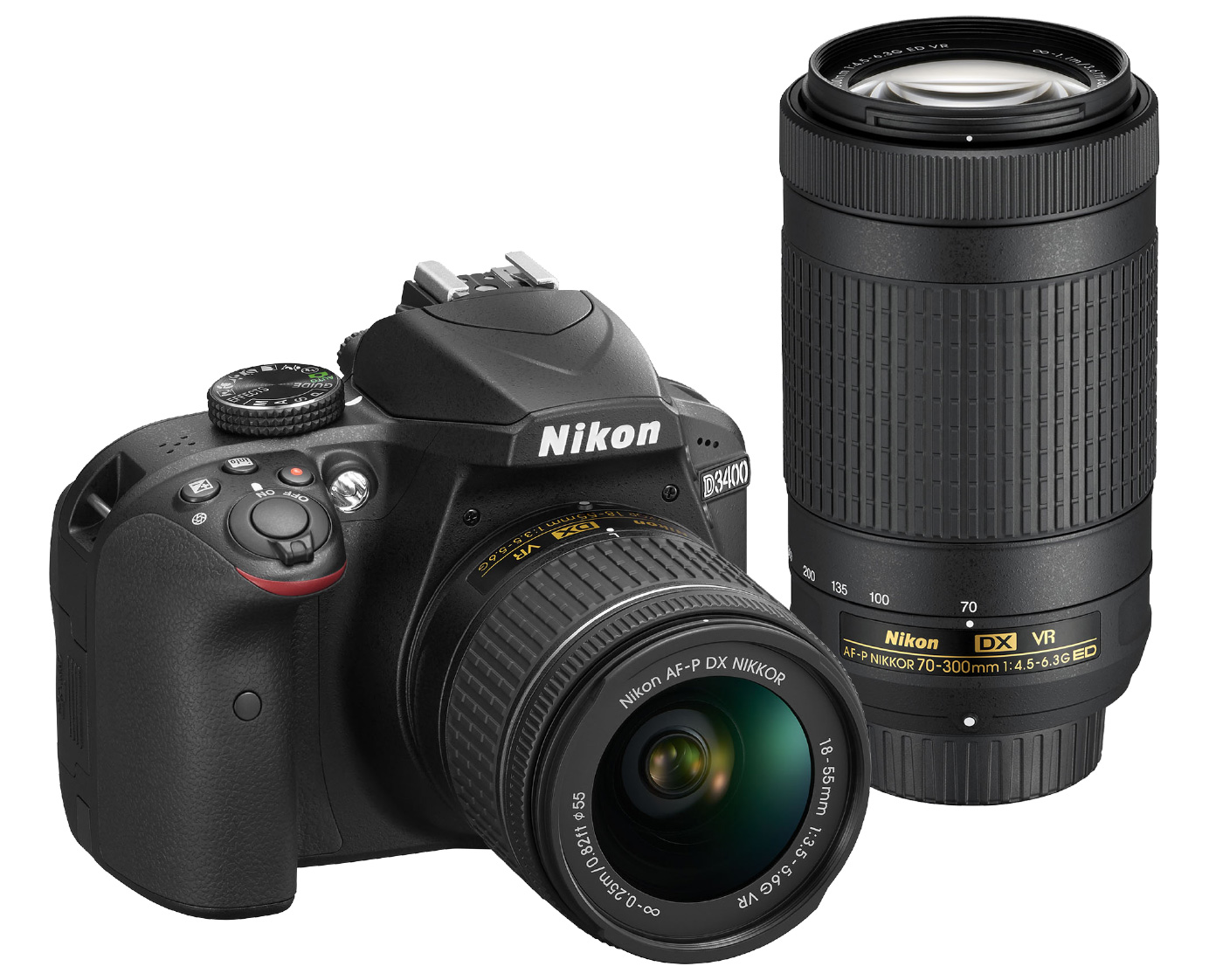
- D3400 Black double-zoom kit with 18–55mm and 70–300mm lenses: Nikon official product photograph
- D3400 Red front with AF-P DX 18–55mm VR lens: Nikon official product photograph