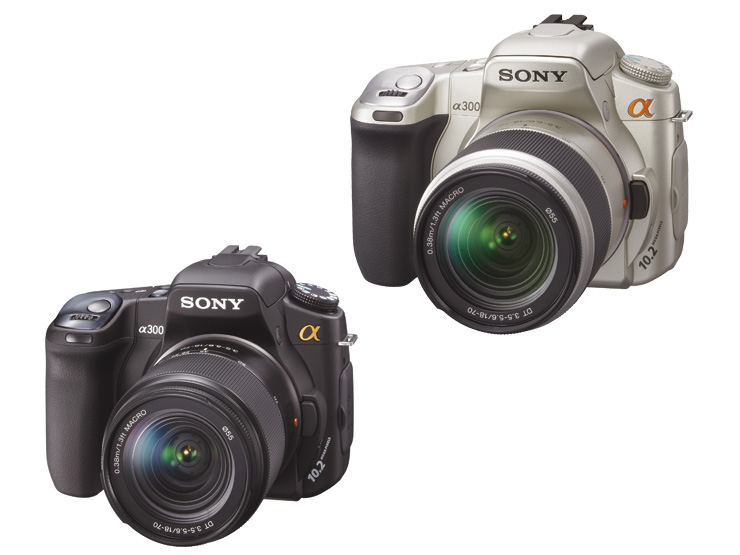
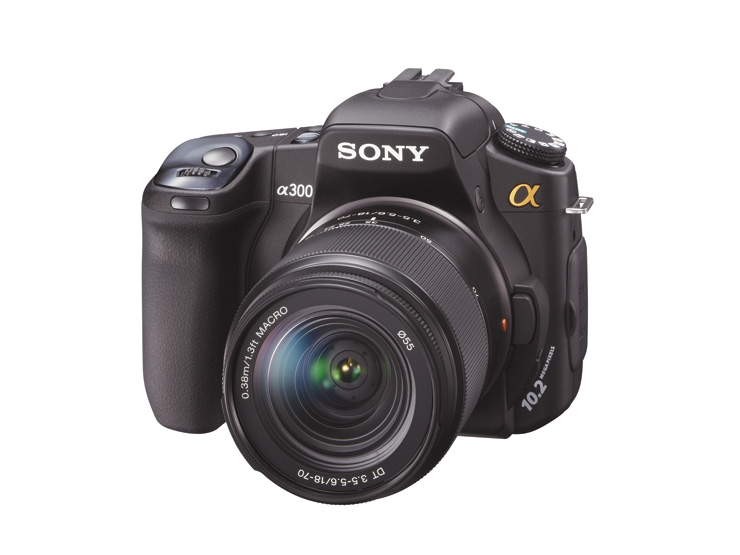
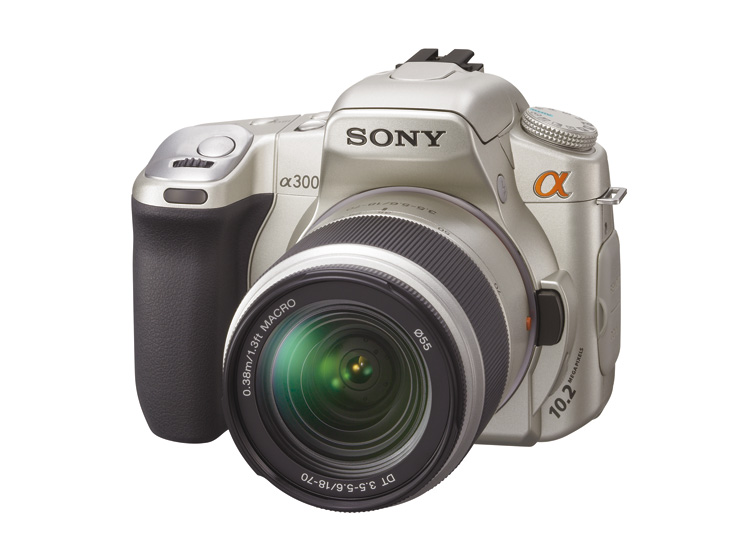
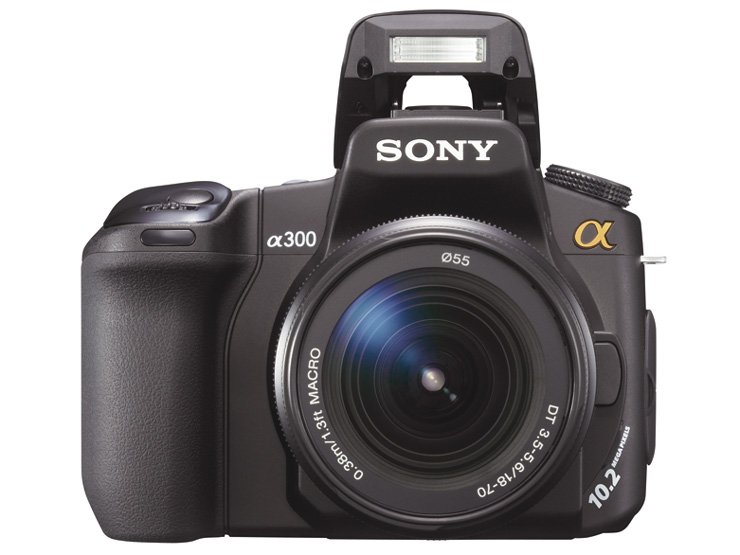
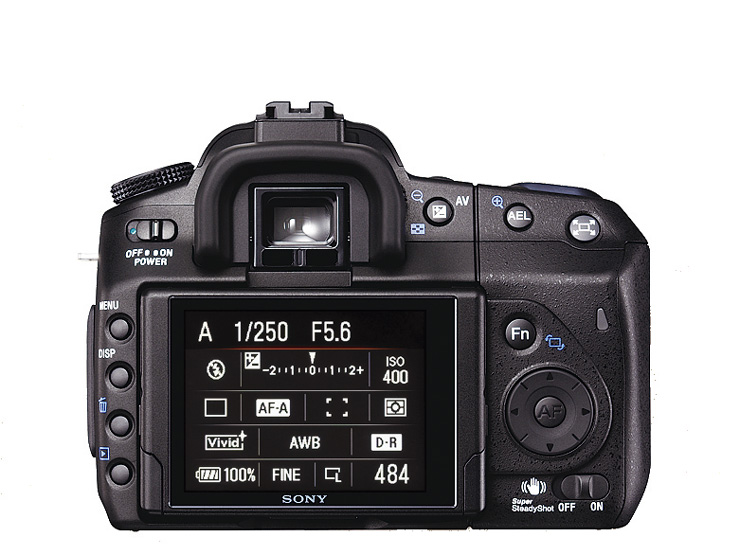
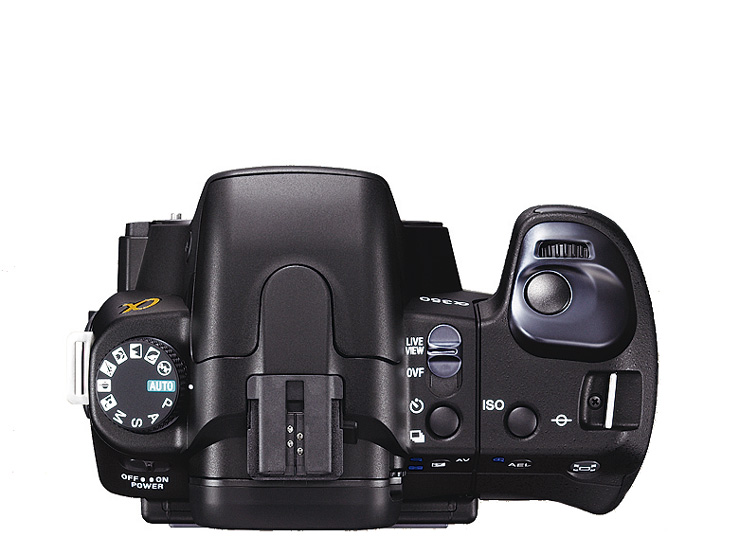
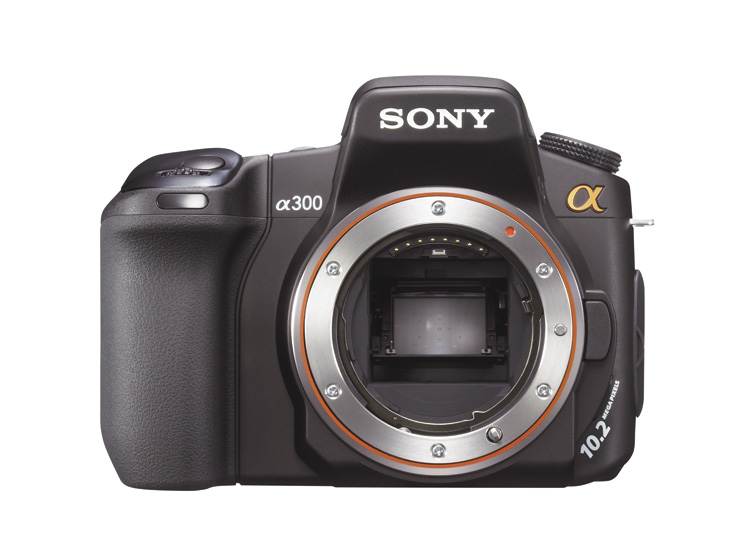
Sony Alpha DSLR-A300 · Photo source
Sony · Alpha
Alpha DSLR-A300
A 10.2 MP APS-C DSLR with sensor-shift stabilisation, a tilting screen and phase-detection autofocus during live view.
- Type
- DSLR
- Sensor
- APS-C
- Megapixels
- 10.2
- Lens
- Sony A-mount
- Video
- –
- Body weight
- 582 g
What reviewers say
Both reviews praised quick live-view autofocus, the tilting screen and stabilisation, but criticised the small viewfinder and high-ISO JPEG detail loss. PhotographyBlog found RAW recovered much of that detail; Cameralabs favoured the A300 over the A350 for typical kit-lens use. Cameralabs tested a sample Sony described as pre-production.
From photographyblog.com, photographyblog.com, photographyblog.com, photographyblog.com, photographyblog.com, photographyblog.com, cameralabs.com, cameralabs.com, cameralabs.com, cameralabs.com, cameralabs.com, cameralabs.com, cameralabs.com, cameralabs.com, cameralabs.com, cameralabs.com and cameralabs.com
Specifications
Report a wrong or missing specImage and sensor
- Camera type
- DSLR
- Sensor format
- APS-C
- Sensor type
- CCD
- Sensor dimensions
- 23.6 × 15.8 mm
- Effective resolution
- 10.2 MP
- Largest image
- 3872 × 2592
- RAW recording
- Yes
- Standard ISO range
- 100–3200
- Sensor detail
- 10.8 million total pixels; RGB primary-colour filter; anti-static coating and sensor-shift dust removal
- Image formats
- JPEG, RAW (Sony ARW 2.0) and RAW+JPEG; 3:2 or cropped 16:9 stills; 12-bit analogue-to-digital conversion
- ISO detail
- ISO 100–3200 in whole-stop steps, plus Auto; high-ISO noise reduction available from ISO 1600
- Image processor
- BIONZ
Lens and shooting
- Lens mount
- Sony A-mount
- Stabilisation
- Sensor shift
- Maximum continuous burst
- 3 fps
- Lens detail
- Interchangeable Sony A-mount; supports compatible Sony, Minolta and Konica Minolta AF lenses; kit optics are separate from body specifications
- Autofocus
- TTL phase detection with nine points and centre cross sensor; single-shot, automatic and continuous AF, manual focus and selectable Eye-Start AF; detection range EV 0–18 at ISO 100
- Shutter
- Electronically controlled vertical-traverse focal-plane shutter; 30 seconds to 1/4000 second plus Bulb; flash sync 1/160 second
- Burst detail
- Up to 3 fps using the optical viewfinder or 2 fps in live view; JPEG Standard/Fine can continue until the card fills, subject to shooting conditions and card speed. Maker buffer claim six RAW or three RAW+JPEG frames.
- Stabilisation detail
- Super SteadyShot sensor-shift stabilisation; Sony claims approximately 2.5–3.5 stops depending on lens and conditions; excludes Minolta AF Macro Zoom 3X–1X F1.7–2.8
- Flash
- Automatic pop-up built-in flash, guide number 12 in metres at ISO 100; ADI and pre-flash TTL control; wireless and high-speed sync require compatible external flash
- Exposure controls
- Program, aperture priority, shutter priority and manual controls; scene modes; 40-segment honeycomb metering through the optical finder or 1200-zone analysis in live view, with centre-weighted and spot options; ±2 EV compensation in 1/3-stop steps; D-Range Optimizer and Creative Style controls
Screen and viewfinder
- Viewfinder
- Optical
- Screen size
- 2.7″
- Screen dots
- 230,400
- Tilting screen
- Yes
- Display detail
- Clear Photo TFT LCD; 230,400 dots count colour subpixels; tilts approximately 130° upward or 40° downward. Live view previews exposure compensation, white balance and selected Creative Style settings; Smart Teleconverter produces 1.4×/2× digital crops.
- Viewfinder detail
- Fixed eye-level pentamirror; approximately 95% coverage and 0.74× magnification with a 50 mm lens at infinity; optical path closed automatically when live view is selected
Connections and design
- Battery life (maker's claim)
- 730 photographs
- Body weight
- 582 g
- Release detail
- Sony Hong Kong specifies April 2008 for the single- and double-lens kits. Japan launched the body and single-lens kit on 17 July 2008; April is the earliest maker retail precision found.
- Recording media
- CompactFlash Type I/II and Microdrive; Memory Stick Duo, PRO Duo and PRO-HG Duo require a separately sold CompactFlash-slot adaptor
- Ports
- USB 2.0 Hi-Speed with NTSC/PAL video output; wired remote-release connector and DC input; no HDMI
- Battery life detail
- NP-FM500H, 7.2 V and 11.8 Wh (1650 mAh); maker CIPA claim approximately 730 photographs with optical finder or 410 in live view, with built-in flash used for half the shots; optional VG-B30AM grip holds two packs
- Charging
- Supplied BC-VM10 external charger; optional AC-VQ900AM adaptor/charger
- Dimensions
- Approximately 130.8 × 98.5 × 74.7 mm (width × height × depth), excluding protrusions
- Weight detail
- Approximately 582 g without battery, memory card, lens or accessories; no loaded weight published in the maker table
- Materials
- Plastic outer body (PhotographyBlog and Cameralabs)
- Colours
- Black; Silky Gold lens kit also released in Japan
- In the box
- NP-FM500H battery, BC-VM10 charger, power cord, USB and video cables, shoulder strap, eyepiece cover and cup, body cap and software CD
Video
- Video detail
- Still-image camera with no movie recording (PhotographyBlog); Quick AF Live View uses a dedicated secondary sensor with a pentamirror switching mechanism, rather than the main image sensor. It shows 90% coverage and has no magnified manual-focus-check mode.
Pros and cons
Pros
- Fast phase-detection autofocus in live view
- Tilting rear screen for high and low angles
- Sensor-shift stabilisation built into the body
Cons
- No video recording
- Live view shows only 90% of the captured frame
Closest rivals
Model | Type | Sensor | Megapixels | Lens | Video | Body weight | Released |
|---|---|---|---|---|---|---|---|
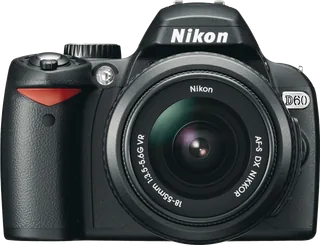
| DSLR | APS-C | 10.2 | Nikon F mount | – | 495 g | Feb 2008 | |
| DSLR | APS-C | 12.3 | Nikon F mount | 1280 × 720 at 24 fps | 620 g | Sept 2008 | |
| DSLR | APS-C | 12.3 | Nikon F mount | – | 825 g | Nov 2007 |


Sources
- sony.jp/ichigan/products/archive/DSLR-A300/spec.html
- sony.com.hk/press/pdf/20080201_03e.pdf
- sony.jp/CorporateCruise/Press/200807/08-0707
- photographyblog.com/pages/reviews/reviews_sony_a300.php
- cameralabs.com/sony_alpha_dslr_a300/3
Photo: sony.jp
- Sony Alpha A300, black and silver A300K lens-kit finish lineup: Sony Japan; A300 product-photo section, black and silver A300K lens-kit finish lineup.
- Sony Alpha A300, black finish with kit zoom lens: Sony Japan; A300 product-photo section, black finish with kit zoom lens.
- Sony Alpha A300, silver finish with kit zoom lens: Sony Japan; A300 product-photo section, silver finish with kit zoom lens.
- Sony Alpha A300, black lens kit, frontal view with flash raised: Sony Japan; A300 product-photo section, black lens kit, frontal view with flash raised.
- Sony Alpha A300, rear display and controls, shared A300/A350 body photograph published by Sony: Sony Japan; shared body photograph published in both DSLR-A300K and DSLR-A350 product-photo sections.
- Sony Alpha A300, top controls, shared A300/A350 body photograph published by Sony: Sony Japan; shared body photograph published in both DSLR-A300K and DSLR-A350 product-photo sections.