Photo 1 of 2
Sony Cyber-shot DSC-F505 · Photo source
Sony · Cyber-shot
Cyber-shot DSC-F505
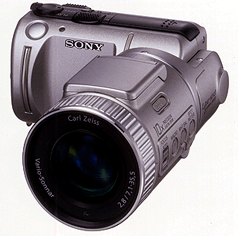
A fixed-lens digital camera with a swivelling body, a 5× Carl Zeiss zoom and Memory Stick recording.
- Type
- Bridge
- Sensor
- Other
- Megapixels
- 2.02
- Lens
- 38–190 mm equivalent
- Video
- 320 × 240
- Body weight
- 435 g
What reviewers say
DPReview and Imaging Resource praised sharp images, useful zoom range, manual focusing and the swivelling design, while finding low-light performance limited. DPReview especially liked the hybrid screen but criticised aggressive JPEG compression and occasional autofocus errors. Imaging Resource found the screen difficult in some intermediate outdoor light and noted lens distortion, while valuing the battery's remaining-time indicator.
From dpreview.com and old.imaging-resource.com
Specifications
Report a wrong or missing specImage and sensor
- Camera type
- Bridge
- Sensor format
- Other
- Sensor type
- CCD
- Effective resolution
- 2.02 MP
- Largest image
- 1600 × 1200
- RAW recording
- No
- Sensor detail
- 1/2-type interlaced CCD with primary-colour filter; Sony's launch sheet specifies 2.11 million total and 2.02 million effective photosites. The largest output is 1600 × 1200, approximately 1.92 million image pixels; these counts are distinct
- Image formats
- Fine or Standard JPEG; no uncompressed still-image mode (DPReview); email and voice-memo modes
Lens and shooting
- Built-in lens
- 38–190 mm equivalent
- Maximum aperture
- f/2.8–3.3
- Optical zoom
- 5×
- Lens detail
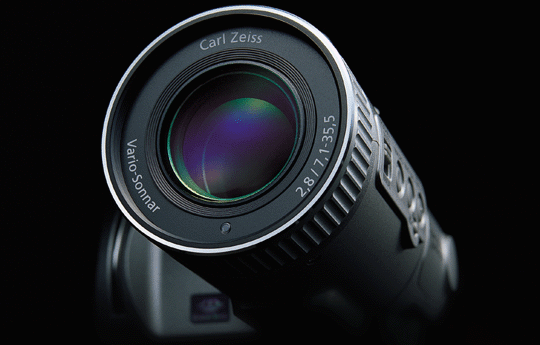
- Carl Zeiss Vario-Sonnar; actual 7.1–35.5 mm, 38–190 mm equivalent; f/2.8–3.3 maximum aperture, aperture-priority settings to f/8; 52 mm filter thread; 2× digital enlargement separately from 5× optical zoom
- Autofocus
- High-speed scan AF and macro AF; manual focus ring; normal focus from 0.8 m or 0.5 m at wide angle, macro from 0.08 m at wide angle
- Shutter
- Sony specifies 1/8–1/725 second in NTSC and 1/6–1/600 second in PAL shutter-priority modes; night scene modes are separate
- Flash
- Built-in pop-up flash; recommended distance approximately 0.3–2.5 m; high, normal and low intensity settings
- Exposure controls
- Automatic, aperture-priority and shutter-priority exposure plus night, night-plus, landscape and panfocus programs; ±1.5 EV compensation; spot metering; Auto, Indoor, Outdoor and One-push white balance
Video
- Highest video resolution
- 320 × 240
- Video detail
- MPEG-1 with sound; 320 × 240 presentation mode up to 15 seconds or 160 × 112 video-mail mode up to 60 seconds; selectable 5/10/15-second recording durations. Native movie frame rate unpublished in the maker launch sheet
- Audio
- Built-in microphone and speaker; voice memos with still images
Screen and viewfinder
- Viewfinder
- None
- Screen size
- 2″
- Screen dots
- 122,980
- Tilting screen
- Yes
- Display detail
- Hybrid reflective/backlit TFT LCD, 122,980 dots; lens/body joint rotates up 90° or down 50°, allowing the screen and lens to face different directions; brightness and backlight controls
Connections and design
- Body weight
- 435 g
- Release detail
- Sony Japan's original August 1999 launch page states 21 September 1999 availability in its pictured model/price table. Japanese kit is DSC-F505K; international camera name DSC-F505. Announcement date is not the sale date
- Recording media
- Memory Stick; Japanese DSC-F505K kit includes 4 MB MSA-4A card
- Ports
- USB, serial digital I/O and composite AV output with mono audio; NTSC/PAL output
- Battery life detail
- NP-FS11 supplied, with NP-F10 supported; Sony claims approximately 60 minutes or up to 1,100 consecutive VGA photographs with flash off, rather than modern CIPA still-image testing; approximately 70 minutes of video-mail capture or 90 minutes playback
- Charging
- AC-VF10 adapter/charger with DK-115 connection cord included in Japanese kit
- Dimensions
- Approximately 107.2 × 62.2 × 135.9 mm (width × height × depth)
- Weight detail
- Approximately 435 g camera only; 475 g including NP-FS11, wrist strap, lens cap and 4 MB Memory Stick
- In the box
- Japanese DSC-F505K kit includes 4 MB Memory Stick, NP-FS11 battery, AC-VF10 adapter/charger with DK-115 cord, AV cable, lens cap and wrist strap
Pros and cons
Pros
- 38–190 mm equivalent Carl Zeiss zoom
- Manual focus ring and aperture/shutter priority
- Hybrid reflective and backlit rear LCD
Cons
- JPEG still images without RAW recording
- No separate viewfinder
- Short low-resolution MPEG movie clips
Closest rivals
Model | Type | Sensor | Megapixels | Lens | Video | Body weight | Released |
|---|---|---|---|---|---|---|---|
| Bridge | Other | 0.33 | 40–400 mm equivalent | – | 480 g | Jul 1998 | |
| Bridge | Other | – | 40–400 mm equivalent | – | 600 g | Aug 1997 | |
| Bridge | 1/1.8-type | 2.62 | 38–190 mm equivalent | 320 × 240 | 424 g | Jun 2000 |

Sources
- sony.jp/CorporateCruise/Press/199908/99-0823/speck.html
- sony.jp/CorporateCruise/Press/199908/99-0823
- sony.jp/CorporateCruise/Press/199908/99-0823/image/top_3.gif
- dpreview.com/reviews/1796930185/sonydscf505
- old.imaging-resource.com/PRODS/F505/F505A.HTM
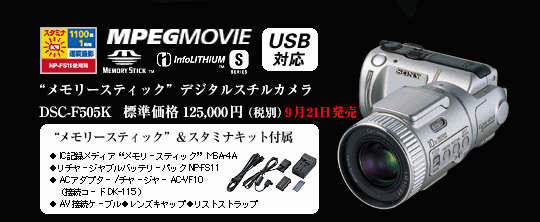
Photo: sony.jp
- Close view of the Cyber-shot DSC-F505 lens against a black background.: Sony Japan official DSC-F505 press photograph; complete supplied lens-detail canvas retained.