Photo 1 of 9
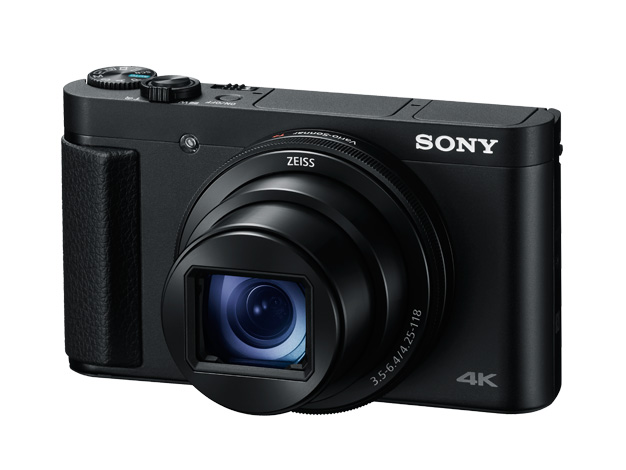
Sony Cyber-shot DSC-HX99 · Sony Japan exact HX99 black front-oblique product photograph; complete supplied studio canvas retained
Sony · Cyber-shot
Cyber-shot DSC-HX99
A pocket travel-zoom camera with RAW stills, 4K recording, a retractable OLED viewfinder and touch focus controls.
- Type
- Compact
- Sensor
- 1/2.3-type
- Megapixels
- 18.2
- Lens
- 24–720 mm equivalent
- Video
- 3840 × 2160 at 30 fps
- Body weight
- 216 g
What reviewers say
Both reviewers valued the pocketable zoom range, viewfinder, RAW support and 4K recording, while finding the small controls fiddly and launch price high. Photography Blog rated its overall image quality favourably; ePHOTOzine was more cautious, finding noise even at low ISO and disappointing results in dim conditions. Touch controls cover focusing and shooting rather than menus.
From photographyblog.com, ephotozine.com, ephotozine.com and ephotozine.com
Specifications
Report a wrong or missing specImage and sensor
- Camera type
- Compact
- Sensor format
- 1/2.3-type
- Sensor type
- Back-illuminated Exmor R CMOS
- Effective resolution
- 18.2 MP
- Largest image
- 4896 × 3672
- RAW recording
- Yes
- Standard ISO range
- 80–3200
- Sensor detail
- 1/2.3-type Exmor R CMOS; approximately 21.1 million total photosites. Optical format is not physical sensor dimensions
- Image formats
- Sony ARW 2.3 RAW, RAW+JPEG or JPEG Extra Fine/Fine/Standard; sRGB or Adobe RGB; 4:3, 3:2, 16:9 and square photographs plus Sweep Panorama
- ISO detail
- Ordinary ISO 80–3200; extended single-frame ISO 6400. Multi-shot Noise Reduction offers ISO 6400 and 12800 using combined exposures
- Image processor
- BIONZ X with front-end LSI
Lens and shooting
- Built-in lens
- 24–720 mm equivalent
- Maximum aperture
- f/3.5–6.4
- Optical zoom
- 28×
- Stabilisation
- Optical lens stabilisation
- Maximum continuous burst
- 10 fps
- Lens detail
- ZEISS Vario-Sonnar T*, actual 4.25–118 mm, 11 elements in 10 groups with five aspherical elements; five-blade iris. Maker specifies 28× optical zoom, while 24–720 mm equivalent values are those displayed by the camera and recorded in Exif
- Autofocus
- 25-point contrast autofocus, AF-S, Direct Manual Focus and manual focus; AF-C available for movies only. Eye AF, Lock-on AF and flexible spot areas; minimum focus approximately 5 cm wide or 250 cm telephoto
- Shutter
- Mechanical shutter: Manual and shutter-priority 30–1/2000 second, aperture-priority 8–1/2000, Program 1–1/2000 and Intelligent Auto 1/4–1/2000
- Burst detail
- Full-resolution Speed Priority Continuous up to 10 fps, or ordinary Continuous approximately 3 fps. Up to 155 frames in Speed Priority with JPEG Fine; rate falls as buffer fills. Focus, exposure and white balance lock to first frame in either mode
- Stabilisation detail
- Optical SteadyShot for stills; Intelligent Active movies combine optical and electronic correction
- Flash
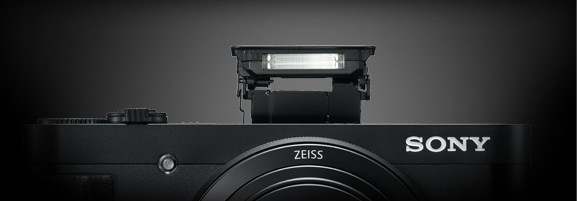
- Built-in pop-up flash; ISO Auto range approximately 0.3–5.4 m wide or 2.5–3.0 m telephoto; no accessory shoe
- Exposure controls
- P/A/S/M and two Memory Recall modes; ±3 EV in 1/3 EV steps; multi-pattern, centre-weighted, spot, entire-screen average and highlight metering
Video
- Highest video resolution
- 3840 × 2160 at 30 fps
- Video detail
- XAVC S 3840 × 2160 at 30p or 24p, 60/100 Mbps; PAL uses 25p. Full-pixel readout without pixel binning. Full HD up to 120p (100p PAL); 4K and 120p/100p HD sessions limited to approximately five minutes, with possible earlier thermal shutdown. Other modes approximately 29 minutes subject to temperature. UHS-I U3 microSDHC/XC required for 100 Mbps
- Audio
- Stereo recording: XAVC S Linear PCM or AVCHD Dolby Digital
Screen and viewfinder
- Viewfinder
- Electronic
- Screen size
- 3″
- Screen dots
- 921,600
- Touchscreen
- Yes
- Tilting screen
- Yes
- Display detail
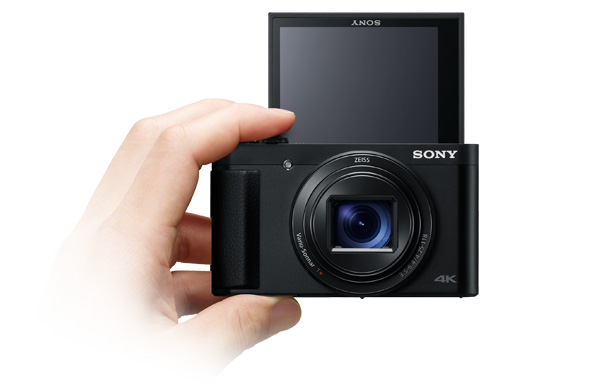
- 3.0-type 4:3 TFT LCD, 921600 dots; tilts up 180 degrees. Touch focus, touch shutter and touchpad focus while using viewfinder; menus are not touch controlled
- Viewfinder detail
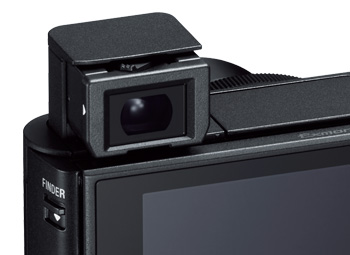
- Retractable 0.2-type OLED, 638400 dots; 100% coverage (97% during 4K recording), 0.50× equivalent magnification, −4 to +3 dioptres
Connections and design
- Wi-Fi
- Yes
- Bluetooth
- Yes
- Battery life (maker's claim)
- 370 photographs
- Body weight
- 216 g
- Release detail
- Sony Switzerland states availability from late October 2018; Sony Hong Kong specifies 26 October locally. October precision retained because the international first-sale day is not established
- Recording media
- microSD, microSDHC, microSDXC and Memory Stick Micro/Mark2; no full-size SD slot
- Ports
- Micro HDMI and Multi/Micro USB with USB 2.0
- Wireless connections
- 2.4 GHz IEEE 802.11 b/g/n Wi-Fi, NFC Type 3 and Bluetooth for location information from a compatible smartphone; no built-in GPS or compass
- Battery life detail
- NP-BX1; CIPA claim approximately 370 photographs with LCD or 300 with viewfinder. LCD claim rises to 460 with monitor auto-off set to two seconds
- Charging
- In-camera USB charging and USB external power using supplied AC adapter with battery inserted
- Dimensions
- 102 × 58.1 × 35.5 mm (width × height × depth), CIPA
- Weight detail
- Approximately 216 g body only, or 242 g including NP-BX1 and memory card
- Colours
- Black
- In the box
- NP-BX1, AC-UB10C adapter, micro USB cable, wrist strap and instructions in Japan; regional mains fittings vary
Pros and cons
Pros
- 24–720 mm equivalent framing in a compact body
- RAW stills and 4K video recording
- Retractable viewfinder and tilting touchscreen
Cons
- No continuous autofocus for still photography
- 4K and high-frame-rate video clips limited to about five minutes
- No built-in GPS receiver or accessory shoe
Closest rivals
Model | Type | Sensor | Megapixels | Lens | Video | Body weight | Released |
|---|---|---|---|---|---|---|---|
| Compact | 1/2.3-type | 18.2 | 24–720 mm equivalent | 1920 × 1080 at 60 fps | – | Apr 2016 | |
| Compact | 1/2.3-type | 18.2 | 24–720 mm equivalent | 1920 × 1080 at 60 fps | 218 g | Jun 2015 | |
| Compact | 1/2.3-type | 18.2 | 24–720 mm equivalent | 1920 × 1080 at 60 fps | 209 g | 2015 |


Sources
- sony.jp/cyber-shot/products/DSC-HX99/spec.html
- helpguide.sony.net/dsc/1820/v1/en/print.pdf
- sony.com.hk/press/pdf/20181025_e.pdf
- mynewsdesk.com/ch/sony-schweiz/pressreleases/nicht-nur-fur-weltenbummler-sony-s…
- Sony HX99 raised electronic viewfinder and rear display detail: Sony Japan official exact-model photograph; complete supplied canvas/background retained
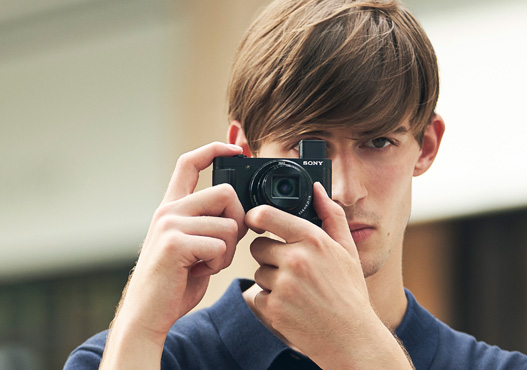
- A photographer using the Sony HX99 with its viewfinder raised: Sony Japan official exact-model photograph; complete supplied canvas/background retained
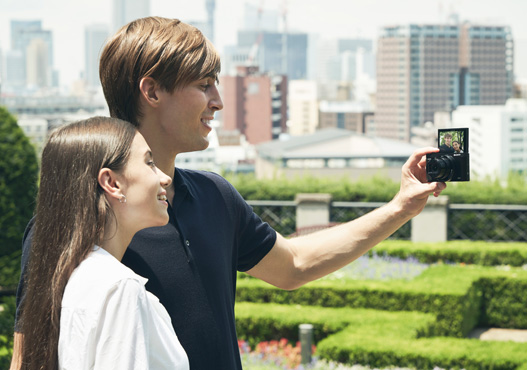
- Sony HX99 held by a couple taking a self-portrait outdoors: Sony Japan official exact-model photograph; complete supplied canvas/background retained
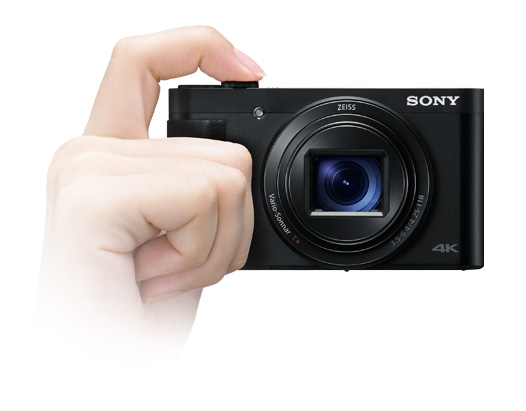
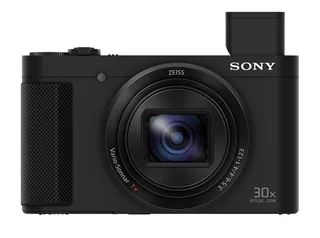
- Sony HX99 front view held by its grip: Sony Japan official exact-model photograph; complete supplied canvas/background retained
- Sony HX99 front close-up with its flash raised: Sony Japan official exact-model photograph; complete supplied canvas/background retained
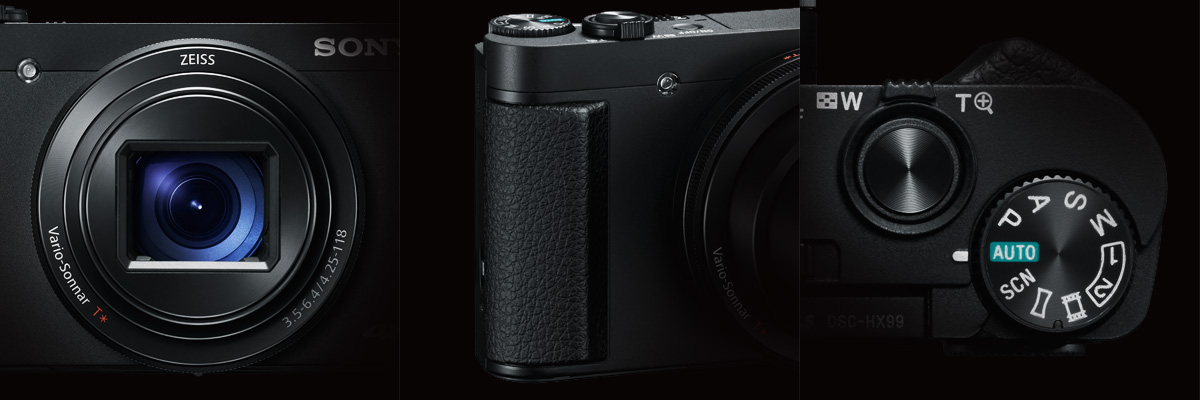
- Sony HX99 physical mode-dial close-up: Sony Japan official exact-model photograph; complete supplied canvas/background retained
- Sony HX99 held with its screen tilted upward: Sony Japan official exact-model photograph; complete supplied canvas/background retained
- Sony HX99 front and top-control photographs shown together: Sony Japan official exact-model photograph; complete supplied canvas/background retained