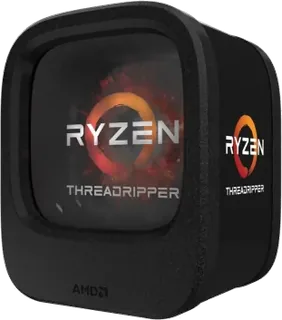
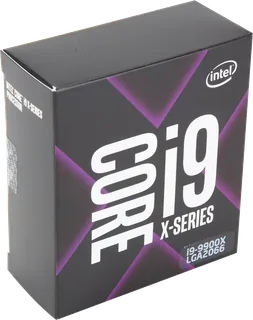
AMD Ryzen Threadripper 1920X vs Intel Core i9-9900X
Better figure, where one is clearly better
| AMDRyzen Threadripper 1920X | IntelCore i9-9900X | |
|---|---|---|
| Overview | ||
| Released | August 2017 | 2018 |
| Cores and clocks | ||
| Cores | 12 (better) | 10 |
| Threads | 24 (better) | 20 |
| Base clock | 3.5 GHz | 3.5 GHz |
| Boost clock | 4 GHz | 4.5 GHz (better) |
| L3 cache | 32 MB (better) | 19.25 MB |
| Cores | Zen architecture; boxed product ID YD192XA8AEWOF. AMD's support page lists 31 July 2017, when pre-orders began; its press release confirms on-shelf availability on 10 August 2017, used here. | Skylake-X refresh; Hyper-Threading and an unlocked multiplier, confirmed by Intel’s exact-model launch table. |
| Clocks | AMD states up to 4.2 GHz with XFR under suitable cooling, separate from the published 4.0 GHz maximum boost | Turbo Boost Max 3.0 up to 4.50 GHz on the preferred cores; ordinary Turbo Boost 2.0 up to 4.40 GHz. Intel’s October 2018 announcement planned November availability. Ark’s contemporary exact-model report confirms Japanese retail sale on 14 December 2018, but earlier worldwide sale was not established; year precision is retained. |
| Cache | L1 1152 KB; L2 6 MB | 19.25 MB Intel Smart Cache; L3 designation confirmed by ComputerBase’s exact-model technical table and Newegg listing. |
| Graphics and AI | ||
| Built-in graphics | No | No |
| Graphics | A separate graphics card is required | No processor graphics, explicitly confirmed by Intel’s exact-model support table. |
| Platform | ||
| Socket | sTR4 | LGA2066 |
| Base power | 180 W | 165 W |
| Unlocked | Yes | Yes |
| Cooler in the box | No | No |
| Memory support | DDR4; four channels; up to 2667 MT/s | Up to 128 GB; four channels of DDR4-2666; 85 GB/s maximum published bandwidth; no ECC. |
| PCIe | PCIe 3.0; 64 lanes | 44 CPU lanes; PCIe 3.0. The 68-lane family platform figure includes chipset lanes. |
| Chipsets | – | Intel X299; LGA2066. |
| Process | 14 nm | 14 nm; Skylake-X refresh. |
| Cooler | No cooler included; maximum operating temperature 68°C | Intel explicitly excludes a fan and heatsink from the boxed product. Intel’s support article confirms solder thermal interface material for this exact model; published junction limit 92°C. |
More comparisons
- AMD Ryzen Threadripper 1920X vs AMD Ryzen Threadripper 9960X
- AMD Ryzen Threadripper 1920X vs AMD Ryzen Threadripper 9970X
- AMD Ryzen Threadripper 1920X vs AMD Ryzen Threadripper 9980X
- AMD Ryzen Threadripper 1920X vs AMD Ryzen Threadripper PRO 9955WX
- AMD Ryzen Threadripper 1920X vs AMD Ryzen Threadripper PRO 9965WX
- AMD Ryzen Threadripper 1920X vs AMD Ryzen Threadripper PRO 9975WX
- AMD Ryzen Threadripper 1920X vs AMD Ryzen Threadripper PRO 9985WX
- AMD Ryzen Threadripper 1920X vs AMD Ryzen Threadripper PRO 9995WX
- Intel Core i9-14900KS vs Intel Core i9-9900X
- Intel Core i5-14400F vs Intel Core i9-9900X
- Intel Core i5-14500 vs Intel Core i9-9900X
- Intel Core i9-14900K vs Intel Core i9-9900X
- Intel Core i5-14600K vs Intel Core i9-9900X
- Intel Core i7-14700K vs Intel Core i9-9900X
- Intel Core i9-13900KS vs Intel Core i9-9900X
- Intel Core i3-13100F vs Intel Core i9-9900X