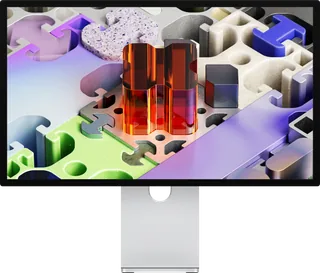
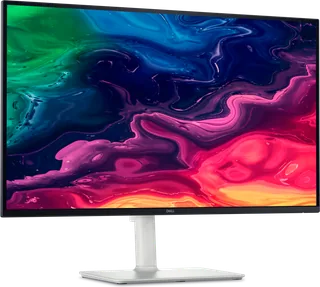
Apple Studio Display XDR vs Dell 27 Plus 4K USB-C (S2725QC)
Better figure, where one is clearly better
| AppleStudio Display XDR | Dell27 Plus 4K USB-C (S2725QC) | |
|---|---|---|
| Overview | ||
| Released | March 2026 | March 2025 |
| Display | ||
| Screen size | 27″ | 27″ |
| Resolution | 5120 × 2880 (5K) (better) | 3840 × 2160 (4K) |
| Sharpness | 218 pixels per inch (better) | 163 pixels per inch |
| Panel | Mini-LED (5K Retina XDR (IPS LCD, oxide TFT)) | IPS |
| Refresh rate | 120 Hz | 120 Hz |
| Response time (grey to grey) | – | 4 ms |
| Brightness (typical) | 1,000 nits (better) | 350 nits |
| Contrast ratio | – | 1,500:1 |
| HDR peak brightness | 2,000 nits | – |
| Colour range | P3 + Adobe RGB, 81% BT.2020 | 99% sRGB |
| Dimming zones | 2,304 | – |
| Screen finish | Glossy | Matte |
| Shape | Flat | Flat |
| Adaptive sync | VESA AdaptiveSync | FreeSync Premium |
| Colour depth | 1 billion colours | 1.07 billion colours |
| Colour modes | Apple XDR Display (P3-2,000 nits), Apple XDR Display (P3 + Adobe RGB-2,000 nits), HDR Video (P3-ST 2084), HDTV Video (BT.709-BT.1886), NTSC Video (BT.601 SMPTE-C), PAL and SECAM Video (BT.601 EBU), Digital Cinema (P3-DCI), Digital Cinema (P3-D65), Design and Print (P3-D50), Design and Print (Adobe RGB-D50), Photography (P3-D65), Photography (Adobe RGB-D65), HDR Photography (P3-D65), Internet and Web (sRGB), Medical Imaging (DICOM-350 nits), Medical Imaging (DICOM-600 nits); custom reference modes | Standard, Movie, FPS, RTS, RPG, Warm, Cool, sRGB, Custom Color |
| HDR detail | 2,000 nits peak across 40% of the screen and 1,000 nits full-screen sustained (below 25 °C); HDR reference modes use PQ (SMPTE ST 2084) | Accepts HDR over HDMI 2.1; Smart HDR modes Desktop, Movie HDR and Game HDR |
| Response time detail | – | 4 ms GTG (Extreme mode), 5 ms (Fast mode), 8 ms (Normal mode) |
| Variable refresh range | 47–120 Hz (Adaptive Sync); fixed 47.95, 48, 50, 59.94, 60 and 120 Hz | – |
| Viewing angles | 89° left, right, up and down | 178° horizontal, 178° vertical (typical) |
| Pixel pitch | – | 0.1554 mm x 0.1554 mm |
| Eye care | – | ComfortView Plus (blue light ≤35%), TÜV Rheinland 4-star eye comfort, flicker-free |
| Calibration | Individually factory calibrated (Apple CMF 2026); Visual Fine-Tune and Fine-Tune Calibration in Pro Display Calibrator | – |
| Connections | ||
| Video inputs | Thunderbolt 5 | 2 × HDMI 2.1, USB-C |
| USB-C charging | Up to 140 W (better) | Up to 65 W |
| USB ports | Thunderbolt 5, 2 × USB-C | USB-C, 2 × USB-A |
| Ethernet | No | No |
| Speakers | Yes | Yes |
| HDMI detail | – | 2 x HDMI 2.1 (HDCP 1.4 & 2.3), up to 3840 x 2160 at 120 Hz with FRL, HDR and VRR |
| Webcam | 12MP Center Stage with Desk View | – |
| USB-C detail | Upstream Thunderbolt 5 (up to 120 Gb/s) with 140 W host charging | USB-C 5Gbps upstream with DisplayPort 1.4 Alt Mode and Power Delivery up to 65 W; USB-C 5Gbps downstream with 15 W |
| Daisy chaining | Downstream Thunderbolt 5 port daisy-chains more displays; up to four with certain Mac configurations | – |
| USB hub detail | 1 × Thunderbolt 5 downstream (up to 120 Gb/s), 2 × USB-C (up to 10 Gb/s) for peripherals, storage and networking | 1 x USB-A 5Gbps (side); pop-out quick access ports with 1 x USB-A 5Gbps (BC1.2 charging) and 1 x USB-C 5Gbps (15 W) |
| Speaker detail | Six speakers with force-cancelling woofers; wide stereo; Spatial Audio with Dolby Atmos | 2 x 5 W |
| Webcam detail | Three-mic array with directional beamforming; camera features and firmware updates need a Mac | – |
| Design | ||
| Stand adjusts | Height, tilt | Height, tilt, swivel, pivot (better) |
| VESA mount | Yes | Yes |
| Weight with stand | 8.5 kg | 6.71 kg |
| Height adjustment | 105 mm | 130 mm |
| Tilt | −5° to +25° | -5° to 21° |
| Swivel | – | -30° to 30° |
| Pivot | Landscape only on the stand; portrait with the VESA mount adapter | -90° to 90° |
| VESA pattern | 100 × 100 mm (VESA mount adapter option) | 100 x 100 mm |
| Size with stand | 62.3 × 21.4 × 47.8–58.3 cm (W × D × H) | 611.54 x 200.40 x 388.63–518.63 mm (W x D x H) |
| Size without stand | 62.3 × 3.3 × 36.2 cm with VESA mount adapter (W × D × H) | 611.54 x 60 x 355.98 mm (W x D x H) |
| Weight without stand | 6.3 kg with VESA mount adapter | 4.85 kg |
| Controls | – | Joystick |
| Colours | – | Ash White |
| Power and support | ||
| Power use | – | 25.2 W on mode, 0.4 W standby, 0.3 W off, 180 W maximum |
| Energy class | – | F (SDR), G (HDR) |
| Power supply | 100–240 V AC, 50–60 Hz, single phase | 100–240 VAC, 50/60 Hz, 2.3 A (typical) |
| Software | Needs an Apple silicon Mac with macOS Tahoe 26.3.1 or later, or an iPad with iPadOS 26.3.1 or later | Dell Display and Peripheral Manager (Easy Arrange) |
| Certifications | ENERGY STAR | ENERGY STAR 8.0, TÜV Rheinland Eye Comfort 3.0 (4 star), TÜV Rheinland hardware low blue light (Category 2) |
| Warranty | 1-year limited warranty and 90 days of complimentary technical support from Apple | 3 years limited hardware with Advanced Exchange Service (UK) |
| In the box | Studio Display XDR, Thunderbolt 5 Pro Cable (1 m) | Stand, VESA cover, side I/O cover, power cable, USB-C to USB-C 10Gbps 100 W cable (1 m) |
More comparisons
- Dell 27 Plus 4K USB-C (S2725QC) vs Lenovo ThinkVision P27UD-40
- Apple AppleColor High-Resolution RGB Monitor vs Apple Studio Display XDR
- Apple Macintosh Portrait Display vs Apple Studio Display XDR
- Apple Apple Color Plus 14-inch Display vs Apple Studio Display XDR
- Apple AppleVision 850 vs Apple Studio Display XDR
- Apple AppleVision 850AV vs Apple Studio Display XDR
- Apple Multiple Scan 15 Display vs Apple Studio Display XDR
- Apple Multiple Scan 17 Display vs Apple Studio Display XDR
- Apple Multiple Scan 20 Display vs Apple Studio Display XDR
- Apple Multiple Scan 720 Display vs Apple Studio Display XDR
- Apple AppleVision 1710AV vs Apple Studio Display XDR
- Apple Studio Display (17-inch LCD, 2001) vs Apple Studio Display XDR
- Apple Studio Display (17-inch CRT, 1999) vs Apple Studio Display XDR
- Apple Studio Display (21-inch CRT, 1999) vs Apple Studio Display XDR
- Apple Studio Display (17-inch CRT ADC, 2000) vs Apple Studio Display XDR
- Apple Studio Display (15-inch LCD, 1998) vs Apple Studio Display XDR