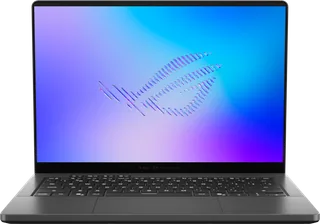
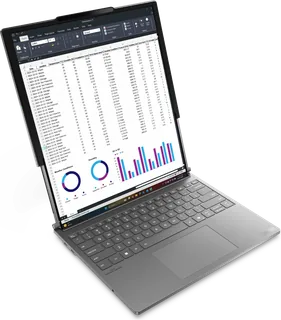
ASUS ROG Zephyrus G14 (2026) GU405 vs Lenovo ThinkBook Plus Gen 6 Rollable
Better figure, where one is clearly better
| ASUSROG Zephyrus G14 (2026) GU405 | LenovoThinkBook Plus Gen 6 Rollable | |
|---|---|---|
| Overview | ||
| Released | 2026 | June 2025 |
| Display | ||
| Screen size | 14″ | 14″ |
| Resolution | 2880 × 1800 (better) | 2000 × 1600 |
| Panel | OLED | OLED |
| Refresh rate | 120 Hz | 120 Hz |
| Brightness | – | 400 nits |
| HDR peak brightness | 1,100 nits | – |
| Touchscreen | No | No |
| Display type | ROG Nebula HDR 3K (2880 × 1800) OLED, 16:10, 0.2 ms | Rollable POLED; 14″ 2000 × 1600 (5:4) rolled in, 16.7″ 2000 × 2350 (8:9) rolled out; rolls by a dedicated key or a hand gesture |
| Colour range | 100% DCI-P3; Delta E < 1 | 100% DCI-P3 |
| Screen finish | Anti-reflection | Glossy |
| Display features | VESA DisplayHDR True Black 1000; G-SYNC; Pantone Validated; MUX Switch with NVIDIA Advanced Optimus; ambient light sensor | 100,000:1 contrast; 10–120 Hz VRR; DisplayHDR True Black 600; Dolby Vision |
| Performance | ||
| Processor | Intel Core Ultra 9 386H | Intel Core Ultra 7 258V |
| CPU cores | 16 | 8 |
| CPU threads | 16 | 8 |
| Graphics | NVIDIA GeForce RTX 5070 Laptop GPU, NVIDIA GeForce RTX 5070 Ti Laptop GPU or NVIDIA GeForce RTX 5080 Laptop GPU | Intel Arc 140V |
| AI engine (NPU) | 50 TOPS (better) | 47 TOPS |
| Memory | 16 GB or 32 GB | 32 GB |
| Storage | 1 TB to 2 TB (better) | 1 TB |
| CPU | Intel Core Ultra 9 386H, 16 cores, 16 threads, up to 4.9 GHz, 18 MB cache | Core Ultra 7 258V; 4 P-cores and 4 LP E-cores, up to 4.8 GHz, 12 MB cache |
| GPU | NVIDIA GeForce RTX 5070 (8 GB GDDR7, 115 W in Manual mode), RTX 5070 Ti (12 GB GDDR7, 130 W) or RTX 5080 Laptop GPU (16 GB GDDR7, 130 W) | Intel Arc Graphics 140V (integrated), DirectX 12.2 |
| AI engine | Intel NPU, up to 50 TOPS | Copilot+ PC; NPU up to 47 TOPS (115 TOPS for the whole platform) |
| Memory type | LPDDR5X-8533 on board, dual-channel; 16 or 32 GB (ASUS's press release lists up to 64 GB) | 32 GB LPDDR5X-8533 on the processor package, not upgradable |
| Storage type | One M.2 PCIe 4.0 NVMe slot; 1 or 2 TB fitted | One M.2 2242 PCIe 4.0 x4 NVMe SSD, 1 TB |
| Cooling | ROG Intelligent Cooling with a redesigned vented bottom panel | – |
| Battery and size | ||
| Battery life (maker's claim) | – | Up to 14.9 hours |
| Battery capacity | 73 Wh (better) | 66 Wh |
| Weight | 1.5 kg (better) | 1.69 kg |
| Thickness | 18.3 mm (better) | 19.9 mm |
| Width × depth | 311 × 220 mm | 303.5 × 230.6 mm |
| Battery life detail | 73 Wh, 4-cell Li-ion | 66 Wh Li-ion; MobileMark 30 up to 11.7 hr, local 1080p video up to 14.9 hr |
| Charger | 250 W rectangular-plug adapter; 100 W USB-C power delivery | 65 W USB-C nano GaN wall-mount adapter (PD 3.0) |
| Fast charging | – | Rapid Charge to 80% in 1 hour (when off, in standby or hibernating) |
| Materials | CNC-milled aluminium chassis | CNC-machined anodised aluminium top and bottom |
| Colours | Eclipse Grey; Platinum White | Luna Grey (dual-tone) |
| Connections | ||
| Ports | Thunderbolt 4, USB-C, 2 × USB-A, HDMI, SD card slot, headphone jack | 2 × Thunderbolt 4, headphone jack |
| Wi-Fi | Wi-Fi 7 | Wi-Fi 7 |
| Bluetooth | 6.0 | 5.4 |
| Webcam | 1080p with IR | 5MP with IR; electronic shutter |
| Operating system | Windows | Windows |
| Port detail | Thunderbolt 4 (40 Gbps) with DisplayPort 2.1 and 100 W PD; USB 3.2 Gen 2 Type-C with DisplayPort 2.1 and 100 W PD; 2 × USB 3.2 Gen 2 Type-A; HDMI 2.1 FRL; SD card reader (UHS-II, 312 MB/s); 3.5 mm combo jack | 2 × Thunderbolt 4 / USB4 40 Gbps with USB PD 45–65 W and DisplayPort 2.1; 3.5 mm headphone/mic combo jack |
| External displays | – | Up to two external displays via Thunderbolt (three including the built-in); up to 8K 60 Hz |
| Keyboard | Backlit chiclet keyboard, 1-zone RGB, 1.7 mm key travel, Copilot key; 35-zone Slash Lighting on the lid | 6-row, spill-resistant, edge-to-edge; 1.0 mm key travel; Copilot key; smart backlight |
| Trackpad | – | Glass haptic touchpad, Precision TouchPad, 75 × 120 mm |
| Speakers | 6 speakers (4 dual-force woofers, 2 tweeters), Dolby Atmos, Smart Amp | Stereo 2 W × 2, Dolby Atmos, sound by Harman Kardon |
| Microphones | Built-in array microphone with AI noise cancelling | Dual-microphone array, Elevoc Voice |
| Biometrics | IR camera for Windows Hello | Fingerprint reader in the side power button (match-on-chip); IR camera for Windows Hello; time-of-flight sensor |
More comparisons
- Lenovo ThinkBook 14 2-in-1 Gen 6 vs Lenovo ThinkBook Plus Gen 6 Rollable
- ASUS ROG Strix G16 (2026) G615 vs ASUS ROG Zephyrus G14 (2026) GU405
- ASUS ROG Zephyrus G14 (2026) GU405 vs Lenovo IdeaPad Pro 5i Gen 11 (14″)
- ASUS ROG Zephyrus G14 (2026) GU405 vs Lenovo IdeaPad Slim 5i Gen 11 (14″)
- ASUS ROG Zephyrus G14 (2026) GU405 vs Lenovo ThinkBook 14 Gen 9 (Intel)
- Lenovo ThinkBook 14 Gen 9 (Intel) vs Lenovo ThinkBook Plus Gen 6 Rollable
- Lenovo ThinkBook 16 Gen 9 (Intel) vs Lenovo ThinkBook Plus Gen 6 Rollable
- ASUS ROG Zephyrus G14 (2025) vs ASUS ROG Zephyrus G14 (2026) GU405
- ASUS ROG Zephyrus G14 (2026) GU405 vs Lenovo ThinkPad T14 Gen 1 (Intel)
- ASUS ROG Zephyrus G14 (2026) GU405 vs Lenovo ThinkPad T14 Gen 1 (AMD)
- ASUS ROG Zephyrus G14 (2026) GU405 vs Lenovo ThinkPad T490
- ASUS ROG Zephyrus G14 (2026) GU405 vs ASUS ROG Zephyrus G16 (2026) GU606
- ASUS ROG Zephyrus G14 (2026) GU405 vs ASUS ROG Zephyrus G16 (2025, Intel)
- ASUS ROG Zephyrus G14 (2026) GU405 vs Lenovo ThinkPad T14 Gen 6 (AMD)
- ASUS ROG Zephyrus G14 (2026) GU405 vs Lenovo ThinkPad T14 Gen 6 (Intel)
- ASUS ROG Zephyrus G14 (2026) GU405 vs Dell Dell 14 Plus DB14250