Canon RF 100–300mm F2.8L IS USM vs Canon RF-S 14–30mm F4–6.3 IS STM PZ
Better figure, where one is clearly better
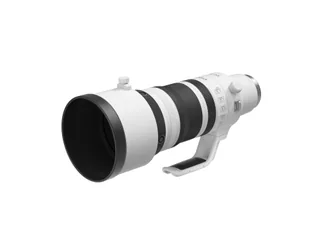
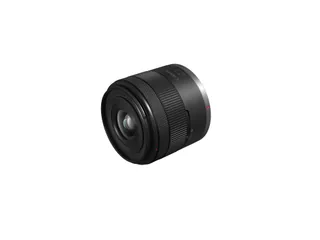
| CanonRF 100–300mm F2.8L IS USM | CanonRF-S 14–30mm F4–6.3 IS STM PZ | |
|---|---|---|
| Overview | ||
| Released | May 2023 | April 2025 |
| Optics | ||
| Lens type | Zoom | Zoom |
| Focal length | 100–300 mm | 14–30 mm |
| Maximum aperture | f/2.8 | f/4–6.3 |
| Minimum aperture | f/22 | f/22–38 |
| Optical construction | Twenty-three elements in eighteen groups | 10 elements in nine groups |
| Special elements | One fluorite, four UD and one glass-moulded aspherical element | – |
| Coatings | Super Spectra, ASC and fluorine coatings | Super Spectra coating |
| Aperture detail | Constant maximum f/2.8; minimum f/22 | Maker minimum aperture f/22 at14mm and f/38 at30mm using half-stop display; Ken Rockwell reports f/36 at30mm, while Digital Camera World lists f/32. Main values retain the maker’s explicitly stated display convention |
| Diaphragm | Nine blades | Seven blades |
| Angle of view | Full-frame diagonal 24°–8°15′; horizontal 20°–6°50′; vertical 14°–4°35′ | – |
| Mount and compatibility | ||
| Mounts | Canon RF | Canon RF |
| Image circle | Full frame | APS-C |
| Compatibility | Canon RF mount for full-frame and APS-C EOS R cameras | Canon RF mount, APS-C image circle; UK maker lists compatible full-frame EOS R bodies with crop restrictions |
| Image circle detail | – | Physical14–30mm focal length;22.4–48mm equivalent angle of view on Canon APS-C, distinct from any additional movie crop |
| Teleconverter support | RF 1.4× gives 140–420 mm f/4; RF 2× gives 200–600 mm f/5.6 | – |
| Focus and stabilisation | ||
| Autofocus | Yes | Yes |
| Minimum focus distance | 1.8 m | 0.15 m |
| Maximum magnification | 0.16× | 0.38× |
| Optical stabilisation | Yes | Yes |
| Autofocus detail | Two Nano USM motors independently drive the electronic floating-focus groups; full-time electronic manual focus | STM autofocus; combined electronic focus/control ring. No dedicated AF/MF switch |
| Focus distance detail | 1.8 m minimum focus throughout the zoom range; limiter selects full range or 6 m–infinity | Maker minimum focus0.15m throughout the zoom range; no AF/MF distinction published in the specification table |
| Magnification detail | 0.06× at 100 mm and 0.16× at 300 mm | 0.17× at14mm and0.38× at30mm |
| Stabilisation detail | Canon rates lens optical IS at 5.5 stops under CIPA conditions, and coordinated IS at up to 6 stops with EOS R5 and compatible bodies | Lens optical IS rated five stops at30mm with EOS R10, yaw/pitch under CIPA2024. Coordinated EOS R7 body/lens IS rated7.5 central and5.5 peripheral stops at30mm, yaw/pitch/roll. Ken Rockwell measured about2.5–2.7 stops on EOS R50 V held at arm’s length, a different test condition |
| Video features | – | Internal power zoom controlled by lens ring, compatible camera controls or remote smartphone/Bluetooth control; UK maker describes two-step variable speed and15 adjustable levels. Movie Digital IS is camera processing with additional crop, distinct from lens optical IS |
| Design | ||
| Dust and moisture resistant | Yes | No |
| Filter diameter | 112 mm | 58 mm |
| Maximum diameter | 128 mm | 69.6 mm |
| Length | 323.4 mm | 62 mm |
| Weight | 2,590 g | 181 g (better) |
| Controls | Separate focus, zoom and clicking control rings; front lens-function buttons and focus-preset controls | Combined focus/control ring and power zoom ring; no dedicated stabilisation switch |
| Zoom design | Internal zoom maintains barrel length | Non-extending internal motorised zoom maintains the lens’s62mm length |
| Filter detail | 112 mm front screw-in thread; no rear drop-in filter | – |
| Weather resistance | Dust- and moisture-resistant construction with heat-blocking white paint | Maker FAQ explicitly states no dust or drip resistant construction |
| Dimensions detail | 128 mm maximum diameter × 323.4 mm length | Approximately69.6mm maximum diameter ×62mm length |
| Weight detail | Approximately 2,590 g, as listed by Canon UK, Canon Japan and Canon Camera Museum | Approximately181g lens, per maker; Ken Rockwell measured179.1g |
| Tripod mount | Rotating tripod collar with support foot | – |
| Lens hood | ET-124 included | EW-63C, sold separately |
| In the box | Lens, E-112 front cap, RF dust cap, ET-124 hood, LS100-300 soft case and user manual | UK maker store lists lens, E-58 II front cap, Lens Dust Cap RF and user manual |
| Release detail | May 2023 first release confirmed by Canon's June 2023 retrospective announcement and Camera Museum | Canon USA scheduled the EOS R50 V kit containing this lens for April2025; Canon Indonesia’s22April2025 launch lists both kit and standalone lens for sale. Japan FAQ’s lateJuly2025 planned standalone release is a later regional date, not the earliest availability. No exact worldwide first-sale day inferred |
More comparisons
- Canon RF 20-50mm F4L IS USM PZ vs Canon RF-S 14–30mm F4–6.3 IS STM PZ
- Canon RF 100–300mm F2.8L IS USM vs Canon RF 20-50mm F4L IS USM PZ
- Canon RF 14mm F1.4L VCM vs Canon RF-S 14–30mm F4–6.3 IS STM PZ
- Canon RF 7-14mm F2.8-3.5L FISHEYE STM vs Canon RF-S 14–30mm F4–6.3 IS STM PZ
- Canon RF 100–300mm F2.8L IS USM vs Canon RF 14mm F1.4L VCM
- Canon RF 100–300mm F2.8L IS USM vs Canon RF 7-14mm F2.8-3.5L FISHEYE STM
- Canon RF 45mm F1.2 STM vs Canon RF-S 14–30mm F4–6.3 IS STM PZ
- Canon RF 100–300mm F2.8L IS USM vs Canon RF 45mm F1.2 STM
- Canon RF 85mm F1.4L VCM vs Canon RF-S 14–30mm F4–6.3 IS STM PZ
- Canon RF 100–300mm F2.8L IS USM vs Canon RF 85mm F1.4L VCM
- Canon RF 100–300mm F2.8L IS USM vs Canon RF 75–300mm F4–5.6
- Canon RF 75–300mm F4–5.6 vs Canon RF-S 14–30mm F4–6.3 IS STM PZ
- Canon RF-S 14–30mm F4–6.3 IS STM PZ vs Canon RF-S 18–150mm F3.5–6.3 IS STM
- Canon RF-S 14–30mm F4–6.3 IS STM PZ vs Canon RF-S 18–45mm F4.5–6.3 IS STM
- Canon RF-S 14–30mm F4–6.3 IS STM PZ vs Nikon NIKKOR Z DX 12-28mm f/3.5-5.6 PZ VR
- Canon RF-S 14–30mm F4–6.3 IS STM PZ vs Sony E PZ 10-20mm F4 G