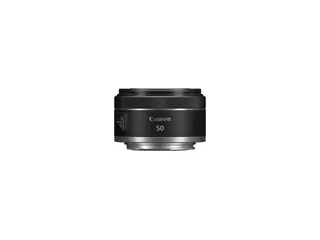
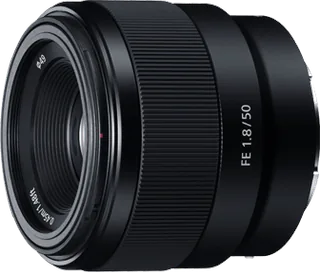
Canon RF 50mm F1.8 STM vs Sony FE 50mm F1.8
Better figure, where one is clearly better
| CanonRF 50mm F1.8 STM | SonyFE 50mm F1.8 | |
|---|---|---|
| Overview | ||
| Released | December 2020 | April 2016 |
| Optics | ||
| Lens type | Prime | Prime |
| Focal length | 50 mm | 50 mm |
| Maximum aperture | f/1.8 | f/1.8 |
| Minimum aperture | f/22 | f/22 |
| Optical construction | Six elements in five groups | Six elements in five groups; double-Gauss design |
| Special elements | One aspherical element | One aspherical element |
| Coatings | Super Spectra anti-reflection coating | – |
| Diaphragm | Seven blades | Seven rounded blades |
| Angle of view | Full-frame horizontal40°, vertical27°30′ and diagonal46° | 47° full frame; 32° APS-C |
| Mount and compatibility | ||
| Mounts | Canon RF | Sony E |
| Image circle | Full frame | Full frame |
| Image circle detail | – | Full-frame coverage; 75 mm equivalent field of view on APS-C |
| Compatibility | Canon EOS R cameras; full-frame RF mount. Distinct from EF50mmF1.8STM and RF50mmF1.2LUSM | – |
| Teleconverter support | Canon RF extenders not compatible | – |
| Focus and stabilisation | ||
| Autofocus | Yes | Yes |
| Minimum focus distance | 0.3 m | 0.45 m |
| Maximum magnification | 0.25× | 0.14× |
| Optical stabilisation | No | No |
| Autofocus detail | STM autofocus; electronic manual focus. Photography Blog reports selection of manual focus through the camera menu | – |
| Focus distance detail | Minimum focus distance0.30m; maker table does not distinguish AF and MF figures, so no mode inferred. Extending inner tube during close focusing, as documented by OpticalLimits | 0.45 m minimum focus distance |
| Magnification detail | Maker maximum magnification0.25×; no unpublished AF/MF distinction inferred | 0.14× maximum magnification |
| Stabilisation detail | No lens optical IS; compatible cameras may provide body stabilisation separately | No optical stabilisation; compatible camera body stabilisation can be used |
| Design | ||
| Filter diameter | 43 mm | 49 mm |
| Maximum diameter | 69.2 mm | 68.6 mm |
| Length | 40.5 mm | 59.5 mm |
| Weight | 160 g (better) | 186 g |
| Controls | Shared focus/control ring with focus-control selector; control mode can adjust camera settings | Manual-focus ring; focus mode selected on camera; metal lens mount |
| Filter detail | 43mm front filter thread; maker lists Canon250D/500D close-up lenses and PL-C B circular polariser incompatible | – |
| Weather resistance | UK maker dust/moisture resistance entry is a dash; OpticalLimits explicitly reports no weather sealing | – |
| Dimensions detail | Approximately69.2mm maximum diameter ×40.5mm length, measured retracted by Canon | 68.6 mm maximum diameter × 59.5 mm length |
| Weight detail | Approximately160g lens | Approximately 186 g lens; separate hood and caps excluded. Sony Netherlands launch release states 192 g, superseded here by exact-model Sony Japan technical specifications |
| Lens hood | ES-65B, sold separately | ALC-SH146 round bayonet hood, supplied |
| In the box | Lens, E-43 front cap and Lens Dust Cap RF; hood and LP1014 pouch are optional according to UK maker specifications | ALC-SH146 hood, ALC-F49S front cap and ALC-R1EM rear cap; no case listed |
| Release detail | December2020 marketed month in Canon Camera Museum. Canon Canada scheduled mid-December2020 availability; Canon Japan records first sale24December2020. Headline retains month because the exact earliest international retail day is not documented; Japan's later day is not presented as a worldwide date | Sony Netherlands announcement dated 29 March 2016 states availability from April 2016; exact first on-sale day not established. Main release retains month precision. Full independent exact-model reviews read: Photography Blog on Alpha 7S and Amateur Photographer Andy Westlake with Alpha 7R II autofocus experience. Review differences in corner sharpness and longitudinal fringing are preserved; the Blog explicitly qualifies its 12-megapixel test body. Reviews assess original launch-era focus behaviour, not subsequent firmware |
More comparisons
- Canon RF 20-50mm F4L IS USM PZ vs Canon RF 50mm F1.8 STM
- Canon RF 14mm F1.4L VCM vs Canon RF 50mm F1.8 STM
- Canon RF 50mm F1.8 STM vs Canon RF 7-14mm F2.8-3.5L FISHEYE STM
- Canon RF 45mm F1.2 STM vs Canon RF 50mm F1.8 STM
- Canon RF 50mm F1.8 STM vs Canon RF 85mm F1.4L VCM
- Canon RF 50mm F1.8 STM vs Canon RF 75–300mm F4–5.6
- Canon RF 20mm F1.4 L VCM vs Canon RF 50mm F1.8 STM
- Canon RF 50mm F1.8 STM vs Canon RF-S 14–30mm F4–6.3 IS STM PZ
- Canon RF 50mm F1.4 L VCM vs Canon RF 50mm F1.8 STM
- Canon RF 28mm F2.8 STM vs Canon RF 50mm F1.8 STM
- Sony FE 50mm F1.8 vs Sony FE 50mm F2.5 G
- Canon EF 50mm f/1.8 vs Canon RF 50mm F1.8 STM
- Canon EF 50mm f/1.8 II vs Canon RF 50mm F1.8 STM
- Canon EF 50mm f/1.8 STM vs Canon RF 50mm F1.8 STM
- Canon RF 35mm F1.8 MACRO IS STM vs Canon RF 50mm F1.8 STM
- Canon RF 50mm F1.2 L USM vs Canon RF 50mm F1.8 STM